
Best Needles for Fine Line Tattoos: 1RL, 3RL and Bugpins
Short answer
What needle is used for fine line tattoos?
Fine line tattoos are done with small round liners, usually a single needle (1RL) or a 3RL, in thin bugpin diameters such as #10 (0.30 mm) or #08 (0.25 mm), with a long taper. A 3RL #10 is the everyday fine-line liner; 1RL and #08 or smaller go finer still for micro detail. Bishop Da Vinci V2 and Emalla offer liners down to #4 (about 0.18 mm).
Key takeaways
- Fine line work uses small round liners: 1RL for the finest lines, 3RL as the everyday fine-line needle, 5RL for slightly heavier lines.
- Pair them with bugpin diameters: #10 (0.30 mm) for most fine line, #08 (0.25 mm) and smaller for micro detail.
- Long taper is the default for fine lining and is what nearly every cartridge at Miami Tattoo Supplies uses.
- Thinner and fewer needles show every wobble and depth change, so fine line is a skill built on practice skin under supervision.
- Fine lines can soften as they heal and age, so design weight and spacing matter as much as the needle.
On this page 5 sections
Fine line work lives or dies on two numbers on the cartridge box: how many needles and how thick they are. Get those right and your hand has a chance; get them wrong and no amount of control will make the line as fine as the design. Here is what fine-line artists actually reach for and what Miami Tattoo Supplies (MTS), which publishes this site, carries in those sizes in its needle cartridge collection.
What needle is used for fine line tattoos?
A small round liner in a thin diameter. Round liners pull their needles into a tight point, which is what draws a clean, narrow line. For fine line, that means:
- 1RL (single needle): the finest line a cartridge can draw. Used for micro detail, tiny script and hairline accents.
- 3RL: the everyday fine-line needle. Slightly more ink per pass than a single, so lines saturate more consistently.
- 5RL: a fine but more visible line, useful for the main outlines of a fine-line piece that has 1RL or 3RL detail inside it.
Then choose diameter. A bugpin is a needle thinner than the standard #12 (0.35 mm):
| Diameter | Size | Fine-line use |
|---|---|---|
| #12 | 0.35 mm | Standard; fine only in 1RL |
| #10 | 0.30 mm | The usual fine-line choice in 3RL and 5RL |
| #08 | 0.25 mm | Finer script and delicate detail |
| #06 | 0.20–0.22 mm | Very fine detail |
| #04 | 0.17–0.18 mm | Micro work |
So a typical fine-line set is 1003RL and 0803RL for most lines, a 1RL for the finest accents, and a 1005RL for slightly heavier outlines. The full code system is in the needle code decoder, the effect of diameter and taper is in needle diameter and taper explained, and choosing between larger liners is in 3RL vs 5RL vs 7RL vs 9RL.
Which taper is best for fine line?
Long taper. A long taper narrows each needle gradually to a fine point, which suits clean, narrow lines. Nearly every cartridge MTS sells is long taper, and every Emalla, Elite and Bishop round liner listed is long taper, so you rarely have to choose. Cheyenne grinds its liners to a super long taper (SLT).
Which fine-line cartridges does Miami Tattoo Supplies carry?
At the time of writing (November 2026), per 20-box:
| Cartridge | Smallest sizes listed | Price range |
|---|---|---|
| Bishop Da Vinci V2 round liner | 3RL in #10, #08, #06 (0.22 mm), #04 (0.18 mm) | $32.49–$39.99 |
| Emalla round liner | 1RL in #10 and #08; 3RL in #06 (0.20 mm) and #04 (0.18 mm) | $25.99–$32.99 |
| Elite Infini Plus round liner | 3RL down to #06 (0.20 mm); 1RL in #12 | $25.99–$29.99 |
| Kwadron round liner (RL) | 3RL and 5RL in #08; 1RL in #12 | $31.49–$39.99 |
Availability varies by size, so check the variant before you order. The Bishop Da Vinci V2 round liners carry the widest bugpin range on one page, and the Emalla round liners are the lower-cost way to stock several fine sizes. Kwadron and Cheyenne users can find their liners in the needle cartridges collection.
Why do fine line tattoos need more than the right needle?
Because the smaller the grouping, the less room for error. A single 0.25 mm needle shows every change in hand speed, angle and depth. Too shallow and the line heals patchy; too deep and it spreads. Machine settings matter too: some fine-line artists prefer softer-hitting setups and shorter strokes, a choice covered in the stroke length guide.
Script has its own needs, covered in the best needles for lettering and script, and the hand technique in how to line a tattoo.
There is also a biological limit. In an article for Dermatology Times, dermatologist Zoe Diana Draelos notes that ink deposited in the dermis is taken up by immune cells and fibroblasts, which is why tattoo lines may blur over time. Very fine lines placed very close together have the least margin as that happens. Good fine-line design allows for it with sensible spacing and line weight.
For practice, the best tattoo practice skin guide covers sheet and 3D options, and how deep a tattoo needle should go explains the skin layers you are aiming for.
Gear mentioned
Products from the Miami Tattoo Supplies catalog, the publisher of this site. Check current price and stock on the store.
Bishop
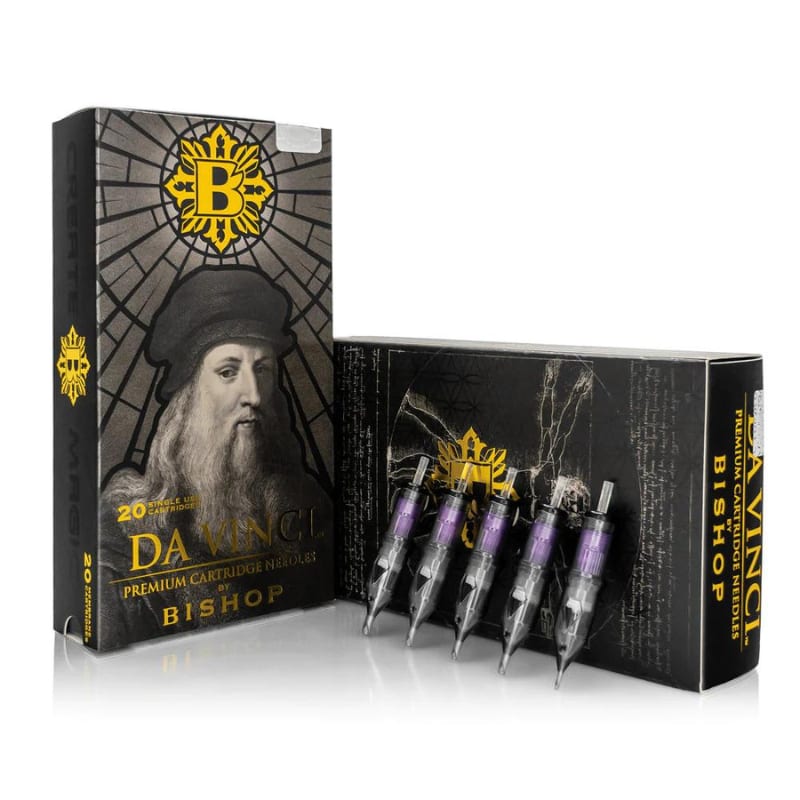
Bishop Da Vinci V2 Tattoo Cartridge Needles 20pcs - Round Liners
View at Miami Tattoo Supplies: Bishop Da Vinci V2 Tattoo Cartridge Needles 20pcs - Round Liners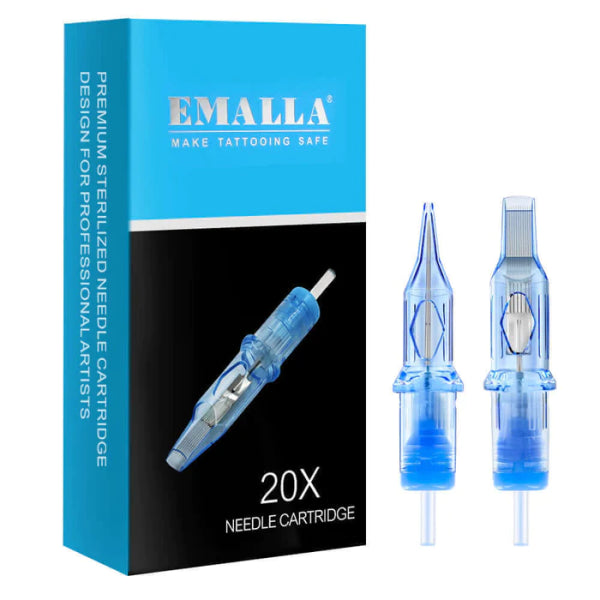
Emalla
Emalla Tattoo Needle Cartridges - Round Liners (20pcs)
View at Miami Tattoo Supplies: Emalla Tattoo Needle Cartridges - Round Liners (20pcs)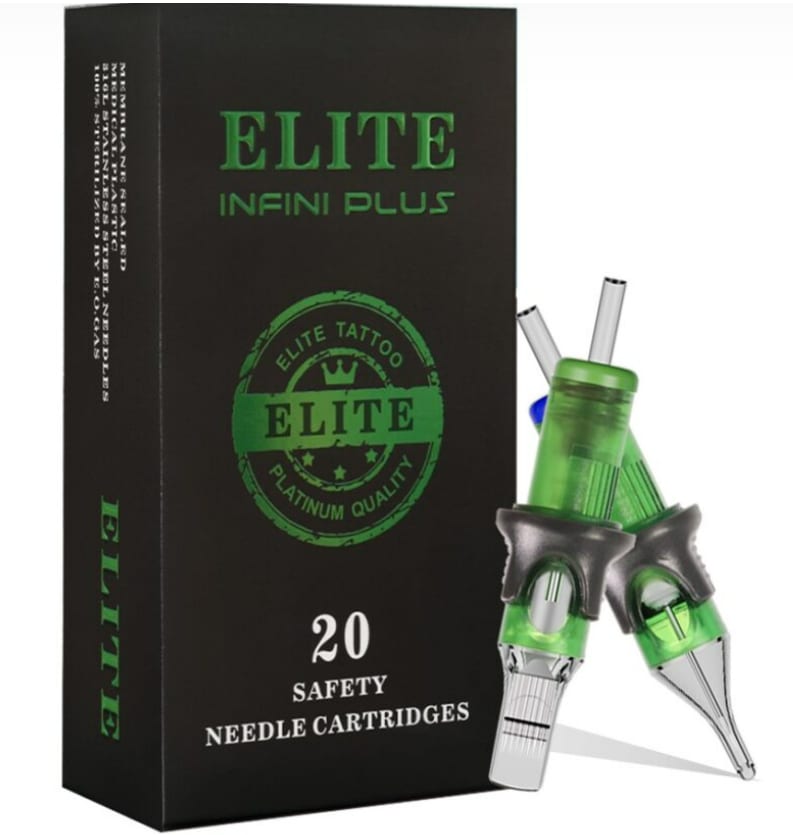
Elite
ELITE INFINI PLUS Tattoo Needle Cartridges - Round Liner (20pcs)
View at Miami Tattoo Supplies: ELITE INFINI PLUS Tattoo Needle Cartridges - Round Liner (20pcs)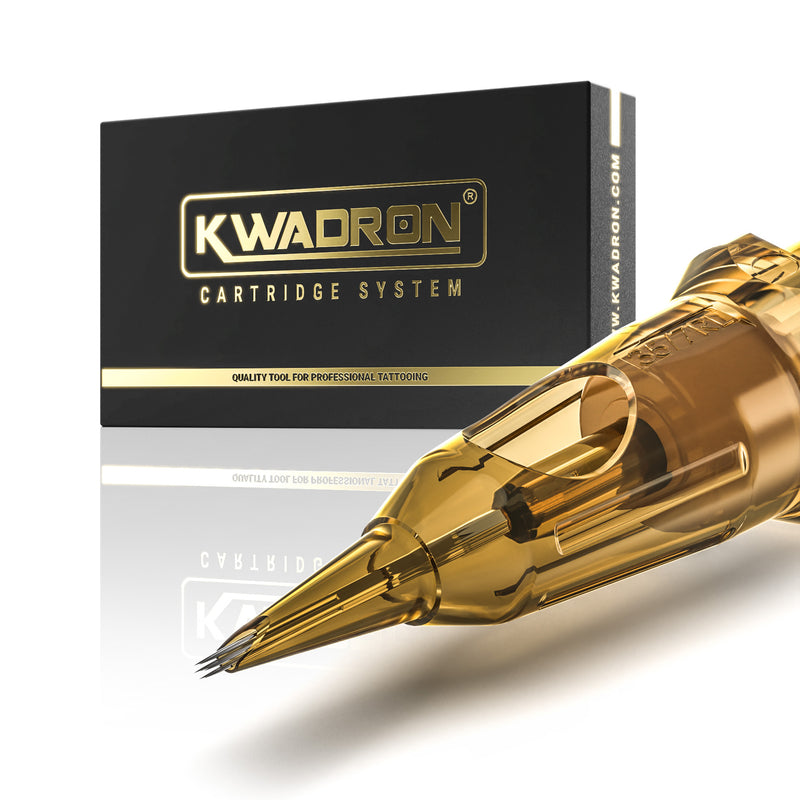
Kwadron
Kwadron Cartridge Needles - Round Liner (RL) Tattoo Cartridges 20pcs
View at Miami Tattoo Supplies: Kwadron Cartridge Needles - Round Liner (RL) Tattoo Cartridges 20pcs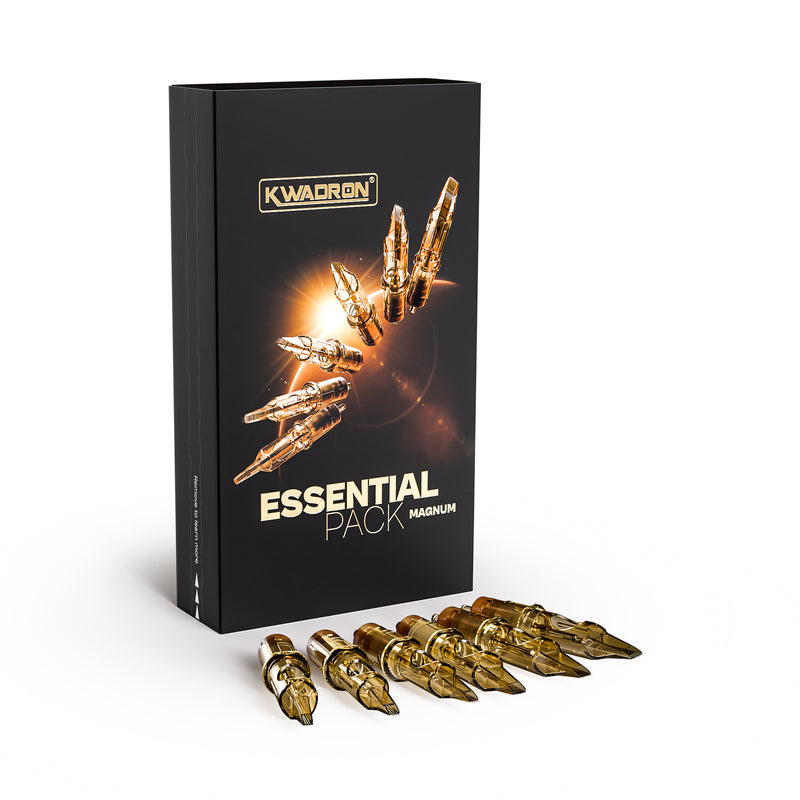
Kwadron
Kwadron Cartridge Needles - Essential Pack Tattoo Cartridges 18pcs
View at Miami Tattoo Supplies: Kwadron Cartridge Needles - Essential Pack Tattoo Cartridges 18pcs
Frequently asked questions
Is a single needle or a 3RL better for fine line?
Both are fine-line needles. A 1RL draws the narrowest possible line and suits micro detail and hairline accents. A 3RL, especially in #10 or #08, deposits a little more ink per pass, so lines saturate more evenly, which is why many artists use it for most of a fine-line piece and save the single for details.
What is the smallest tattoo needle size?
At Miami Tattoo Supplies at the time of writing, the smallest listed diameters are #4 round liners at about 0.18 mm in Bishop Da Vinci V2 and Emalla. Bishop's own site lists its #4 as 0.17 mm. In needle count, the smallest grouping is the single needle, 1RL.
Do fine line tattoos fade faster?
Fine lines contain less ink than bold ones, so any softening or blurring as the tattoo heals and ages is more noticeable. A dermatology article notes that pigment in the dermis is gradually taken up by the body's cells, which can blur lines over time. Correct depth, sensible line spacing and good aftercare all help a fine-line tattoo last.
What machine settings suit fine line work?
Many fine-line artists favor a smooth, consistent machine with a shorter or softer-hitting stroke, and they adjust voltage to their hand speed. Exact settings vary by machine and artist, so test on practice skin. The stroke length and voltage guides on this site explain the trade-offs.
Can I do fine line with a #12 needle?
Yes, in a 1RL: a #12 single still draws a narrow line. Multi-needle liners in #12 produce noticeably heavier lines than the same count in #10 or #08, so for 3RL and 5RL fine work, most artists choose a bugpin diameter.