Best Needles for Lettering and Script Tattoos
Short answer
What needle is best for lettering tattoos?
For fine script, use a 3RL or 5RL round liner in #10 (0.30 mm), long taper. For medium script and outlined block letters, use a 5RL to 7RL in #12 (0.35 mm). For bold lettering such as Old English or large blocks, outline with a 9RL or larger and fill with a round shader or small magnum. Size the letters so the gaps stay open as the tattoo ages.
Key takeaways
- Letter height sets the needle: the smaller the text, the smaller and thinner the liner.
- 3RL #10 is the everyday fine-script needle; 1RL is for very small accents and demands a steady hand.
- Bold block and blackletter work uses a 9RL or larger for the outline and a round shader or small magnum to fill.
- Long taper is the default for lettering because it gives the cleanest edge.
- Lines soften and spread over the years, so tiny, tightly spaced letters close up no matter which needle you use.
On this page 8 sections
Lettering is where needle choice shows the most, because every letter is a set of lines a client will read for decades. A needle that is too big fills in the counters of small letters; one that is too small leaves bold letters looking weak and patchy. This guide matches the needle to the kind of lettering. It is published by Miami Tattoo Supplies (MTS); every cartridge named is in the needle cartridge collection at Miami Tattoo Supplies.
What needle is best for lettering?
A round liner sized to the letter. The size of the text, not the font name, decides the needle: small letters need small, thin liners, and big letters need bigger liners and a fill needle. Round liners (RL) group their needles into a tight point, which gives the crisp, solid stroke letters need. Kwadron puts the rule simply: fewer needles give a thinner line, higher counts thicker, more old-school lines.
| Lettering | Outline needle | Fill needle | Diameter |
|---|---|---|---|
| Fine or tiny script | 3RL (1RL for accents) | None | #10 (0.30 mm) |
| Medium script | 5RL or 7RL | None, or a small RS for thick strokes | #12 or #10 |
| Outlined block letters | 7RL to 9RL | 5RS to 9RS | #12 (0.35 mm) |
| Bold blackletter or Chicano script | 9RL to 14RL | Round shader or small magnum | #12 |
| Large filled letters | 9RL or larger | Magnum sized to the letter | #12 |
These are common starting points, not rules; the size of the piece moves them up or down. The round liner size comparison covers each liner in more detail.
Which needle should you use for fine script?
A 3RL in #10 (0.30 mm), long taper, is the everyday fine-script needle. It draws a thin line that still holds solid ink. Step up to a 5RL when the text is a little larger or must read from a distance, because a slightly heavier line survives healing better. Use a 1RL only for very small accents, dots on an i or fine flourishes; single-needle lettering is unforgiving and every wobble shows. Fine line needles in general are covered in best needles for fine line tattoos.
What about bold block letters and blackletter?
Outline with a bigger liner and fill with a shader. For outlined block letters, a 7RL or 9RL in #12 gives a clean, strong edge. Bold blackletter, Old English and heavy Chicano-style script, which combine thick and thin strokes, are usually lined with a 9RL or larger so the thick strokes go in with fewer passes. Fill thick strokes and solid letters with a round shader (5RS to 9RS) or, for large letters, a small magnum. A round shader spreads its needles more loosely, so it fills without the hard edge a liner leaves; see round liner vs round shader.
Does needle taper matter for lettering?
Yes, a little. Long taper (LT) is the default for lettering because it gives a finer point and a clean edge. Medium taper (MT) puts more steel into the skin per hit and some artists use it for bolder lines. Taper names are not standardized across brands, so compare within one maker's range; Kwadron sells its #12 round liners in both long and medium taper. The needle codes guide explains the suffixes.
Why does small lettering blur over time?
Because ink in the dermis does not stay perfectly still. Dermatologist Zoe Diana Draelos, writing in Dermatology Times, notes that dermal ink is taken up by cells such as macrophages and fibroblasts, which is linked to lines blurring over time. Letters drawn very small, with tight counters and close spacing, close up as that happens, whatever needle was used.
The practical rules for clients and artists:
- size text so the open spaces inside letters are at least as wide as the line itself;
- choose a heavier liner rather than tracing a thin line twice, which overworks the skin;
- leave more space between letters than looks necessary on the stencil.
What else makes lettering clean?
Three supplies matter almost as much as the needle:
- A precise stencil. Lettering lives or dies on spacing, so print it rather than tracing by hand. A thermal printer such as the Elite Pocket S7 wireless stencil printer ($349 at MTS at the time of writing) gives consistent line weight. See tattoo stencil supplies explained.
- A dense lining black. A purpose-made lining black, such as Eternal Lining Black ($15.99 for 1 oz at the time of writing), flows evenly in small liners.
- Practice. Script is a hand skill. Practice letterforms on synthetic skin until the line weight is even, and work on clients only under a licensed mentor until you hold your own license.
Which lettering needles does Miami Tattoo Supplies stock?
At the time of writing (November 2026), the round liner cartridges at MTS include Kwadron (1RL to 18RL, #12, #10 and #08, $31.49 to $39.99 per box of 20), Emalla (1RL to 14RL, #12 down to #4 in some sizes, $25.99 to $32.99), Bishop Da Vinci V2 and Elite Infini Plus. For fills, the Kwadron round shader and magnum cartridges cover most lettering. Stock varies by size, so check the option on the Kwadron round liner listing. A lettering starter set: 3RL #10, 5RL #12, 9RL #12 and a 7RS #12.
Gear mentioned
Products from the Miami Tattoo Supplies catalog, the publisher of this site. Check current price and stock on the store.
Kwadron
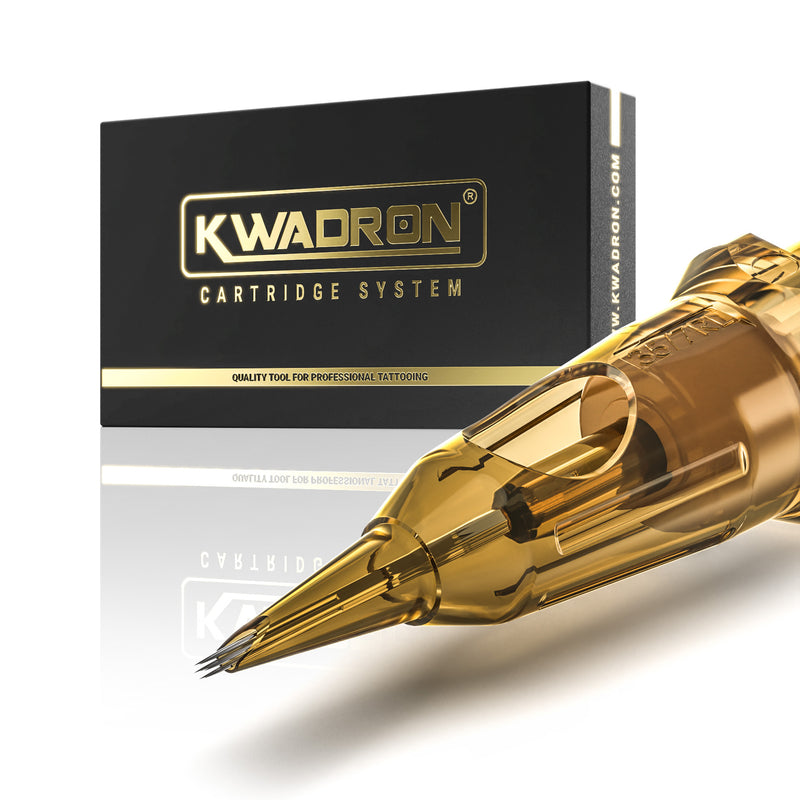
Kwadron Cartridge Needles - Round Liner (RL) Tattoo Cartridges 20pcs
View at Miami Tattoo Supplies: Kwadron Cartridge Needles - Round Liner (RL) Tattoo Cartridges 20pcs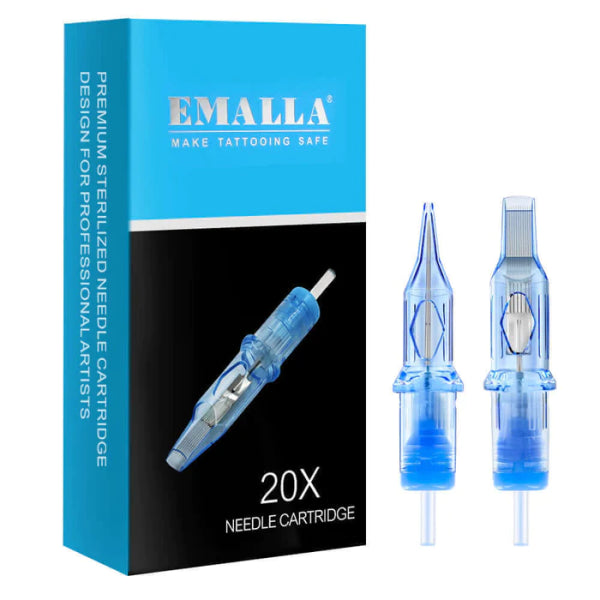
Emalla
Emalla Tattoo Needle Cartridges - Round Liners (20pcs)
View at Miami Tattoo Supplies: Emalla Tattoo Needle Cartridges - Round Liners (20pcs)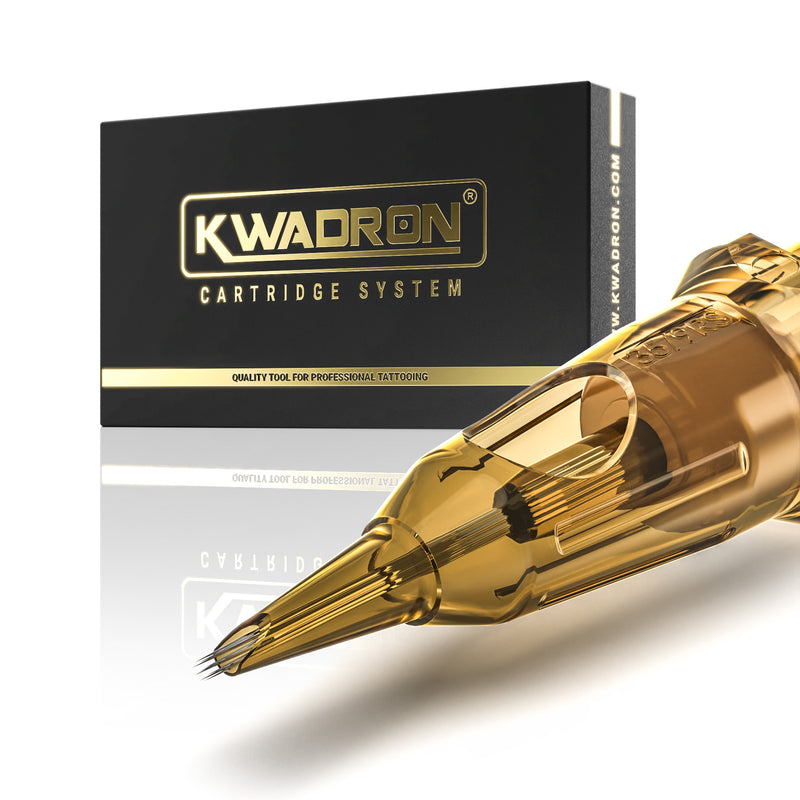
Kwadron
Kwadron Cartridge Needles - Round Shader (RS) Tattoo Cartridges 20pcs
View at Miami Tattoo Supplies: Kwadron Cartridge Needles - Round Shader (RS) Tattoo Cartridges 20pcs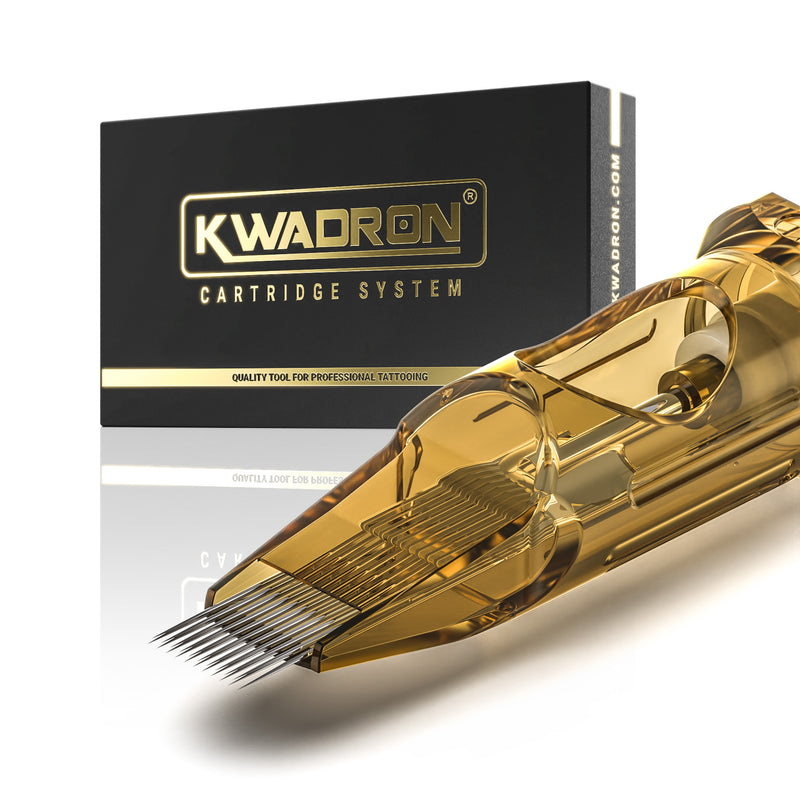
Kwadron
Kwadron Cartridge Needles - Magnum (MG) Tattoo Cartridges 20pcs
View at Miami Tattoo Supplies: Kwadron Cartridge Needles - Magnum (MG) Tattoo Cartridges 20pcs
Eternal Ink
Eternal Tattoo Ink - Lining Black
View at Miami Tattoo Supplies: Eternal Tattoo Ink - Lining Black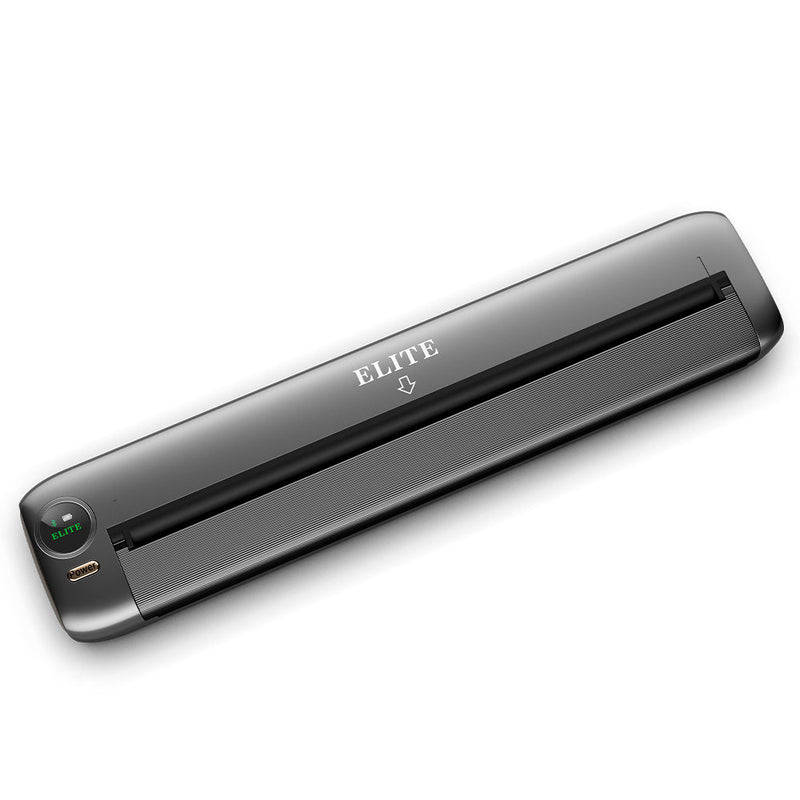
Elite
ELITE POCKET S7 Wireless Tattoo Stencil Printer
View at Miami Tattoo Supplies: ELITE POCKET S7 Wireless Tattoo Stencil Printer
Frequently asked questions
What size needle is used for script tattoos?
Most script is done with a round liner between 3RL and 7RL. A 3RL in #10 suits fine and small script, a 5RL suits medium text, and a 7RL suits larger script and outlined letters. Bold script with thick strokes may use a 9RL or larger, with a round shader to fill.
Can you do lettering with a single needle?
You can, but it is the hardest way. A single needle (1RL) draws the finest line, and very small single-needle text tends to soften and close up as it heals and ages. Most artists use a 1RL only for accents and use a 3RL or 5RL for the letters themselves.
Should lettering be done with a #10 or #12 needle?
Use #10 (0.30 mm) for fine and small script, where a crisp, light line matters. Use #12 (0.35 mm) for medium and bold lettering, where a heavier line and more ink per pass help the letters read and hold. Many artists carry both diameters in their go-to liner sizes.
What needle do you use to fill in letters?
A round shader for small and medium letters, typically 5RS to 9RS in #12, because its looser grouping fills evenly without hard edges. For large filled letters, a small magnum sized to the stroke works faster and needs fewer passes. Outline first with a liner, then fill.
How small can lettering be and still last?
There is no fixed minimum, because it depends on the font, line weight, placement and skin. The safe rule is to keep the gaps inside and between letters at least as wide as the lines. Tiny, tightly spaced text blurs as the tattoo ages, so artists often advise clients to go larger.