
How Deep Should a Tattoo Needle Go Into the Skin?
Short answer
How deep should a tattoo needle go into the skin?
A tattoo needle should deposit ink in the dermis, the layer just below the epidermis, often described as roughly 1 to 2 mm into the skin. The epidermis ranges from about 0.05 mm on the eyelids to 1.5 mm on the palms, per the National Cancer Institute, so depth varies by body area. Too shallow fades; too deep causes blowouts and scarring. Depth is learned under supervision.
Key takeaways
- Ink must pass through the epidermis, which sheds, and sit in the dermis, which holds pigment long term.
- The National Cancer Institute gives the epidermis as 0.05 mm on the eyelids to 1.5 mm on palms and soles, and the dermis as 1.5 to 4 mm.
- Sources commonly describe tattoo depth as about 1 to 2 mm into the skin, but the right depth changes with body area, skin thickness and technique.
- Too shallow gives patchy, fading work; too deep gives heavy bleeding, blowouts and scarring.
- Depth is a hand skill learned on practice skin and under a licensed mentor, not a number dialed into a machine.
On this page 6 sections
Needle depth is the single skill that most separates a tattoo that heals well from one that does not, and it is the one no supply can do for you. This page explains where ink needs to sit, what the skin layers measure, what goes wrong at either extreme, and why depth is learned with a mentor rather than from a number. It is published by Miami Tattoo Supplies (MTS), whose practice skin collection is where depth practice starts.
Where in the skin does tattoo ink go?
Into the dermis. Skin has three layers: the epidermis on the surface, the dermis below it, and the subcutaneous fat layer underneath. The epidermis constantly renews and sheds, so ink left there does not last. The dermis is stable, and pigment placed there stays.
The National Cancer Institute's skin anatomy reference gives the scale. The epidermis is only about 0.05 mm thick on the eyelids and about 1.5 mm on the palms and soles. The dermis is the thickest layer, 1.5 to 4 mm, about 90 percent of the skin's thickness, and it holds the skin's blood vessels, nerve endings, hair follicles and glands. That is why a tattoo that reaches the dermis bleeds a little and hurts: you are working in a living, supplied layer.
| Layer | Thickness (NCI) | What happens to ink there |
|---|---|---|
| Epidermis | 0.05 mm (eyelids) to 1.5 mm (palms, soles) | Sheds as skin renews; ink fades out |
| Dermis | 1.5 to 4 mm | Holds pigment long term: the target |
| Subcutaneous fat | Varies by person and site | Too deep: ink spreads, skin is damaged |
So how deep is that in millimetres?
Often described as roughly 1 to 2 mm into the skin. FK Irons' guide to needle depth puts it that way: many tattoos are deposited approximately 1 to 2 mm into the skin. In a Dermatology Times article, dermatologist Zoe Diana Draelos describes professional tattoos as placing insoluble pigment 1 to 4 mm into the dermis, and notes that about a third of the ink stays in the epidermis and is shed as the tattoo heals.
The figures differ because skin differs. Thin skin on the inner arm, ribs or top of the hand needs less depth than thicker skin on the back or thigh, and the same body area varies between clients. Treat any millimetre figure as a description of where the ink ends up, not a setting.
What happens if the needle goes too shallow or too deep?
Too shallow: ink sits in the epidermis and sheds with it. The healed tattoo looks patchy, faded or grey where it should be solid, and lines may break up. It usually needs reworking.
Too deep: the needle goes past where pigment should sit. FK Irons lists heavy bleeding, scarring and blowouts as the results. A blowout is ink spreading under the skin beyond the line, giving a blurred, bruise-like halo that does not heal away. Overworking the same area, even at the right depth, also damages the skin and slows healing.
What controls needle depth?
Several things together, which is why there is no single setting:
- Needle exposure: how far the needle extends past the tip, set at the grip or dial; FK Irons advises starting with less extension than you think you need. Setting it on a pen is covered in how to set up a tattoo pen machine.
- Stroke length and machine hit: longer strokes and harder-hitting machines drive further. See the stroke length guide.
- Hand pressure, angle and speed: the variables you control in every pass.
- Skin and stretch: how well the skin is stretched and how thick it is at that spot.
- Cartridge brand: cartridge length and membrane tension can change exposure at the same setting.
How do you learn the right depth?
Under supervision, on practice skin first. A mentor watches how your lines heal, adjusts your setup and hand, and teaches you to read the skin as you work. Synthetic skin teaches consistency of hand speed and pressure but does not behave exactly like human skin, which is why supervised client work matters before you work alone. The path is laid out in how to start learning to tattoo safely, and the common errors in beginner tattooing mistakes.
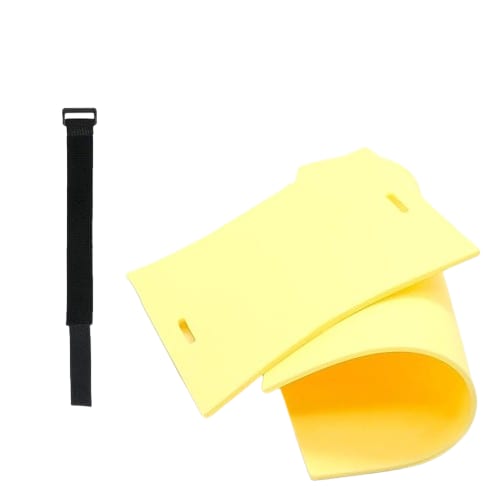
For practice, the 8 x 8 practice skin with straps can be strapped to a limb to mimic working on a curve, and larger sheets such as the full-back 15 x 20 silicone practice skin give room for whole designs. Both are sold by Miami Tattoo Supplies, and the full range is compared in the best tattoo practice skin. Before working on anyone, complete bloodborne pathogens training.
Watch
Gear mentioned
Products from the Miami Tattoo Supplies catalog, the publisher of this site. Check current price and stock on the store.
HQ Silicone Practice Skin with Straps 8x8
View at Miami Tattoo Supplies: HQ Silicone Practice Skin with Straps 8x8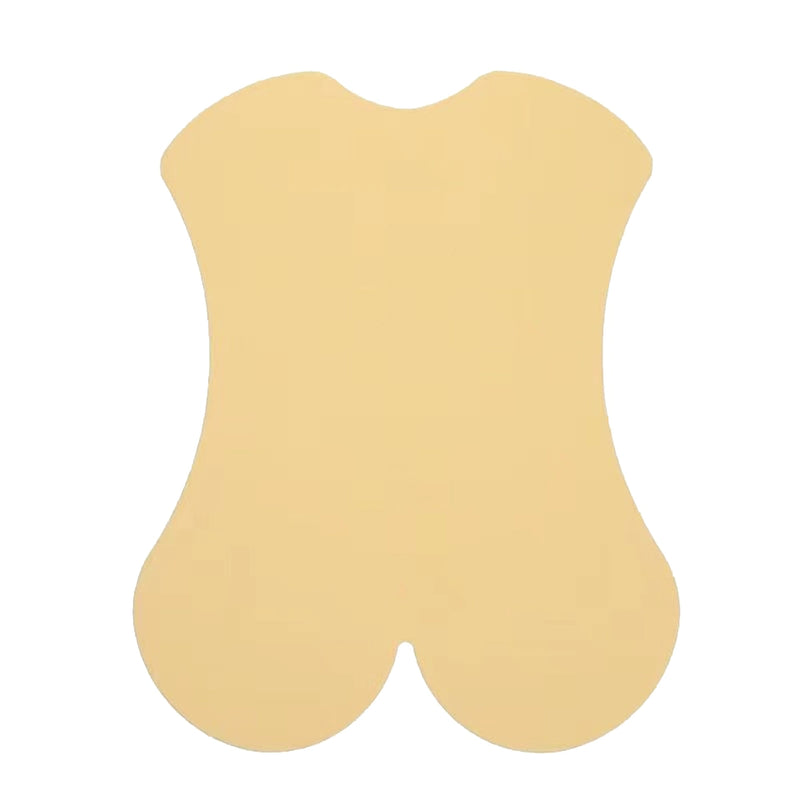
HQ Silicone Practice Skin Full Back 15'x20'
View at Miami Tattoo Supplies: HQ Silicone Practice Skin Full Back 15'x20'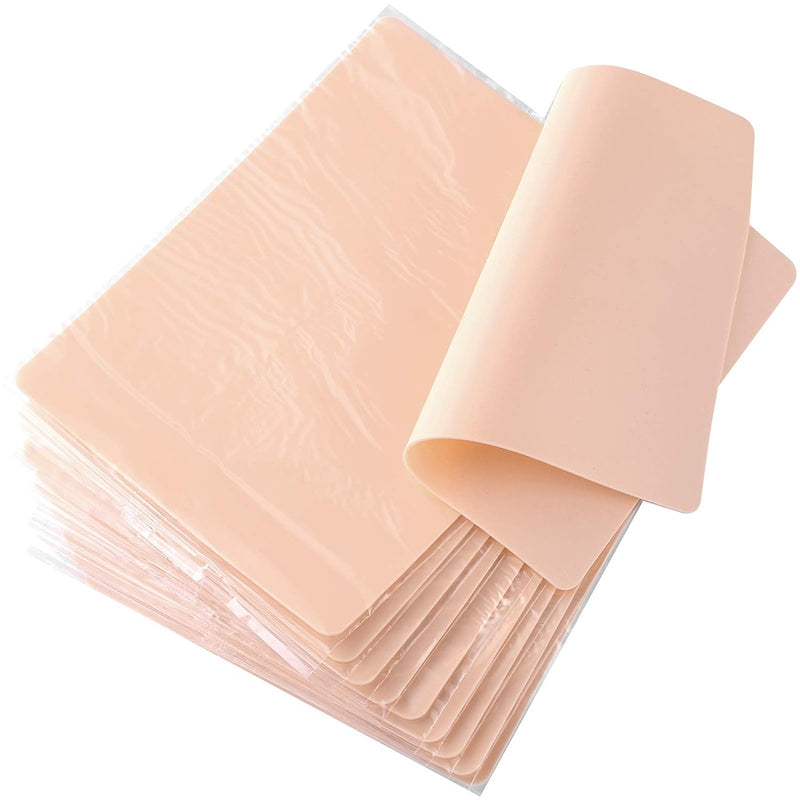
Regular Practice Skin 6x8
View at Miami Tattoo Supplies: Regular Practice Skin 6x8
Kwadron
Kwadron Cartridge Needles - Round Liner (RL) Tattoo Cartridges 20pcs
View at Miami Tattoo Supplies: Kwadron Cartridge Needles - Round Liner (RL) Tattoo Cartridges 20pcs
Frequently asked questions
How deep does a tattoo needle go in mm?
Tattoo depth is commonly described as about 1 to 2 mm into the skin, enough to pass through the epidermis into the dermis. The National Cancer Institute gives the epidermis as 0.05 to 1.5 mm thick depending on the body area, so the right depth varies by location and client. It is learned under supervision, not set as a fixed number.
What happens if a tattoo is too shallow?
Ink left in the epidermis is shed as the skin renews, so the healed tattoo looks patchy, faded or broken where it should be solid. Lines may heal thin or disappear in places. Shallow work usually needs a touch-up once fully healed, which adds trauma to the skin, so consistent depth the first time is the goal.
What causes a tattoo blowout?
A blowout happens when ink is placed too deep or at a bad angle and spreads under the skin beyond the intended line, leaving a blurry halo. It is associated with excessive depth, heavy hand pressure and poor stretch, especially on thin skin. It does not heal away; fixing it usually means covering or reworking the design.
Does tattoo depth change on different body parts?
Yes. Skin thickness varies across the body: the epidermis alone ranges from about 0.05 mm on the eyelids to 1.5 mm on the palms and soles, per the National Cancer Institute. Thin areas such as the inner arm, ribs and hands need a lighter touch than thicker skin on the back, thighs and calves.
Can you learn needle depth on practice skin?
Practice skin is the right place to build consistent hand speed, pressure and angle, but it does not behave exactly like human skin. Depth is finished learning under a licensed mentor who can watch your work heal and correct your technique. Never practice on friends or yourself without a license and supervision.