
Round Liner vs Round Shader Needles: What Is the Difference?
Short answer
What is the difference between round liners and round shaders?
Both are circular needle groupings; the difference is how tightly the needles are packed. A round liner (RL) clusters its needles into a tight point that draws one crisp, solid line. A round shader (RS) spaces the same circle more loosely, so it lays down a softer, wider stroke for small shading areas, fills and bold traditional lines. Use RL for outlines, RS for shading.
Key takeaways
- RL and RS use the same circular layout; RL is tight to a point, RS is spread wider.
- Round liners make clean, solid outlines; round shaders make softer strokes for small shading, fills and heavy lines.
- At the same count, an RS covers more skin than an RL, so a 7RS and a 7RL behave very differently.
- Most artists line with 3RL to 9RL and shade small areas with 5RS to 9RS, then switch to magnums for larger shading.
- Diameter still matters: a #10 round shader gives smoother, lighter shading than a #12 one.
On this page 7 sections
Round liners and round shaders look almost identical in a catalog photo: a ring of needles soldered around a center. They do different jobs, and grabbing the wrong one is one of the most common ways a newer artist gets a blurry outline or a patchy fill. Here is how they differ, what sizes people actually use, and when each one earns its place on the tray. This guide is published by Miami Tattoo Supplies (MTS), which sells both groupings in its needle cartridge collection.
What is the difference between a round liner and a round shader?
Packing density. In a round liner the needles are pulled together so the tips converge on a single tight point. In a round shader the same circle is soldered looser, so the tips sit apart and spread the ink over a wider, softer area.
That one change drives everything else. A tight cluster deposits ink in one concentrated track, which is why liners draw a solid, crisp edge in a single pass. A loose cluster spreads the same amount of steel over more skin, so each pass is softer and wider. Cheyenne lists both in its Safety Cartridge range, with liners ground to a super long taper (SLT) and shaders to a long taper (LT), which reflects the same logic: liners are built for a fine point, shaders for spread.
| Round liner (RL) | Round shader (RS) | |
|---|---|---|
| Needle layout | Tight circle, converging point | Looser circle, open spacing |
| Line quality | Crisp, solid, defined | Softer edge, slightly wider |
| Main jobs | Outlines, script, detail | Small shading, fills, bold lines |
| Typical sizes | 1RL to 14RL | 3RS to 14RS |
| Common diameters | #12, #10, #08 and finer | #12, #10, some #08 |
When should you use a round liner?
Use a round liner whenever the edge has to be clean: outlines, lettering, fine detail, and any line that will hold the rest of the tattoo together as it ages. The count sets the line weight.
- 1RL to 3RL: fine line, script, micro detail. Smaller diameters (#10, #08) make these finer still.
- 5RL to 7RL: the everyday outline range for most custom work.
- 9RL to 14RL: heavy traditional outlines and bold lettering.
Kwadron's round liner cartridges at the store run from 1RL to 14RL across #12, #10 and #08, and Emalla's go down to #6 and #4 in 3RL, which shows how far the liner range now reaches into fine-line work. Choosing between the everyday sizes is covered in 3RL vs 5RL vs 7RL vs 9RL, lettering in the best needles for lettering and script, and fine work in the best needles for fine line tattoos.
When should you use a round shader?
Use a round shader for areas too small or too tight for a magnum: shading in small spaces, filling small solid areas, whip shading, and bold lines where you want a little softness. The hand techniques themselves are in whip, pendulum and stipple shading. Many traditional artists also line with a round shader to get a heavy, slightly softer line than the same count of liner would give.
- 3RS to 5RS: tight shading, small fills, dot work textures.
- 7RS to 9RS: small to medium shading areas and bold outlines.
- 11RS to 14RS: larger solid fills where a magnum feels too wide for the shape.
Once an area is bigger than a coin or two, most artists move to a magnum, which covers more skin per pass with less trauma. The magnum options are in magnum needles explained, and the full shading toolkit is in the best needles for shading and color packing.
Does diameter change how a liner or shader behaves?
Yes, and it is the second decision after the grouping. A #12 (0.35 mm) needle carries more ink per pass and gives a bolder result; a #10 (0.30 mm) bugpin gives a finer line and smoother, lighter shading; #08 (0.25 mm) is finer again. The same 7RS in #10 will shade more gently than in #12. If the codes on the box are new to you, the needle code decoder lists every diameter.
Can one needle do both lining and shading?
It can, with compromises, and plenty of artists line with a shader on purpose. Going the other way works less well: shading with a round liner concentrates every pass on a small point, which makes smooth gradients slow and is harder on the skin. If you are building a first tray, the safe starting set is a few round liners for outlines (for example 3RL, 5RL, 7RL in #12), one or two round shaders, and a curved magnum.
What it costs at the time of writing
Box prices at Miami Tattoo Supplies at the time of writing (November 2026), for 20 cartridges:
| Cartridge | Price range per box |
|---|---|
| Kwadron round liner (RL) | $31.49–$39.99 |
| Kwadron round shader (RS) | $31.49–$39.99 |
| Bishop Da Vinci V2 round liner / round shader | $32.49–$39.99 |
| Emalla round liner / round shader | $25.99–$32.99 |
| Elite Infini Plus round liner / round shader | $25.99–$29.99 |
Larger groupings sit at the top of each range. You can compare all of them in the store's needle cartridge collection, or start with the Kwadron round shader cartridges if you already line with Kwadron. Brand background is on the Kwadron brand guide.
Watch
Gear mentioned
Products from the Miami Tattoo Supplies catalog, the publisher of this site. Check current price and stock on the store.
Kwadron
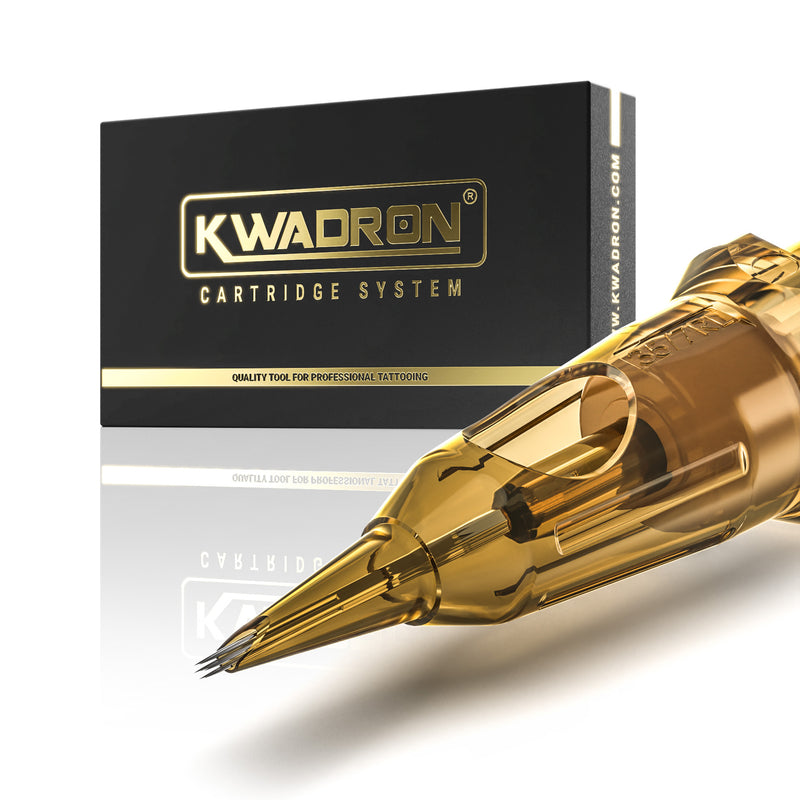
Kwadron Cartridge Needles - Round Liner (RL) Tattoo Cartridges 20pcs
View at Miami Tattoo Supplies: Kwadron Cartridge Needles - Round Liner (RL) Tattoo Cartridges 20pcs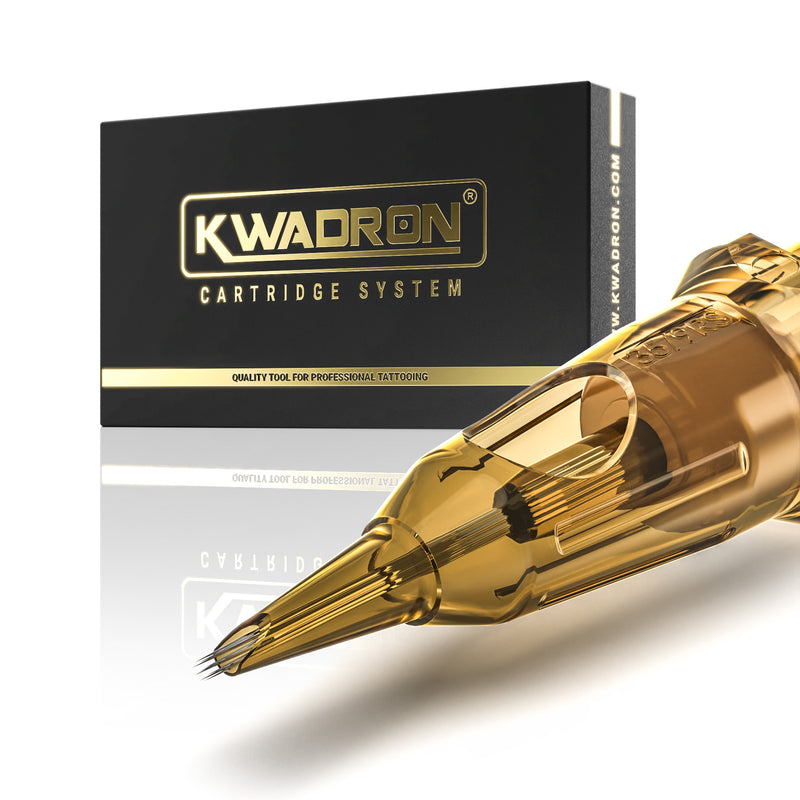
Kwadron
Kwadron Cartridge Needles - Round Shader (RS) Tattoo Cartridges 20pcs
View at Miami Tattoo Supplies: Kwadron Cartridge Needles - Round Shader (RS) Tattoo Cartridges 20pcs
Bishop
Bishop Da Vinci V2 Tattoo Cartridge Needles 20pcs - Round Shaders
View at Miami Tattoo Supplies: Bishop Da Vinci V2 Tattoo Cartridge Needles 20pcs - Round Shaders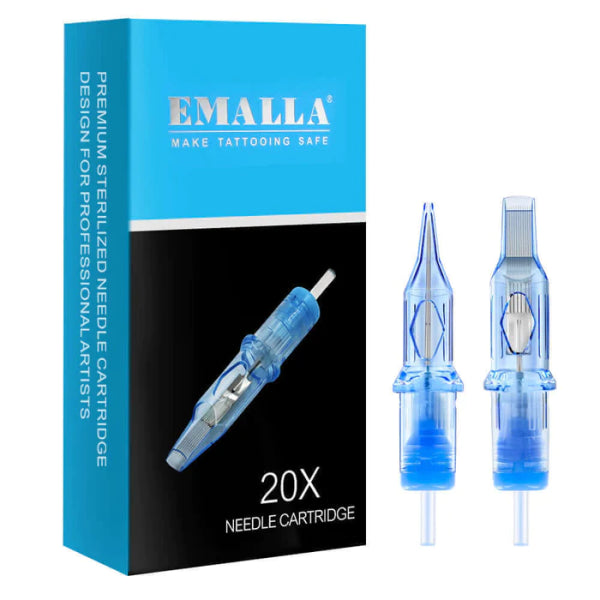
Emalla
Emalla Tattoo Needle Cartridges - Round Liners (20pcs)
View at Miami Tattoo Supplies: Emalla Tattoo Needle Cartridges - Round Liners (20pcs)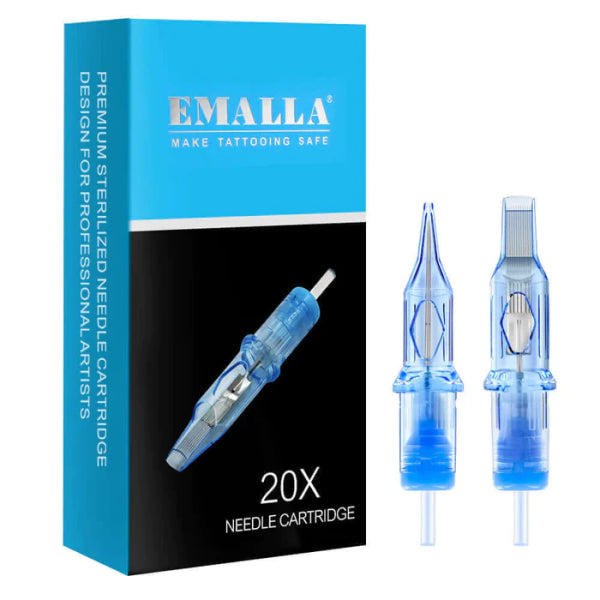
Emalla
Emalla Tattoo Needle Cartridges - Round Shaders (20pcs)
View at Miami Tattoo Supplies: Emalla Tattoo Needle Cartridges - Round Shaders (20pcs)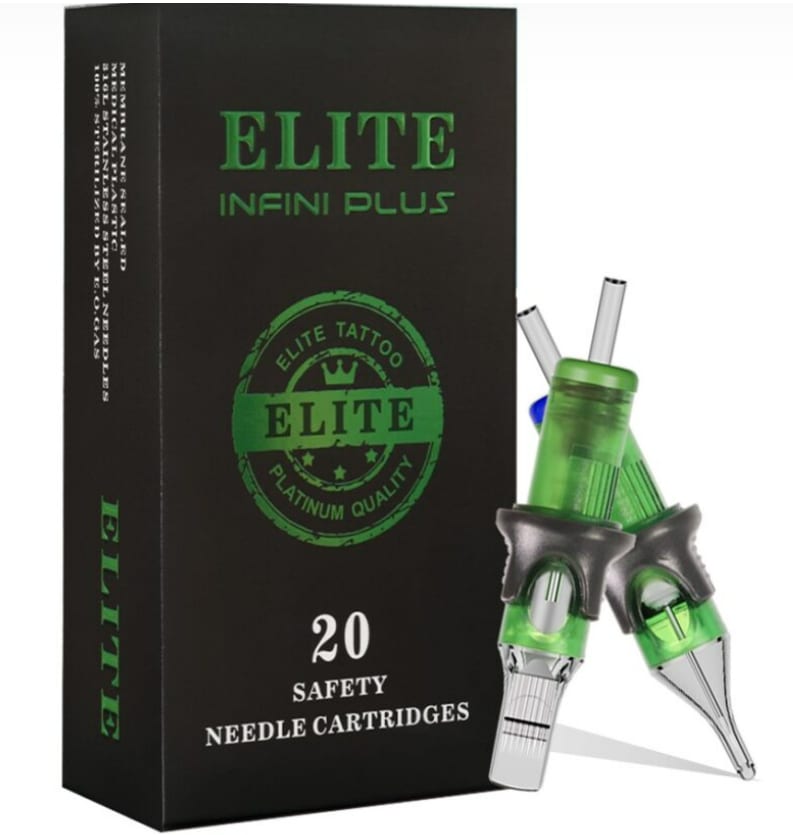
Elite
ELITE INFINI PLUS Tattoo Needle Cartridges - Round Shader (20pcs)
View at Miami Tattoo Supplies: ELITE INFINI PLUS Tattoo Needle Cartridges - Round Shader (20pcs)
Frequently asked questions
Can I line with a round shader?
Yes. Lining with a round shader gives a heavier line with a slightly softer edge, and many traditional artists do it deliberately for bold outlines. The trade-off is less crispness on fine details. For small lettering or delicate lines, a round liner of the right count will give a cleaner result.
What size round liner is best for outlining?
For most custom work, 5RL to 7RL in #12 handles standard outlines, 3RL suits fine detail and smaller designs, and 9RL to 14RL suits bold traditional work. The right size depends on the scale of the piece and the weight of line the design calls for, so many artists keep three or four sizes on hand.
Is a round shader the same as a magnum?
No. A round shader arranges its needles in a loose circle; a magnum lines them up in two flat rows like a blade. Round shaders suit small areas and bold lines, while magnums cover larger shading and color areas faster. For anything bigger than a small patch, most artists reach for a magnum or curved magnum.
Why do my round liner lines look blown out or shaky?
Common causes are needle depth, hand speed, machine settings and stretch rather than the needle grouping itself. A liner that is too large for the line weight can also look heavy. Practice on synthetic skin and work under a supervising artist before tattooing clients; depth control in particular is learned with supervision.