
How to Line a Tattoo: Needle, Stroke, Voltage and Hand Speed
Short answer
How do you line a tattoo?
To line a tattoo, use a round liner sized to the line, a 3RL for fine work or a 7RL to 9RL for outlines, on a firm-hitting stroke with little give. Set a short needle hang, start voltage low, stretch the skin flat, and move at one steady speed so the line goes in on a single pass. Learn it on practice skin under a licensed mentor.
Key takeaways
- A clean line comes from four things working together: the right round liner, a firm hit, a steady hand speed and a flat stretch.
- Pick the liner by the weight you want in one pass; tracing a thin line two or three times overworks the skin.
- FK Irons gives 7 to 8.5 V as a baseline for fine line and 8 to 10.5 V for bold lining and large groupings.
- Too fast a hand skips and leaves gaps; too slow a hand overworks the skin and risks blowouts.
- Lining is learned on synthetic skin and then on clients only under a licensed mentor; never on friends or at home.
On this page 8 sections
Lining is the first technique an apprentice is taught and the one clients judge first: a wobbly or patchy outline is visible from across the room. A clean line is not a gift; it is a set of supply choices and hand habits that you can learn. This page explains each one. It is written for apprentices training under a licensed mentor and for artists tightening their technique. Tattooing people requires a license (in Florida, from the Department of Health) and bloodborne pathogen training, and all of this is practiced on synthetic skin first, such as the sheets in the practice skin collection at Miami Tattoo Supplies, the store that publishes this site.
Which needle should you line with?
A round liner (RL), sized to the line weight you want in one pass. The tight, pointed grouping draws a solid, crisp line.
| Line | Liner | Diameter |
|---|---|---|
| Fine line, small script | 3RL (1RL for the finest detail) | #10 (0.30 mm) |
| Light outlines on small pieces | 5RL | #12 or #10 |
| Everyday outlines | 7RL | #12 (0.35 mm) |
| Bold outlines, traditional | 9RL to 14RL | #12 |
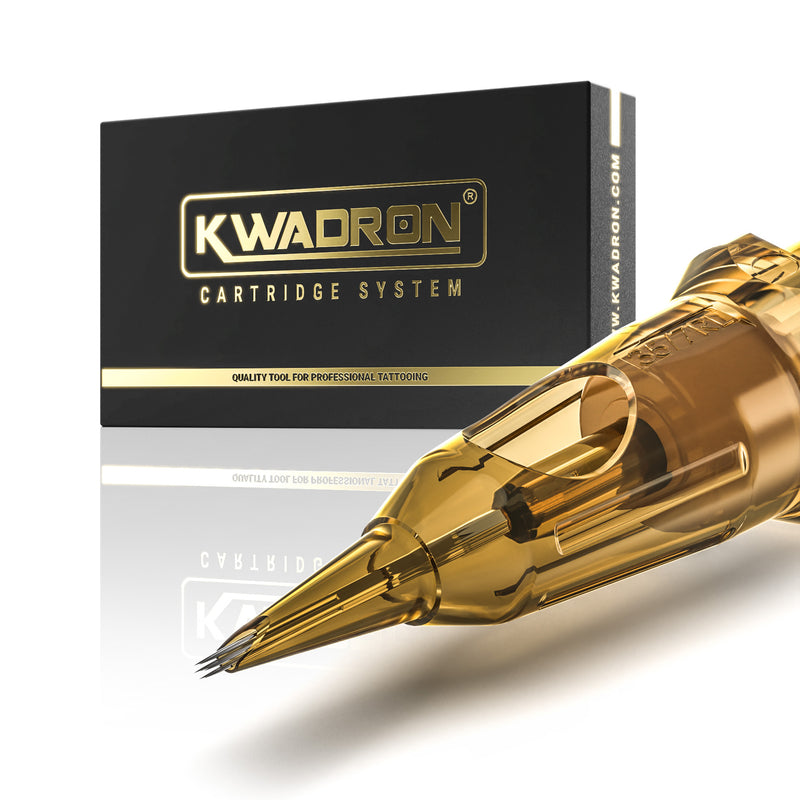
The rule that saves the most skin: if you want a heavier line, use a bigger liner rather than going over a small one two or three times. Each extra pass is more trauma and more chance of a blowout. The round liner size comparison covers each size, and the Kwadron round liner cartridges at MTS run from 1RL to 18RL.
What stroke and give work best for lining?
A firm hit. Lining wants the needle to go in cleanly on one pass, so most artists line on a medium to long stroke, around 4.0 to 5.0 mm. Bishop sells its Power Wand Liner at 5.0 mm and describes it as made for line work of all types; FK Irons offers the Flux Max at 4.0 or 4.5 mm for lining. If your machine has electronic give, FK Irons suggests low or off for line work, for a crisp, punchy hit. A soft, short stroke can line, especially fine line, but it is slower and less forgiving of hand speed. The stroke length guide explains the ranges.
What voltage should you line at?
Start at the low end and raise it until the line goes in cleanly. FK Irons' voltage guide gives these baselines for modern rotaries:
- fine line and detail: 7 to 8.5 V;
- bold lining and large groupings: 8 to 10.5 V.
Adjust in steps of 0.2 to 0.5 V. Bigger liners load the motor and usually need a little more voltage than a 3RL. FK Irons also notes its own machines run lower than many others, so your machine's numbers may differ. Match voltage to hand speed: a faster hand needs more speed from the machine, a slower hand less.
How far should the needle hang for lining?
Less than for shading. FK Irons describes lining as a controlled, shallower setup, about 1.5 mm as a general approach, and advises starting with less extension than you think you need. A harder-hitting machine may need less hang to reach the same depth. The target is always the dermis; see how deep a tattoo needle should go.
How do you actually pull a clean line?
Set up so the line goes in on one smooth pass:
- Load the needle lightly. Dip into a fresh ink cap of lining black and let the excess drip; an overloaded tip floods the stencil.
- Stretch the skin flat. Use your free hand (and your mentor's or a second point of tension on awkward areas) to pull the skin taut around the line. Loose skin makes wavy lines and uneven depth.
- Start moving before you touch down. Bring the needle into the skin already in motion and lift out while still moving. Stopping on the skin leaves a blob at the start or end of the line.
- Keep one speed. Move at a steady pace the machine can keep up with. Too fast skips and leaves gaps; too slow overworks the skin.
- Keep the angle consistent. Do not tilt the machine sideways mid-line; a changing angle changes depth and leaves fuzzy edges.
- Plan the order. Work so your hand does not drag across lines you have just made or smear the stencil, which usually means starting at the bottom of the design and working away from your hand side.
- Wipe lightly. Use a spray bottle of diluted green soap and a light touch, so you clear ink without rubbing off the stencil.
Long lines are easier in one committed motion than in short, hesitant strokes. Brace your hand on the skin or your other hand to keep it steady. The Tattooing 101 video on this page demonstrates hand position and line angle in detail.
What are the common lining problems?
| Problem | Likely cause | First fix |
|---|---|---|
| Gaps or patchy line | Hand too fast, needle too shallow, voltage too low | Slow down; check hang; raise voltage slightly |
| Line spreads or blurs | Too deep, too slow, angle too flat | Reduce hang; speed up; steepen the angle |
| Wobbly line | Short hesitant strokes, no brace, loose skin | One committed motion; brace; stretch flat |
| Blobs at ends | Stopping on the skin | Enter and exit while moving |
| Stencil smeared | Heavy wiping, wrong order | Light wipes; work away from your hand |
Blowouts get their own page: what causes tattoo blowouts.
How should you practice lining?
On synthetic skin, in drills, before designs. Fill a sheet with straight lines, then circles, then curves of the same weight, and change one variable at a time: liner size, voltage, hang. Synthetic skin is useful for checking settings and hand control, though FK Irons notes it does not perfectly replicate real skin, so your mentor's supervision on real clients is the final step. Strapped sheets that wrap around a leg or arm help you practice stretching on a curve.
Watch
Gear mentioned
Products from the Miami Tattoo Supplies catalog, the publisher of this site. Check current price and stock on the store.
Kwadron
Kwadron Cartridge Needles - Round Liner (RL) Tattoo Cartridges 20pcs
View at Miami Tattoo Supplies: Kwadron Cartridge Needles - Round Liner (RL) Tattoo Cartridges 20pcs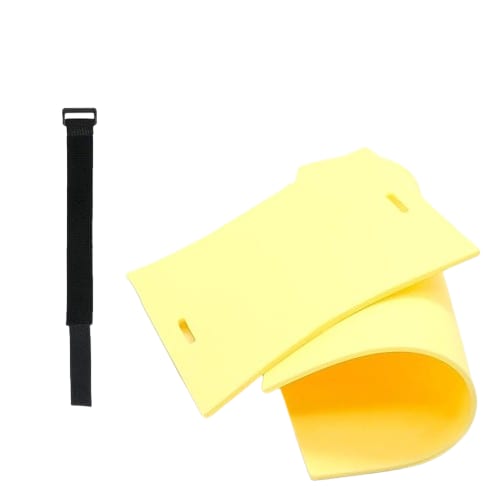
HQ Silicone Practice Skin with Straps 8x8
View at Miami Tattoo Supplies: HQ Silicone Practice Skin with Straps 8x8
Eternal Ink
Eternal Tattoo Ink - Lining Black
View at Miami Tattoo Supplies: Eternal Tattoo Ink - Lining Black
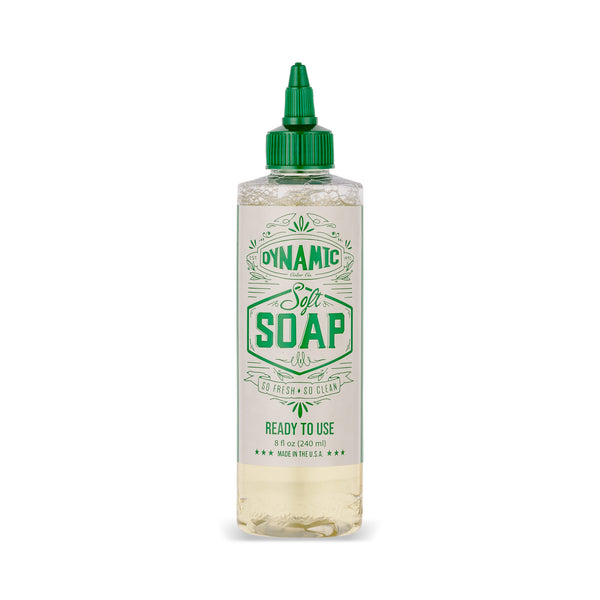
Dynamic Color
Dynamic Soft Green Soap Bottle 8oz
View at Miami Tattoo Supplies: Dynamic Soft Green Soap Bottle 8oz
Hive Cups - Rinse Cups and Cartridge Holder Lids
View at Miami Tattoo Supplies: Hive Cups - Rinse Cups and Cartridge Holder Lids
Frequently asked questions
What needle do you use to line a tattoo?
A round liner (RL). Most outlines are done with a 3RL to 9RL: a 3RL in #10 for fine line and small script, a 7RL in #12 for everyday outlines, and a 9RL or larger for bold traditional lines. Choose the size that gives the line weight you want in one pass.
Why are my tattoo lines shaky?
Usually from short, hesitant strokes, an unsupported hand or loose skin. Brace your hand on the skin or your other hand, stretch the area flat, and pull each line in one committed motion at a steady speed. Practice straight lines, circles and curves on synthetic skin until the weight stays even.
Should you go over a tattoo line twice?
Avoid it. Each extra pass adds trauma and raises the risk of blowouts and scarring. If a line needs to be heavier, switch to a bigger liner. If the line skipped, check your hand speed, needle hang and voltage before retracing, and touch up only the gaps.
What voltage do you line a tattoo at?
It depends on the machine and grouping. FK Irons gives 7 to 8.5 V as a baseline for fine line and 8 to 10.5 V for bold lining and large groupings on modern rotaries, and recommends 5 to 9 V for its own machines. Start low, raise in small steps, and confirm on practice skin.
Do you line or shade a tattoo first?
Most artists line first, because the outline fixes the design and the stencil fades as you work. Some styles, such as soft black and grey realism, shade first or use very light lines. Follow your mentor's method while you learn, and plan the order so you do not wipe away stencil you still need.