
How to Set Up a Tattoo Pen Machine: Cartridge, Needle Depth and Voltage
Short answer
How do you set up a tattoo pen machine?
Charge the battery, disinfect the pen and bag it, then twist in a sealed membrane cartridge until it seats. Set needle hang with the grip dial, starting with less than you think you need. Start voltage at the low end of the maker's guidance, such as FK Irons' 5 to 9 volts, raise it in small steps, and test on practice skin before any client work.
Key takeaways
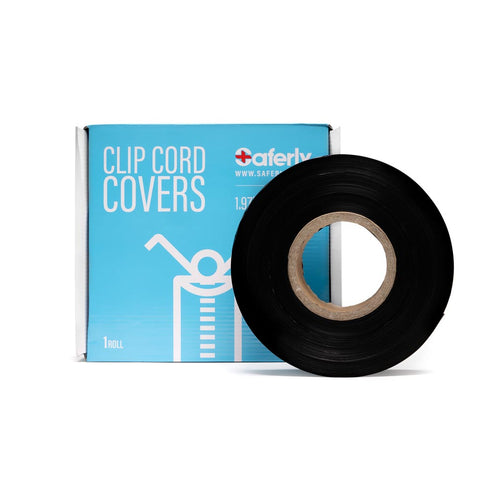
- Barrier the machine before you load a needle: a machine bag or pen cover over the body, a clip cord sleeve if it runs corded.
- Needle hang is set by the grip dial or collar; FK Irons advises starting with less extension than you think you need.
- Start voltage low and raise it in 0.2 to 0.5 V steps; FK Irons recommends 5 to 9 V for its machines depending on the job.
- Test every new setup on practice skin; synthetic skin checks the settings but does not behave exactly like real skin.
- Used cartridges go straight into a sharps container; the pen is cleaned by the maker's method, never autoclaved unless the maker allows it.
On this page 9 sections
A pen machine has fewer parts to tune than a coil, but the order you set it up in still matters: barrier before needle, depth before voltage, practice skin before skin. This page walks through the setup for a wireless or RCA pen, using the machine makers' own guidance where they publish it. It is written for licensed artists and for apprentices working under a licensed mentor; in Florida, all forms of tattooing require a license from the Department of Health. Pens, cartridges and barriers are in the machines in stock at Miami Tattoo Supplies, the store that publishes this site.
What do you need before you start?
Lay everything out before you open a needle. For one setup you need:
- the pen and a fully charged battery (or a power supply and RCA clip cord for a corded pen);
- a machine bag or pen cover, plus a clip cord sleeve if it is corded;
- a disposable grip cover if your pen uses one;
- a sealed cartridge in the grouping you plan to use;
- a disinfectant the pen's maker approves, and gloves;
- practice skin for the test run;
- a sharps container within reach.
Read your machine's manual first. Makers differ on cleaning, battery care and which cartridges they recommend, and the manual wins over any general guide, including this one.
Step 1: Charge the battery
Charge fully before first use; Bishop prints that instruction on its Power Wand Advanced set. FK Irons lists a full charge of the PowerBolt II at 2 hours with the USB-C cable. Keep a second battery charging while you work if your machine takes swappable packs; the power supplies and batteries guide explains run times.
Step 2: Clean and barrier the machine
Wipe the pen with a disinfectant its maker approves and let it sit for the contact time on the label. Do not assume a pen can go in an autoclave: Bishop states none of its machines can be autoclaved and recommends cold sterilization with a germicidal agent, plus wrapping and bagging before use.
Then cover it. Slide a machine bag or pen cover over the body and battery, leaving the cartridge end open. For an RCA pen, sleeve the clip cord along its full length. If you change cartridges mid-session, the bag stays on; if it tears, replace it. The barrier protection guide covers the rest of the station.
Step 3: Load the cartridge
Open the cartridge only when you are ready to use it, and check that the blister is sealed and in date. Push it into the grip and twist until it seats; most current pens take twist-in membrane cartridges. With the machine off, the needle should sit inside the tip.
Most cartridges fit most pens, but not all: grip bore, cartridge length and needle travel vary. If a cartridge rattles, does not seat or runs inconsistently, stop and use a different brand. See are tattoo cartridges universal.
Step 4: Set the needle hang
Needle hang is how far the needle travels past the tip of the cartridge, and on a pen you set it with the dial or collar near the grip. FK Irons' advice is to load the cartridge, turn the machine on, adjust according to the manufacturer's recommendations, and start with less extension than you think you need.
FK Irons publishes these as general starting points for the depth each technique aims for, not settings:
| Technique | FK Irons' general approach |
|---|---|
| Lining | Controlled, shallower setup, about 1.5 mm |
| Shading | Smooth pigment distribution, about 2 mm |
| Color packing | Efficient saturation without excess trauma, about 2 to 2.5 mm |
Hang and hit interact. FK Irons notes that a harder-hitting setup may need less protrusion, and a softer one a little more, to reach the same depth. Depth itself is a hand skill, explained in how deep a tattoo needle should go.
Step 5: Set the starting voltage
Start low and work up. FK Irons recommends 5 to 9 volts for its machines depending on the job and says its machines usually run lower than others. In its voltage guide it gives baselines for modern rotaries:
- fine line and detail: 7 to 8.5 V;
- black and grey shading: 6.5 to 8 V;
- color packing: 7.5 to 9.5 V;
- bold lining and large groupings: 8 to 10.5 V.
Adjust in steps of 0.2 to 0.5 V rather than a full volt. Check your own machine's operating range first; the voltage guide lists the ranges of the pens MTS stocks. If your pen has a give setting, leave it at the middle level until you have a baseline.
Step 6: Test on practice skin
Run lines and a small shaded area on practice skin before you touch a client. Look for a line that goes in on one pass without skipping, and a needle that runs smoothly without the machine bogging down. If lines are patchy, look at hang and hand speed before you add voltage. FK Irons points out that synthetic skin is useful for testing settings and hand control but does not perfectly replicate real skin, so the final check is under your mentor's eye. Practice sheets are in the practice skin collection.
Step 7: Break down after the session
Release the cartridge straight into a sharps container; never recap it or set it down. Remove the bag, cord sleeve and grip cover inside gloves, then clean the pen by its maker's method and recharge the battery. Our guide to sharps disposal covers containers and pickup.
Gear mentioned
Products from the Miami Tattoo Supplies catalog, the publisher of this site. Check current price and stock on the store.
Emalla
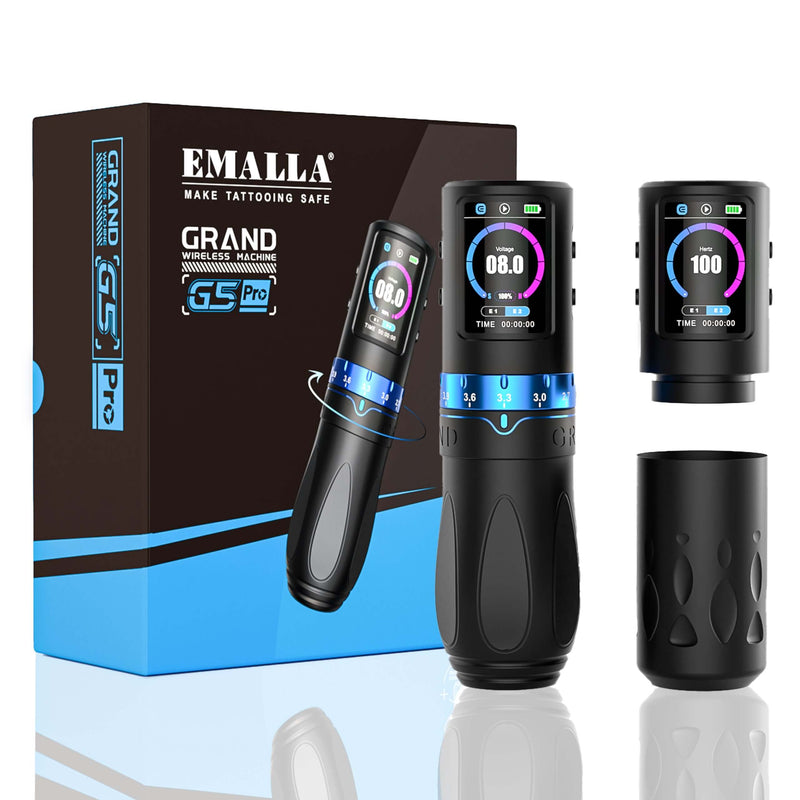
EMALLA Grand G5 Pro Wireless Tattoo Pen Machine (Adjustable Strokes)
View at Miami Tattoo Supplies: EMALLA Grand G5 Pro Wireless Tattoo Pen Machine (Adjustable Strokes)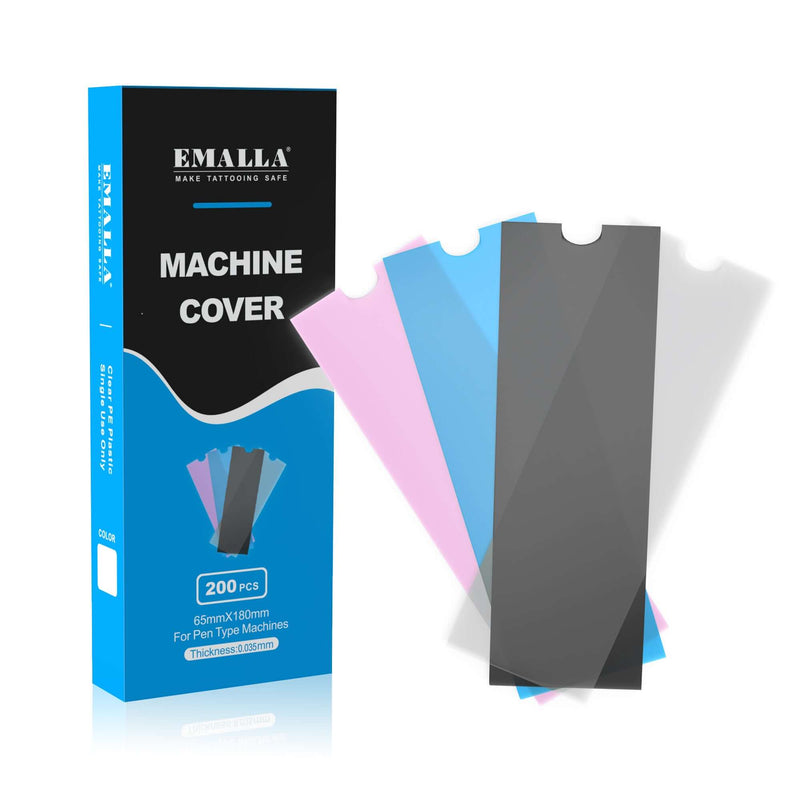
Saferly
Clip Cord Sleeves + Machine Bags - Cut-to-Length Roll
View at Miami Tattoo Supplies: Clip Cord Sleeves + Machine Bags - Cut-to-Length Roll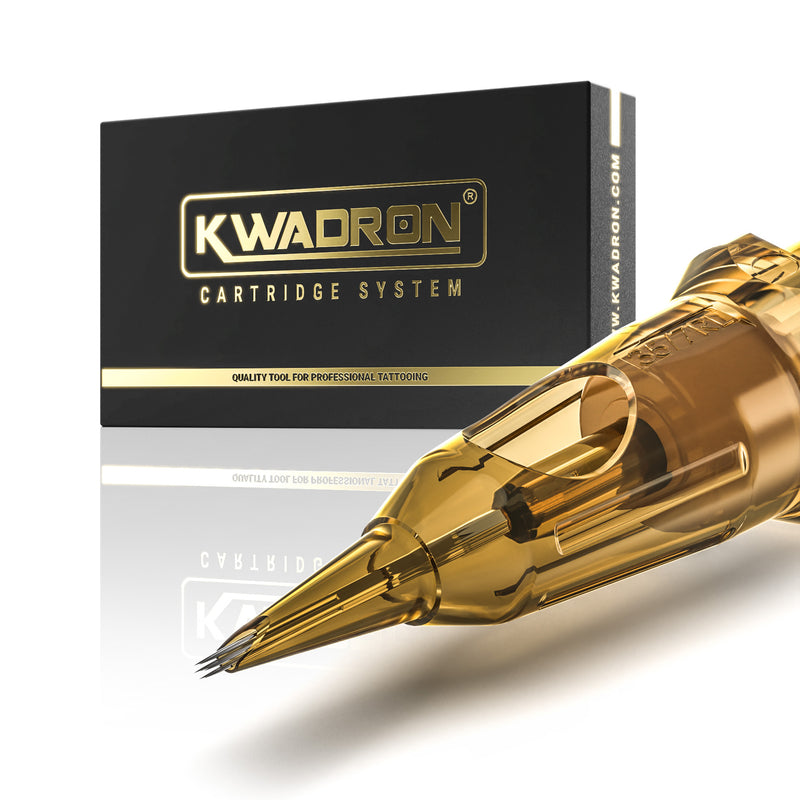
Kwadron
Kwadron Cartridge Needles - Round Liner (RL) Tattoo Cartridges 20pcs
View at Miami Tattoo Supplies: Kwadron Cartridge Needles - Round Liner (RL) Tattoo Cartridges 20pcs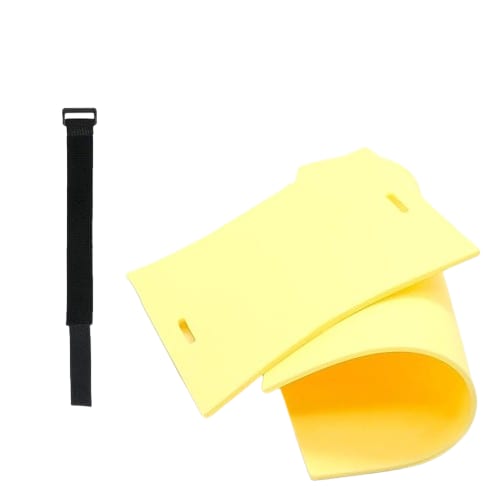
HQ Silicone Practice Skin with Straps 8x8
View at Miami Tattoo Supplies: HQ Silicone Practice Skin with Straps 8x8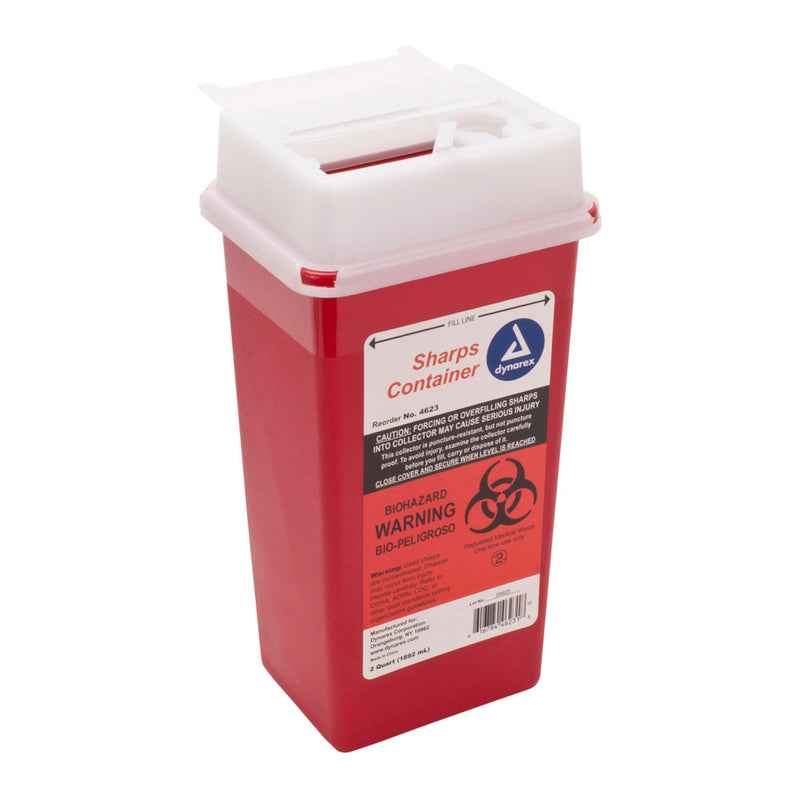
Dynarex
Sharps Bio Hazard Tattoo Container 1 Quart.
View at Miami Tattoo Supplies: Sharps Bio Hazard Tattoo Container 1 Quart.
Frequently asked questions
How far should the needle stick out on a tattoo pen?
There is no universal figure, because hang depends on the machine's hit, the grouping and the skin. FK Irons advises starting with less extension than you think you need and testing on practice skin. It gives general depth approaches of about 1.5 mm for lining and about 2 mm for shading as starting points, not settings.
What voltage should I run my tattoo pen at?
Start at the low end of your maker's guidance and raise it slowly. FK Irons recommends 5 to 9 volts for its machines, and its voltage guide gives baselines from 6.5 to 8 V for black and grey shading up to 8 to 10.5 V for bold lining. Other machines differ, so check the manual.
Do I need a power supply for a wireless pen?
No, a wireless pen runs from its battery. You need a power supply and RCA clip cord only for a corded pen, or for a wireless pen you want to run corded through an RCA adapter. Many artists keep a power supply as a backup in case every battery runs flat during a long day.
Can you put a tattoo pen in an autoclave?
Only if its maker says so, and most do not. Bishop, for example, states that none of its machines can be autoclaved and that doing so voids the warranty. Clean the pen with an approved disinfectant and barrier it with a machine bag or pen cover before each client.
Why does my cartridge rattle or skip in the pen?
Usually the cartridge is not fully seated, or it is a poor fit for that grip's bore, length or needle travel. Twist it in again until it locks, then test. If it still rattles, try another brand. A damaged membrane can also cause inconsistent running; replace the cartridge rather than adjusting around it.