
Tattoo Power Supplies and Batteries: How to Choose
Short answer
What power supply do I need for a tattoo machine?
Match the power source to your machine's connector and voltage range. A corded rotary or pen needs a regulated tattoo power supply, a foot pedal and an RCA cord; a coil needs the same supply with a clip cord. A wireless machine needs its own brand's battery, plus a spare. An RCA battery pack can make a corded rotary wireless if its output covers the voltage you run.
Key takeaways
- Check the connector first: most corded rotaries and pens use RCA, coils use a clip cord.
- A wired supply needs a stable output, a clear voltage display and a foot pedal; dual-output supplies run a liner and shader.
- Brand batteries are not interchangeable: PowerBolt II fits FK Irons wireless machines, and Bishop's XLUMEN and Power Wand Advanced batteries do not fit each other.
- A basic corded setup at Miami Tattoo Supplies, supply plus pedal plus RCA cord, costs about $60 at the time of writing.
- Own a backup: a spare battery or a basic wired supply prevents a dead session.
On this page 8 sections
A machine is only as consistent as the power behind it. A supply that sags or a battery that drops voltage shows up as wobbling lines and patchy shading long before you suspect the electronics. This guide explains what each type of power source does, which connectors fit which machines, and what to buy. It is written by Miami Tattoo Supplies (MTS), and prices are from the MTS catalog at the time of writing (November 2026); the power supplies and batteries collection has the current range.
What power supply do you need for a tattoo machine?
You need a regulated DC source that covers your machine's operating range and has the right plug. For corded machines that means a power supply, a cord and a foot pedal. For wireless machines it means the battery made for that machine, plus a spare. Check your machine's range first: the FK Irons Flux Max runs 4 to 12 V and the FK One Adjust 5 to 12 V, per FK Irons, and the Salvation Premium Rotary Pen 7 to 12 V, per its listing. The voltage guide covers where to set it.
Which connector does your machine use?
| Connector | Used by | Notes |
|---|---|---|
| RCA | Most corded rotaries and pens | Bishop Power Wand RCA, Mast Tour, Emalla G5 Pro RCA module |
| Clip cord | Coil machines, some frame rotaries | Clips onto the machine's binding posts |
| Brand battery mount | Wireless machines | FK PowerBolt II, Bishop Advanced and XLUMEN, Emalla packs |
The power supply end of a cord is usually a standard 1/4 in jack, so one supply can run an RCA cord for a rotary or a clip cord for a coil. A few pens use other plugs; check the socket on your machine before buying a cord or battery.
Wired power supplies
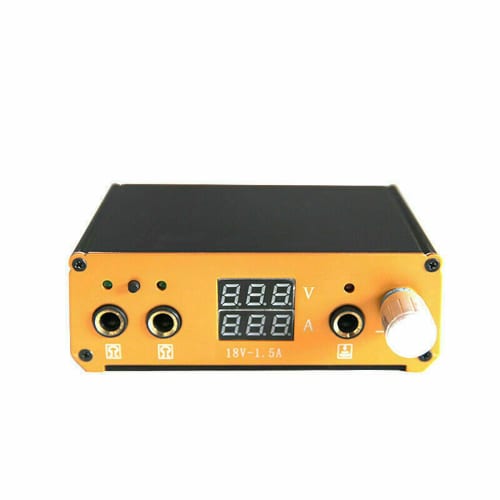
A wired supply is the cheapest, most reliable power for a corded machine. Look for a stable output that does not drop when the motor is loaded, a voltage display you can read at a glance, and a foot pedal input. Dual-output supplies let you run a liner and a shader from one box.
Two budget options at MTS:
- Salvation Dual Input Digital Power Supply ($29.95): liner, shader and pedal jacks, separate voltage dials for each machine and an LCD readout.
- Mini Digital Power Supply ($24): a very small supply with a voltage knob, listed with a 0 to 18 V output and 110 V US input. Its listing carries a 30-day warranty.
Neither is a flagship supply, but both are fine for a backup or a learning setup. Add a foot pedal (from $10 for the ultra-slim pedal, $34 for the premium red foot switch, or $74.99 for Peak's aluminum Cryo footswitch with a 1/4 in mono jack) and an RCA clip cord ($19.50). A Salvation supply, the ultra-slim pedal and an RCA cord come to about $60.
Brand batteries for wireless machines
Wireless machines take batteries made for them, and they are not interchangeable across brands.
- FK Irons PowerBolt II: fits the Flux Max, EXO and Flux, with a built-in menu, voltage and hertz readout, eGive (0 to 3) and session timer. FK Irons states a full charge takes 2 hours over USB-C and lists the battery at $299.99 on its own site.
- Bishop Advanced battery: attaches magnetically to the Power Wand and rotates 360 degrees. Bishop rates the standard battery at up to 6 hours and the Shorty at up to 4, with two voltage presets, a hertz readout and a jumpstart setting. The XLUMEN uses its own 2,300 mAh batteries, which do not fit the Power Wand Advanced.
- Emalla Grand G5 Pro packs: two 2,000 mAh packs ship with the machine, good for about 10 hours combined, and an RCA module lets the machine run from a wired supply.
- Mast wireless battery: the replacement battery for the Mast Tour is $75, listed with a 1,200 mAh cell, up to 6 hours of use and about 3 hours to charge.
For which machines carry which battery, see the wireless machines guide.
RCA battery packs
An RCA battery pack plugs into a corded machine's RCA socket and makes it wireless. It is the cheapest way to go cordless with a machine you already like. The RCA battery pack at MTS ($79) is listed with a 2,400 mAh cell and five fixed output levels: 5, 6.5, 8, 9.5 and 11 V. Fixed steps suit a machine you run at a known setting; if you fine-tune voltage in tenths, a supply or a brand battery with finer control suits you better.
Foot pedals and wireless foot switches
On a corded supply, the foot pedal switches the machine on and off so your hands stay free and clean. Most use a standard 1/4 in jack. Wireless systems have their own versions: the FK Irons Killswitch works with PowerBolt batteries, and Bishop's Power Wand is compatible with the Critical Connect footswitch.
What should you buy?
- Corded rotary or pen: a dual-output digital supply, a pedal and an RCA cord such as the straight 2.0 m RCA clip cord.
- Coil machine: the same supply with a clip cord. See rotary vs coil.
- Wireless machine: a second brand battery before anything else.
- Corded machine you want to free up: an RCA battery pack whose output covers your usual voltage.
For corded setups, the station setup guide covers cord routing and barriers, and how to set up a tattoo pen machine covers depth and voltage once the power is sorted.
Gear mentioned
Products from the Miami Tattoo Supplies catalog, the publisher of this site. Check current price and stock on the store.
Salvation Dual Input Digital Power Supply
View at Miami Tattoo Supplies: Salvation Dual Input Digital Power Supply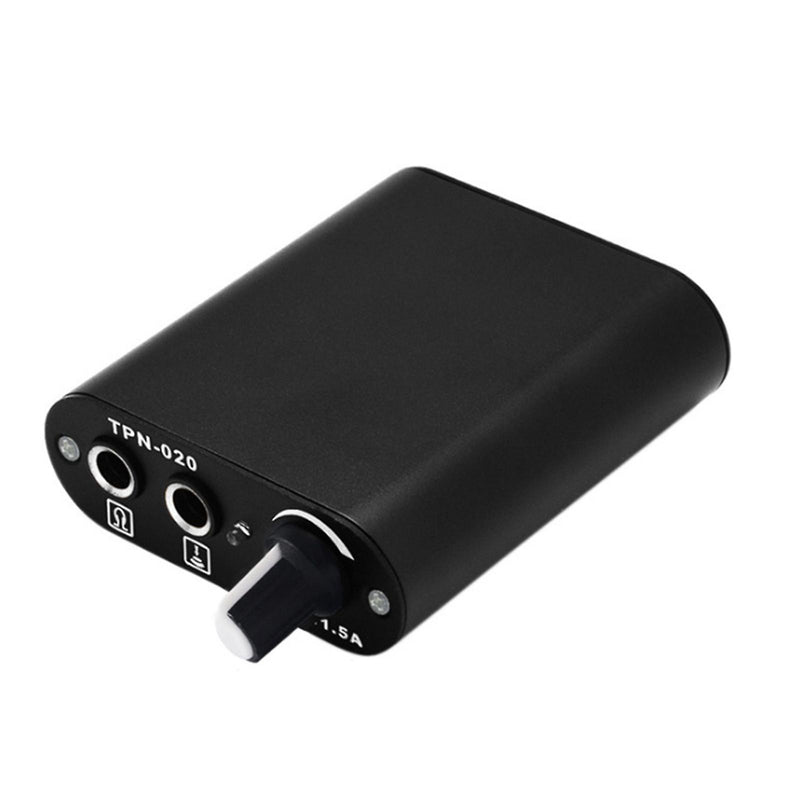
The Mini Digital Power Supply Black
View at Miami Tattoo Supplies: The Mini Digital Power Supply Black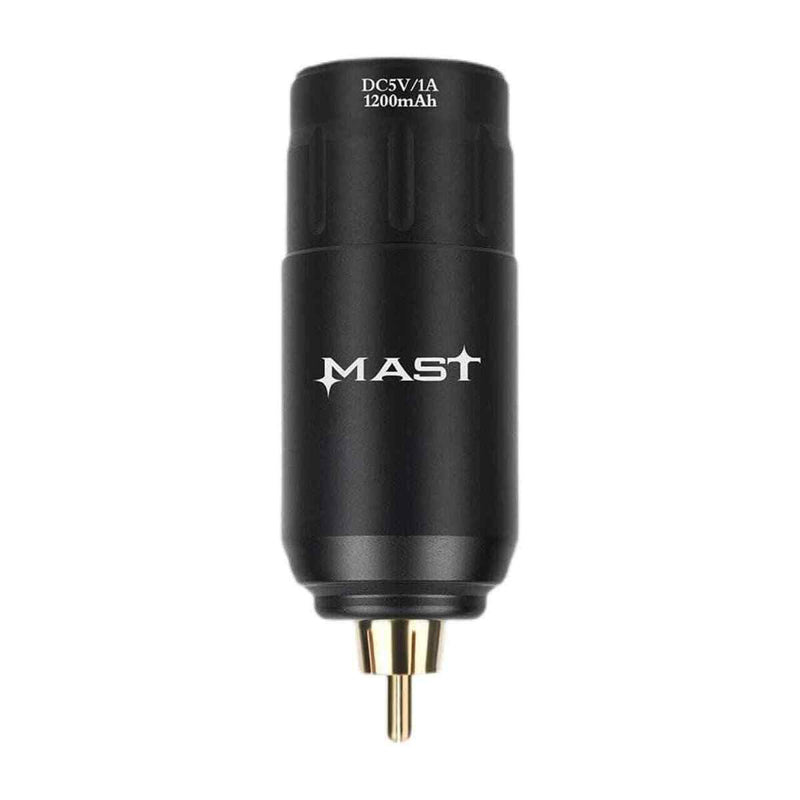
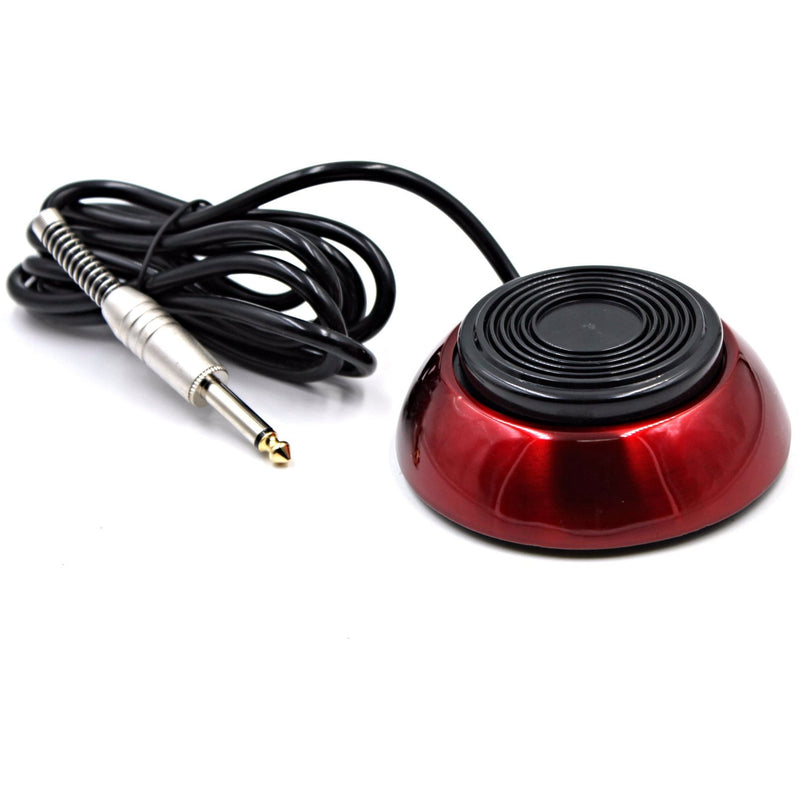
Premium Foot Switch Pedal - Red
View at Miami Tattoo Supplies: Premium Foot Switch Pedal - Red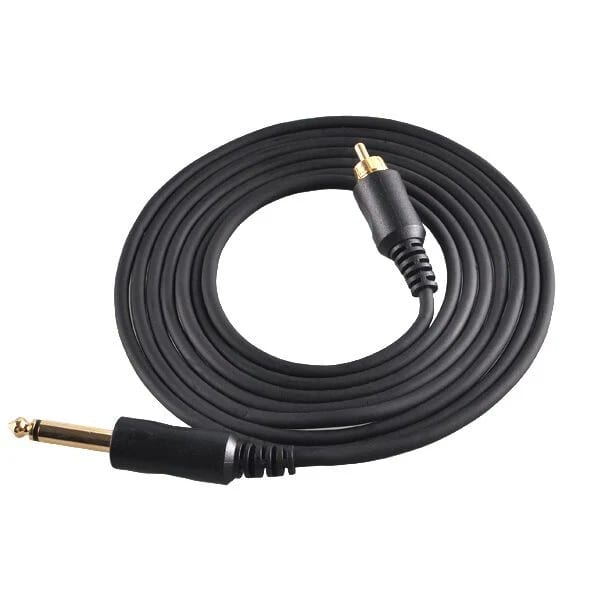
RCA Tattoo Clip cord 2.0M for Rotary Tattoo Machine - Straight
View at Miami Tattoo Supplies: RCA Tattoo Clip cord 2.0M for Rotary Tattoo Machine - Straight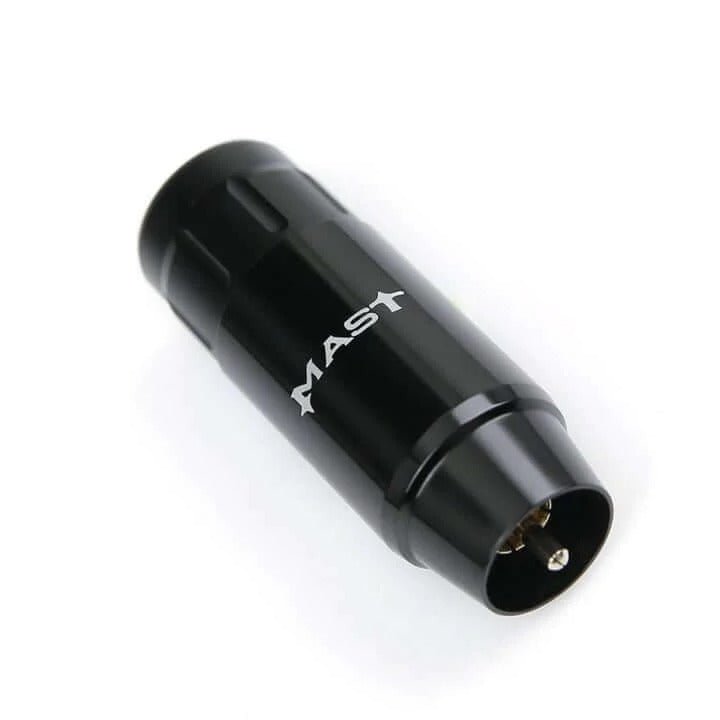
Mast
Mast Wireless Tattoo Battery Remplacement Power Supply
View at Miami Tattoo Supplies: Mast Wireless Tattoo Battery Remplacement Power Supply
Frequently asked questions
Can I use any power supply with any tattoo machine?
Any regulated tattoo power supply that covers your machine's voltage range will work, as long as you have the right cord: RCA for most rotaries and pens, a clip cord for coils. Wireless machines need their own battery or an RCA option, such as the Emalla Grand G5 Pro's RCA module or the Bishop Power Wand's RCA adapter.
What is the difference between RCA and clip cord connections?
An RCA cord has a round plug that pushes into a socket on the back of most rotaries and pens. A clip cord ends in two clips that attach to a coil machine's binding posts. Both usually plug into the same 1/4 in jack on the power supply, so one supply can run either.
Do I need a foot pedal for a wireless tattoo machine?
No. Wireless machines start and stop with a button on the battery or machine. Some systems offer an optional wireless foot switch, such as the FK Irons Killswitch for PowerBolt batteries or the Critical Connect footswitch for the Power Wand, for artists who prefer switching with their foot.
Are RCA battery packs as good as built-in wireless machines?
They can be, and they let you keep a machine you already like. The trade-offs are extra length and weight at the back of the machine, one more connection point, and on some packs fixed voltage steps rather than fine adjustment. Check the pack's output range against the voltage your machine runs at.
How many batteries should a wireless artist own?
At least two per machine you use daily, so one charges while the other runs. Manufacturers' runtimes are best-case figures that drop with higher voltage, longer strokes and large groupings. A third battery is worth it if you do long sessions or travel to conventions.