What Is a Tattoo Pen Machine? How Pens Differ From Other Rotaries
Short answer
What is a tattoo pen machine?
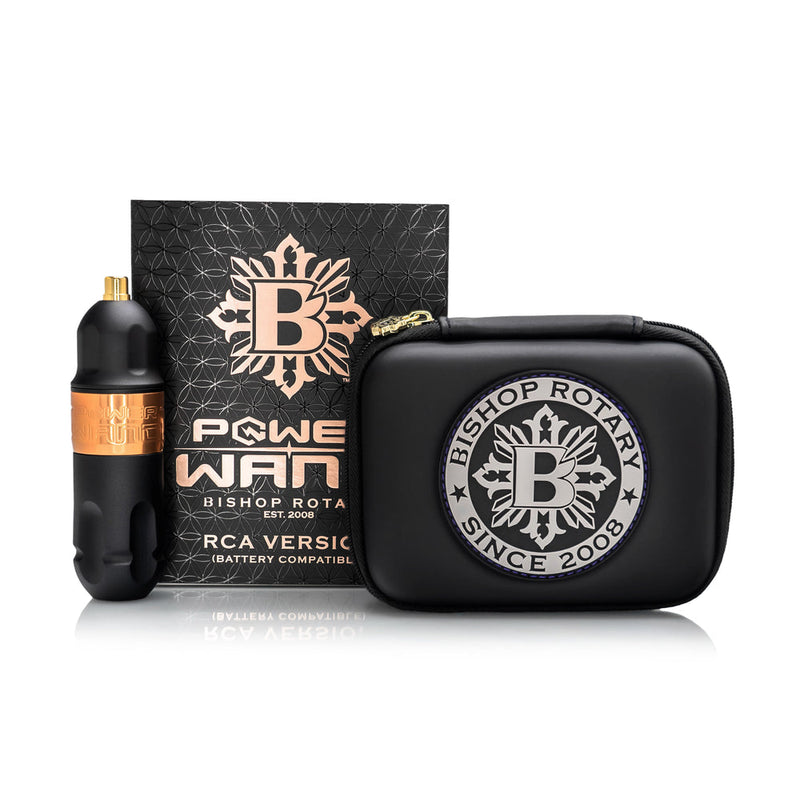
A tattoo pen machine is a rotary tattoo machine built into a cylindrical, pen-shaped body that runs cartridge needles. The motor and drive sit inside the barrel, so you hold it like a pen instead of a frame machine. Every tattoo machine Miami Tattoo Supplies lists in November 2026 is a pen, including the Bishop Power Wand, FK Irons Flux Max and Emalla Grand G5 Pro.
Key takeaways
- Every pen is a rotary, but not every rotary is a pen: frame-style direct-drive and slider rotaries still exist.
- Pens only run cartridge needles; the cartridge's membrane keeps ink and fluids out of the machine.
- Grip diameter is the main ergonomic choice: the pens on this page range from 25 mm to 38 mm.
- Most current pens are wireless or wireless-ready, with a battery that clips onto the back.
On this page 8 sections
"Pen" is the word on most machine listings now, and it causes confusion: is a pen a different kind of machine, a beginner tool, or a cosmetic tool? It is none of those. A pen is a rotary tattoo machine in a particular shape. Here is how pens work, how they compare with the other rotary designs, and what to check before you buy one. Published by Miami Tattoo Supplies (MTS), whose tattoo machine collection is made up of pens.
What makes a machine a "pen"?
A pen is defined by its body, not its motor. The motor, the drive that turns rotation into needle movement, and the cartridge connection all sit in one straight barrel. You grip the barrel near the tip, like a marker. The needle comes from a cartridge that clicks into the front; there is no tube, no rubber band and no needle bar to set.
Inside, pens use the same principle as any rotary machine: a motor turns a cam or eccentric, and that movement pushes the cartridge's needle forward. Manufacturers use different drive designs and motors; Bishop, for example, builds the Power Wand around a German-made Faulhaber motor. What matters to you is the resulting stroke, hit and stability, not the name of the mechanism.
Pen vs direct-drive vs slider rotaries
| Type | Body | Needles | Typical use |
|---|---|---|---|
| Pen | Straight cylindrical barrel | Cartridges only | Everything; the dominant format |
| Direct-drive rotary | Frame, like a coil machine | Needle on bar with tube, or cartridge grip | Artists who want a frame feel |
| Slider rotary | Frame, needle bar on a guided slider | Needle on bar or cartridge grip | Steadier, linear needle travel |
Direct-drive rotaries attach the needle bar to a pin on the cam, so the needle follows the cam's circular path with a slight side-to-side motion that the tube and grip absorb. They feel closer to a coil in the hand.
Slider rotaries run the needle through a slider on a guide, so the motion is straight up and down. Artists choose them for linear needle travel with traditional needles.
Pens contain all of this inside the barrel and work only with cartridges, which is why most new machines, and every machine Miami Tattoo Supplies lists at the time of writing, are pens. Frame rotaries remain useful if you prefer needles on bar or the frame grip position.
Why are pens so popular?
Three practical reasons. First, setup is quick: cartridge in, power on, no tube cleaning or needle bar alignment. Second, a cartridge's membrane keeps ink and fluids out of the machine, which matters for cross-contamination; see our cartridge membrane guide. Third, the shape is easy to bag and suits a writing-style grip that many artists find less tiring.
The trade-off: you are locked into cartridges, which cost more per needle than needles on bar, and most pens need a cartridge with a membrane. Check whether your cartridges fit before switching brands.
How do you choose a pen by feel?
Grip diameter and balance matter more than any other spec. The pens Miami Tattoo Supplies carries cover the range:
| Pen | Grip diameter | Weight | Source |
|---|---|---|---|
| Mast Tour | 25 mm | 82 g | MTS listing |
| Bishop Power Wand | 31 mm (XLUMEN: 37 mm) | 5.2 oz with Shorty battery | Bishop / MTS listing |
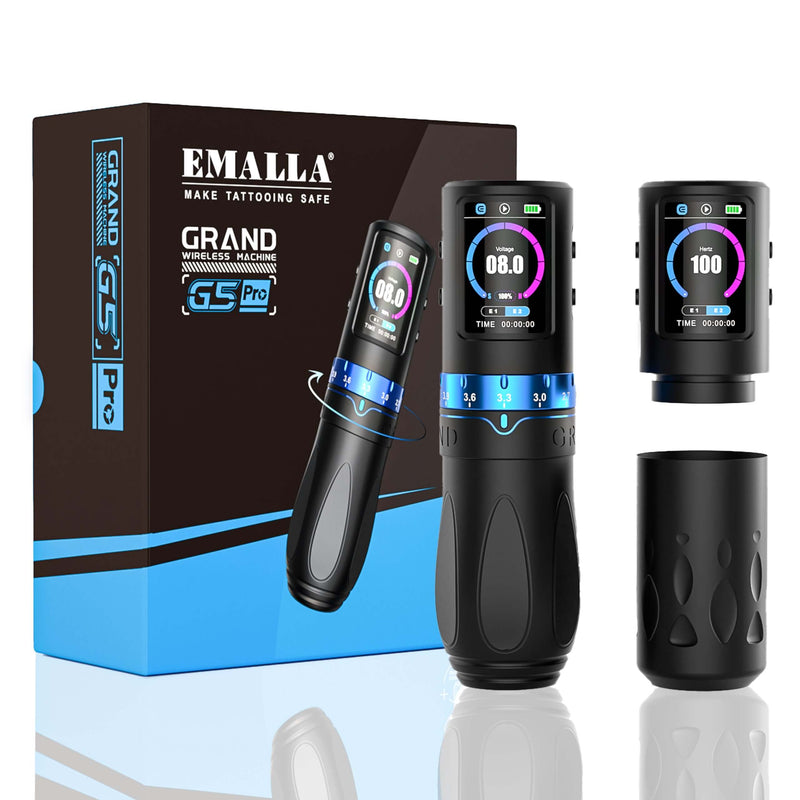
| Emalla Grand G5 Pro | 34 mm or 38 mm grips | 208–218 g | Emalla |
| FK Irons Flux Max | 33–38 mm, forward-weighted | 206 g | FK Irons |
Thin pens suit artists with smaller hands and detailed work; thicker grips spread the load on long sessions. Weight distribution matters too. FK Irons calls the Flux Max "forward-weighted"; Emalla calls the G5 Pro "fully balanced." Disposable grip covers change the effective diameter, so try a machine with the grips you will actually use.
Corded or wireless pens?
Most current pens either have a battery that attaches to the back or accept one. The Bishop Power Wand RCA, for example, ships with an RCA adapter and also takes Bishop's wireless batteries through its magnetic backplate. The Emalla Grand G5 Pro runs on its batteries or switches to an RCA module for a wired supply. Our wireless machines guide covers runtimes and battery packs.
Pen stroke and give
Stroke works the same way on a pen as on any rotary. Fixed-stroke pens are sold in several versions (the Power Wand as Shader 3.5 mm, Packer 4.2 mm and Liner 5.0 mm). Adjustable pens change the stroke on the machine (the Emalla Grand G5 Pro offers seven steps from 2.4 to 4.2 mm). Some pens add an electronic "give" setting to soften the hit, such as FK Irons' eGive and Emalla's E-Soft; soft vs hard hit explains what that changes.
How do you set up a pen?
Click or twist the cartridge in, set the needle depth on the grip or dial, and set voltage before the needle touches skin. The full routine, step by step, is in how to set up a tattoo pen machine. The machines in stock at Miami Tattoo Supplies are all pens, and the cartridge range covers the needles they run.
Gear mentioned
Products from the Miami Tattoo Supplies catalog, the publisher of this site. Check current price and stock on the store.
Emalla
EMALLA Grand G5 Pro Wireless Tattoo Pen Machine (Adjustable Strokes)
View at Miami Tattoo Supplies: EMALLA Grand G5 Pro Wireless Tattoo Pen Machine (Adjustable Strokes)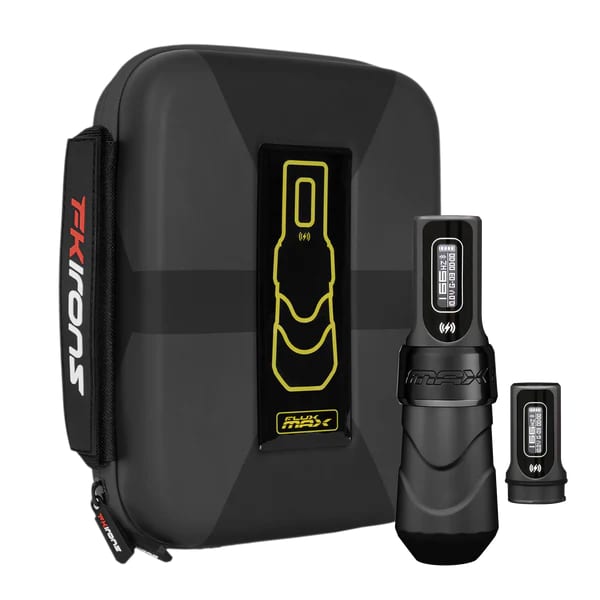
FK Irons
FK Irons Flux Max Black Ops w/ 2 PowerBolts II
View at Miami Tattoo Supplies: FK Irons Flux Max Black Ops w/ 2 PowerBolts II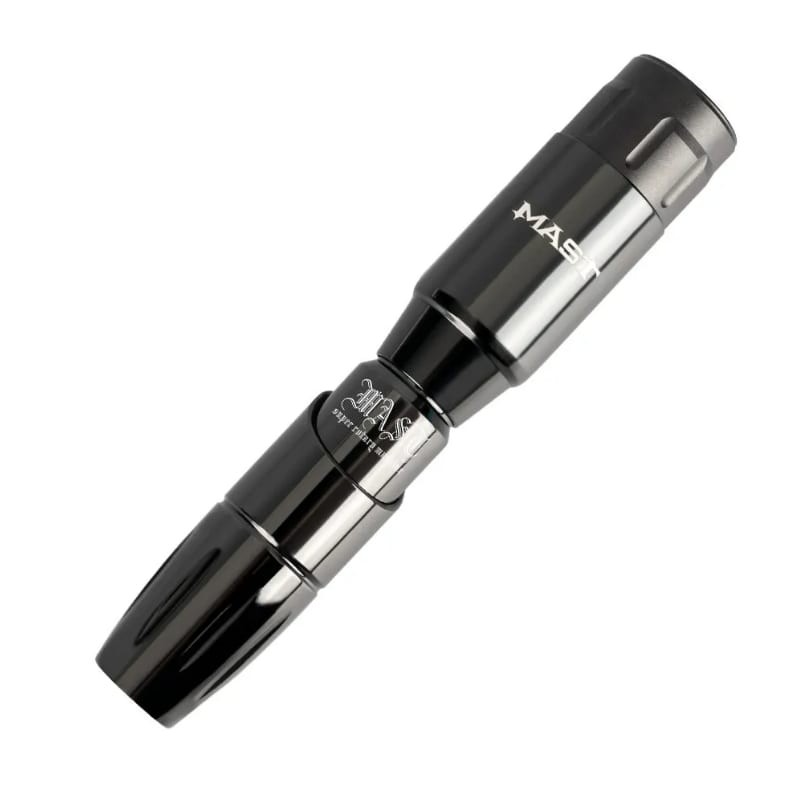
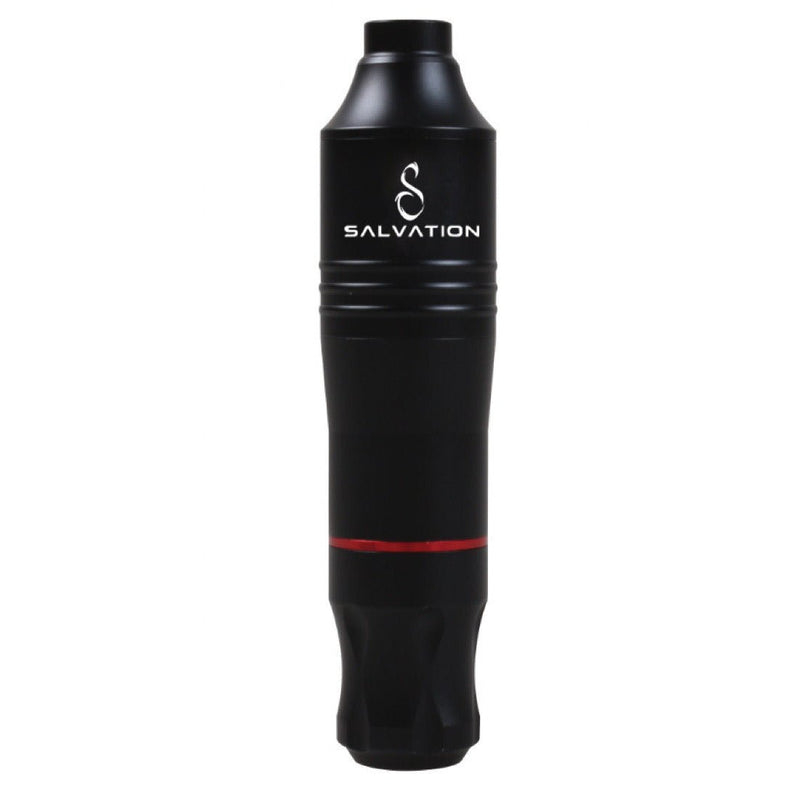
Salvation
Salvation Professional Premium Rotary Tattoo Pen - Black Strong and Quiet
View at Miami Tattoo Supplies: Salvation Professional Premium Rotary Tattoo Pen - Black Strong and Quiet
Frequently asked questions
Is a tattoo pen the same as a rotary machine?
A pen is a type of rotary machine. All pens use an electric motor, so they are rotaries, but "rotary" also includes frame-style direct-drive and slider machines. When a listing says "rotary pen," it means a motor-driven machine in a pen-shaped body that runs cartridges.
Are tattoo pens only for beginners?
No. Flagship professional machines such as the FK Irons Flux Max and Bishop Power Wand are pens. There are cheap pens aimed at beginners too, but the format itself is what most professional machines now use. Price, motor quality and consistency separate professional pens from cheap ones, not the shape.
Can a tattoo pen use traditional needles on bar?
No. Pens are built for cartridge needles only; there is no tube or needle bar mount. If you want to use needles on bar with a rotary, choose a frame-style direct-drive or slider rotary with a tube vise.
Is a PMU pen the same as a tattoo pen?
They look similar but are tuned differently. PMU machines usually run shorter strokes and lighter hits for brows, lips and eyeliner, and often use PMU-specific cartridges. Some artists use one for both, but most PMU work is done with dedicated machines; see our PMU machine vs tattoo machine guide.
Do tattoo pens need oiling?
Most pens are sealed and need little or no lubrication from the artist; some brands supply a specific lubricant and say exactly where to use it. Over-lubricating can void a warranty, as Bishop's does. Follow your machine's manual and send it to the manufacturer for internal service.