What Voltage Should You Run a Tattoo Machine At?
Short answer
What voltage should I run my tattoo machine at?
There is no universal voltage. The right setting depends on the machine's motor, its stroke, the needle grouping and your hand speed. FK Irons, for example, recommends 5 to 9 volts for its rotaries depending on the job, and most wireless pens run within about 4 to 12 volts. Start low, raise it until the needle runs smoothly through the skin, and note what works.
Key takeaways
- Voltage sets motor speed; on many current machines you can read it as hertz, the number of needle cycles per second.
- Check your machine's operating range first: the FK Irons Flux Max runs 4 to 12 V, the FK One Adjust 5 to 12 V, the Emalla Grand G5 Pro 4 to 12 V.
- Bigger groupings and longer strokes load the motor, so they usually need more voltage than a small liner on a short stroke.
- FK Irons notes its machines usually run at a lower voltage than other machines, and steel frames a little lower than aluminum.
- Save settings that work as presets; many batteries store several.
On this page 6 sections
Ask ten artists what voltage they run and you get ten numbers, and all of them can be right. Voltage is a means to an end: the needle moving fast enough to go in cleanly without tearing skin. What follows is manufacturer guidance where it exists and a practical method where it does not. It is written by Miami Tattoo Supplies (MTS), which sells the power supplies and batteries mentioned; for anything specific to your machine, its manual wins.
What does voltage actually do?
On a rotary, voltage sets how fast the motor turns, which sets how many times per second the needle cycles. More voltage means more cycles and more power to push through resistance; less voltage means fewer cycles and a softer, slower feel. On a coil, voltage drives the electromagnets and affects both speed and how hard the armature pulls.
Many current machines also display hertz (Hz), the number of needle cycles per second. FK Irons offers hertz on the Flux Max "for improved accuracy", and the Flux Max and FK One Adjust show either unit; the Emalla Grand G5 Pro has separate voltage and frequency modes. Hertz is easier to compare between machines, because the same voltage can produce different speeds on different motors.
What voltage range do machines run at?
Check your machine's operating range before anything else. Manufacturer figures for machines Miami Tattoo Supplies sells:
| Machine | Operating range | Source |
|---|---|---|
| FK Irons Flux Max | 4–12 V (66–199 Hz) | FK Irons |
| FK One Adjust | 5–12 V (80–180 Hz) | FK Irons |
| Emalla Grand G5 Pro | 4–12 V; frequency mode 3–150 Hz | Emalla |
| Mast Tour | Starts at 4 V; 25–160 Hz | MTS listing |
| Salvation Premium Rotary Pen | 7–12 V | MTS listing |
The range is what the machine can do, not where you should sit. FK Irons' own answer to "what is the right voltage" is that it is the voltage your technique, stroke and tuning require; it says its machines usually run lower than other brands, recommends between 5 and 9 volts depending on the job, and notes that steel frames should usually run a bit lower than aluminum.
What changes the voltage you need?
Four things, mainly:
- Needle grouping. A large magnum has more needles dragging through skin than a 3 round liner, so it needs more power to keep speed.
- Stroke length. A longer stroke moves the needle further per cycle and loads the motor more. See our stroke length guide.
- Technique. Many artists run lining a little faster for crisp, single-pass lines and soft shading slower for gradual buildup. Others do the opposite with whip shading. There is no rule.
- Skin. Thin, delicate or previously worked skin often needs a gentler approach than thick skin.
How do you dial in your voltage?
Start low and raise it in small steps until the needle runs smoothly and consistently through the skin, then stop. A practical routine on practice skin:
- Set the machine near the bottom of its usual working range.
- Run a line or a shading pass at your normal hand speed.
- If the needle stalls, drags or skips, raise the voltage slightly (many batteries step by 0.1 or 0.5 V).
- When lines go in cleanly in one pass, or shading builds evenly, that is your setting.
- Write it down, or save it as a preset, with the stroke and needle used.
Presets save time once you know your numbers. The Emalla Grand G5 Pro stores four (two voltage, two frequency) and Bishop's Advanced battery stores two voltage presets. The Bishop video on this page shows how its presets are set. Technique pages such as how to line a tattoo and shading techniques cover hand speed, the other half of the equation.
Voltage on a corded setup
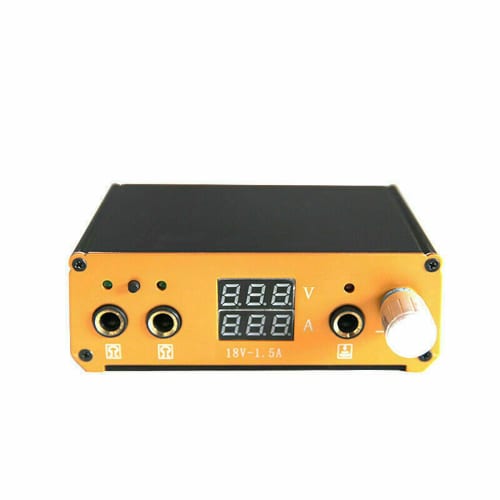
Corded machines take their voltage from a power supply with a dial and a display. At the time of writing, Miami Tattoo Supplies lists the Salvation Dual Input Digital Power Supply ($29.95), which has separate liner and shader dials, and the Mini Digital Power Supply ($24), with a 0 to 18 V output knob. See the power supplies and batteries collection and our power supply guide. For FK Irons specifics, read our FK Irons brand guide; for every machine in stock, see the tattoo machine collection.
Watch
Gear mentioned
Products from the Miami Tattoo Supplies catalog, the publisher of this site. Check current price and stock on the store.
Salvation Dual Input Digital Power Supply
View at Miami Tattoo Supplies: Salvation Dual Input Digital Power Supply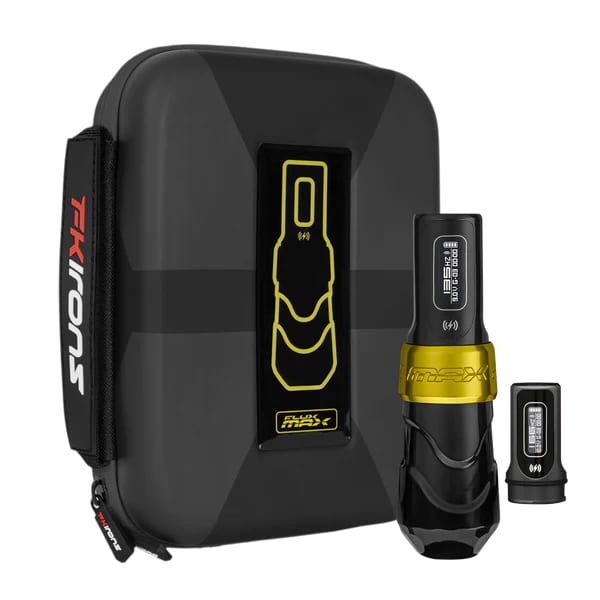
FK Irons
FK Irons Flux Max Gold Stealth w/ 2 PowerBolts II
View at Miami Tattoo Supplies: FK Irons Flux Max Gold Stealth w/ 2 PowerBolts II
FK Irons
FK One Adjust Wireless Tattoo Machine
View at Miami Tattoo Supplies: FK One Adjust Wireless Tattoo Machine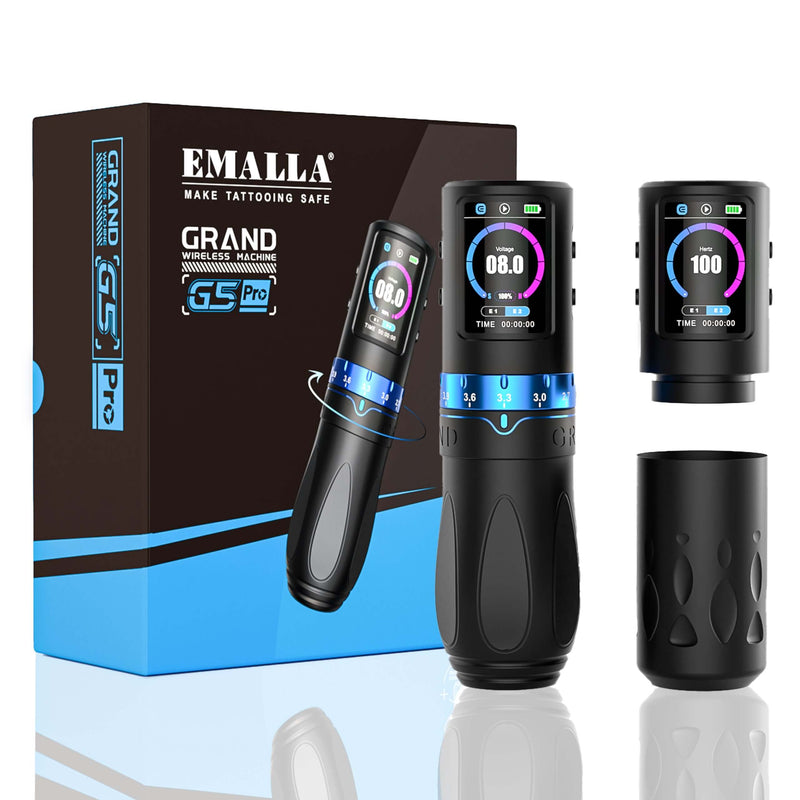
Emalla
EMALLA Grand G5 Pro Wireless Tattoo Pen Machine (Adjustable Strokes)
View at Miami Tattoo Supplies: EMALLA Grand G5 Pro Wireless Tattoo Pen Machine (Adjustable Strokes)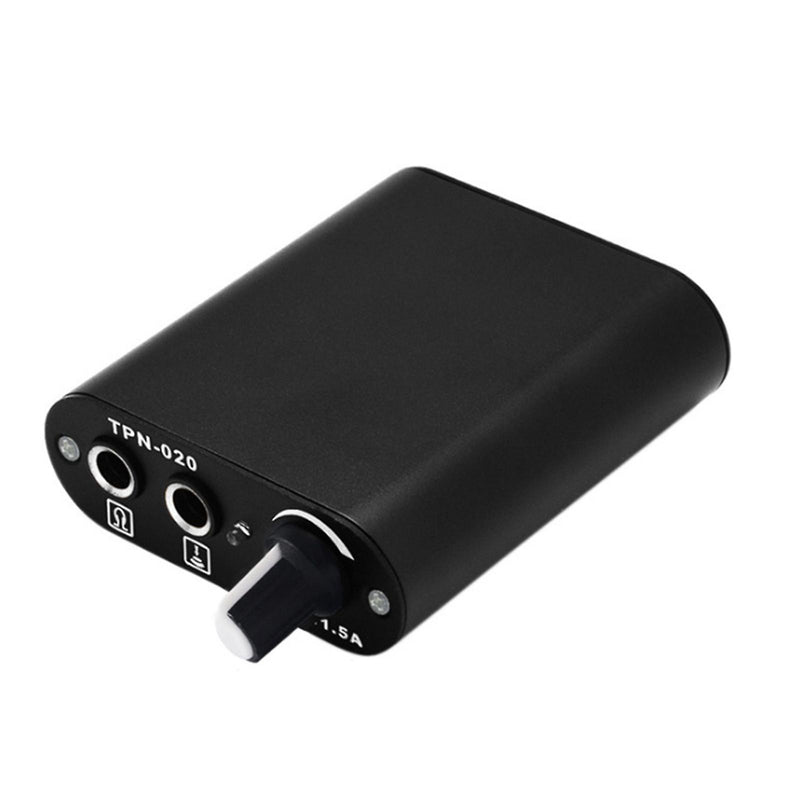
The Mini Digital Power Supply Black
View at Miami Tattoo Supplies: The Mini Digital Power Supply Black
Frequently asked questions
What voltage should I line at?
There is no fixed number. Many artists line a bit faster than they shade to get crisp single-pass lines, but the right figure depends on the machine, stroke and needle. For FK Irons machines the maker recommends 5 to 9 volts depending on the job. Start low on practice skin and raise until the line goes in cleanly.
What voltage should I shade at?
Usually at or below your lining voltage, adjusted for the needle. Large magnums may need more power to keep speed, while soft black-and-grey work often runs slower for gradual buildup. Test on practice skin, and save the setting that gives even shading without irritation.
Should I use volts or hertz?
Use whichever your machine shows, but hertz is easier to compare across machines because it measures actual needle cycles per second. The same voltage can give different speeds on different motors. If your battery offers both, as FK Irons batteries do, many artists find hertz more repeatable.
Why does my machine slow down mid-session?
Usually a draining battery, a cartridge with a tight membrane, or a large grouping loading the motor. Check battery charge first, then try a fresh cartridge. If the machine slows at any voltage, contact the manufacturer for service rather than running it harder.
Do coil machines run at higher voltage than rotaries?
In common practice, yes: coils often run at higher settings than rotaries because voltage drives the electromagnets as well as the speed. Each coil machine's build and tuning changes its ideal setting, so there is no reliable universal figure. Set it by how the machine runs on practice skin.