
Tattoo Shading Techniques: Whip, Pendulum, Stipple and Smooth Shading
Short answer
What are the different tattoo shading techniques?
The four main tattoo shading techniques are whip shading, a flicking stroke that fades out; pendulum shading, a wrist-pivoted swing that builds dark-to-light gradients; stipple shading, dots whose density sets the tone; and smooth shading, overlapping passes with a curved magnum for even gradients. Each suits different needles and machine settings, and all are learned on practice skin under a licensed mentor.
Key takeaways
- Whip shading uses a flick of the wrist so ink is densest where the needle enters and fades as it lifts out.
- Pendulum shading swings the machine in an arc from the wrist, building tone where the swing turns.
- Stipple shading builds tone from dots: a slow hand and a small liner, with density controlling darkness.
- Smooth shading uses a curved magnum, a softer setup and grey wash dilutions for even black and grey gradients.
- The most common shading mistake is overworking: going over the same skin too many times to fix uneven tone.
On this page 8 sections
Shading is where a tattoo gets its depth, and it is where most apprentices spend the longest on practice skin. There are several named techniques, and artists mix them freely, but each one is a specific combination of hand motion, needle and machine setup. This page explains the four you will hear about most, with the supplies that make each work. It is written for apprentices training under a licensed mentor, and it is published by Miami Tattoo Supplies (MTS), whose black and grey wash collection stocks the inks named here.
How do the shading techniques compare?
| Technique | Hand motion | Usual needle | Machine setup | Common mistake |
|---|---|---|---|---|
| Whip | Quick flick that lifts out | 3RL to 7RL, small mags | Medium stroke, moderate speed | Heavy entry marks, mixed directions |
| Pendulum | Wrist-pivoted arc, back and forth | Magnums, curved mags | Medium stroke | Pressing at the turn of the swing |
| Stipple | Slow travel, dot by dot | 1RL to 5RL | Firm hit, lower speed | Moving so fast dots join into lines |
| Smooth | Small overlapping passes | Curved mags, round shaders | Short stroke, softer hit | Overworking the same patch |
These are common pairings, not rules. Your mentor may teach different names for similar motions, and many shaded pieces use two or three of these in one area.
What is whip shading?
Whip shading is a flicking stroke: the needle goes into the skin and the wrist flicks it out along a short arc, so the ink is densest at the start and fades to nothing at the end. Repeated in one direction, the flicks build a soft gradient with a slightly textured, grainy look that suits traditional and illustrative work.
It is usually done with a small round liner (3RL to 7RL) or a small magnum. Keep every flick going the same way, keep the entry light so you do not leave hard dots where the needle lands, and build tone with more flicks rather than deeper ones.
What is pendulum shading?
Pendulum shading swings the machine back and forth in an arc, pivoting from the wrist like a clock pendulum. The needle spends longest at the ends of the swing, so ink builds up there and thins out in the middle of the arc; place the turn of the swing where you want the darkest tone. It covers larger areas faster than whip shading and gives a smooth dark-to-light fade.
Magnums and curved magnums suit it because their width covers the arc in fewer passes. The common mistake is pressing harder at the turn, which overworks that spot. Keep pressure even and let the dwell time do the work. Magnum groupings are explained in magnum needles explained.
What is stipple shading?
Stipple shading builds tone from individual dots. Move the machine slowly enough that the needle leaves separate dots rather than a line: close dots read dark, spaced dots read light. It is the basis of dotwork and gives a distinctive grainy texture.
Use a small liner, from a single needle to a 5RL. A firm hit helps each dot go in cleanly; Bishop, for example, describes its Liner Power Wand (5.0 mm stroke) as made for dotwork and 3RL shading. A lower voltage, with the machine cycling slower, makes it easier to place dots one at a time. The mistakes are hand speed too fast, so dots join into lines, and returning to the same dot until it becomes a blowout.
What is smooth shading?
Smooth shading, often just called black and grey shading, uses overlapping passes to make even gradients with no visible strokes. The needle moves in small circles or short back-and-forth strokes, and tone is controlled by the ink dilution and the number of passes rather than by texture.
The supplies matter most here:
- Needle: curved (soft-edge) magnums, around 7 to 15 needles, in #10 for the smoothest gradients or #12 for bolder tones; round shaders for small spaces. See best needles for shading and color packing.
- Machine: a shorter, softer stroke and more give. FK Irons suggests high give for soft shading, to layer light tones slowly without chewing the skin, and gives 6.5 to 8 V as a baseline for black and grey shading.
- Ink: a grey wash set or your own dilutions of black with a mixing solution, laid from lightest to darkest. Our grey wash guide explains both approaches; the Dynamic Greywash set was $39.99 at MTS at the time of writing.
FK Irons gives shading a general depth approach of about 2 mm, a little more than lining, but depth is a feel learned on practice skin, not a number.
What about color packing?
Color packing is solid fill rather than a gradient, so it is not usually counted among the shading techniques, but it uses the same hands. Use a magnum sized to the area, a medium stroke and medium give, and move in small overlapping circles or tight back-and-forth passes until the color is even. FK Irons suggests 7.5 to 9.5 V as a packing baseline. The largest grouping that fits the area means fewer passes and less trauma.
What are the most common shading mistakes?
- Overworking. Going over the same skin again and again to fix uneven tone. FK Irons warns that most skin trauma comes from overlap and repetition, not voltage itself.
- Hand speed and machine speed out of step. A fast machine with a slow hand overworks; a slow machine with a large mag drags.
- Starting too dark. In black and grey, lay light tones first; you can always darken, but you cannot lighten.
- Inconsistent direction. Mixed stroke directions in whip shading read as scratchy.
- Practicing on people. Shading is learned on synthetic skin, then on clients only under a licensed mentor. Never tattoo friends or family at home.
Watch
Gear mentioned
Products from the Miami Tattoo Supplies catalog, the publisher of this site. Check current price and stock on the store.
Kwadron
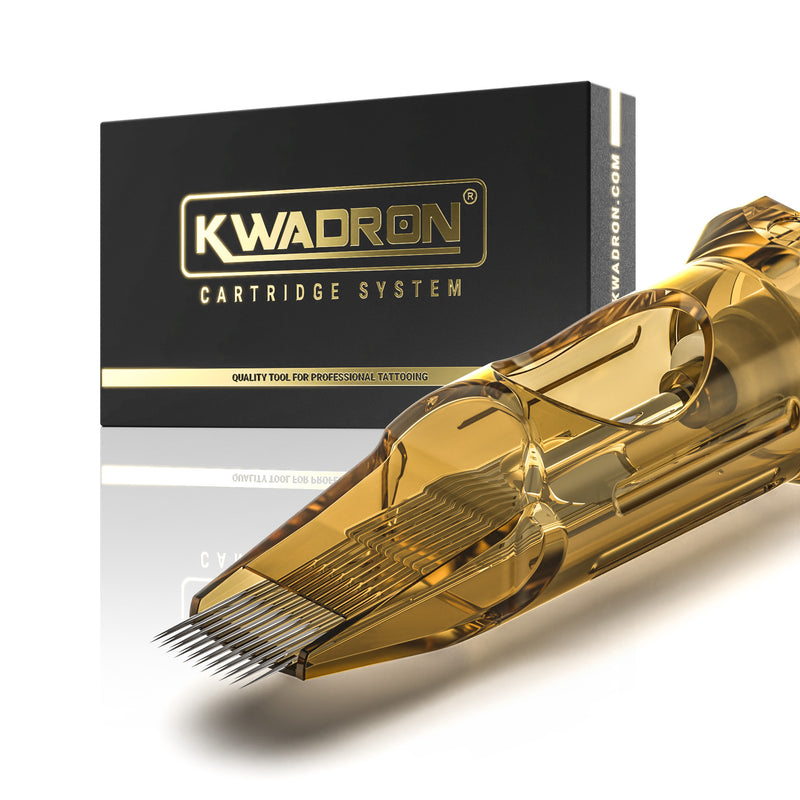
Kwadron Cartridge Needles - Soft Edge Curved Mag (SEM) Tattoo Cartridges 20pcs
View at Miami Tattoo Supplies: Kwadron Cartridge Needles - Soft Edge Curved Mag (SEM) Tattoo Cartridges 20pcs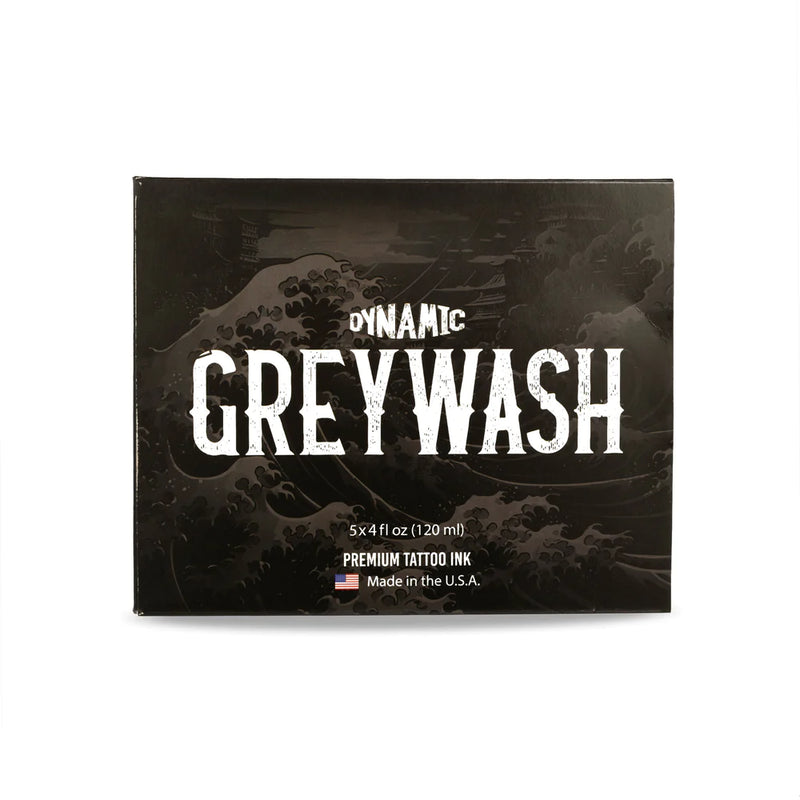
Dynamic Color
Dynamic Greywash Tattoo Ink Set 5 Bottles
View at Miami Tattoo Supplies: Dynamic Greywash Tattoo Ink Set 5 Bottles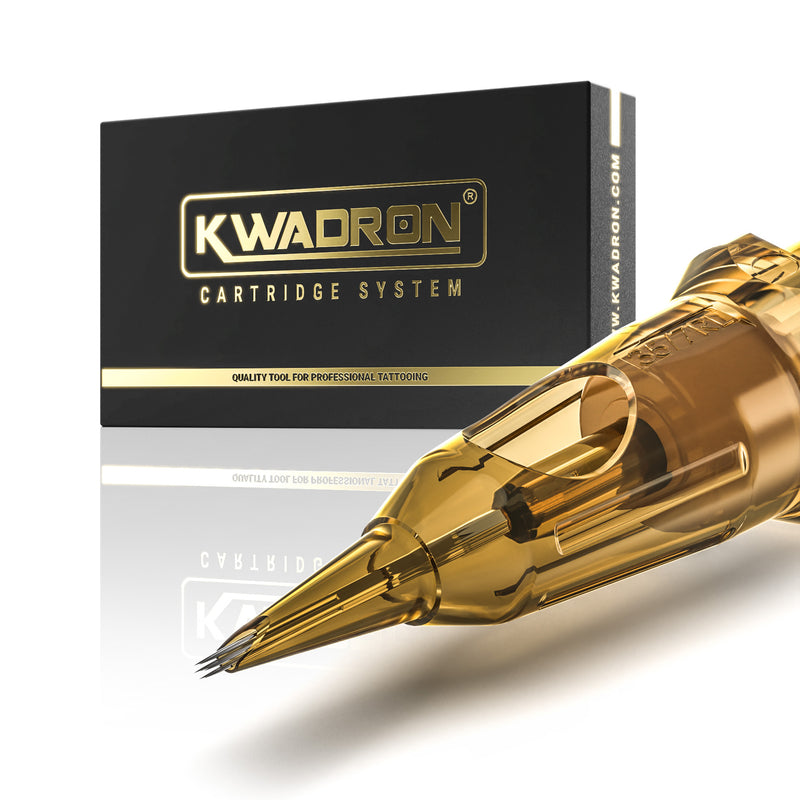
Kwadron
Kwadron Cartridge Needles - Round Liner (RL) Tattoo Cartridges 20pcs
View at Miami Tattoo Supplies: Kwadron Cartridge Needles - Round Liner (RL) Tattoo Cartridges 20pcs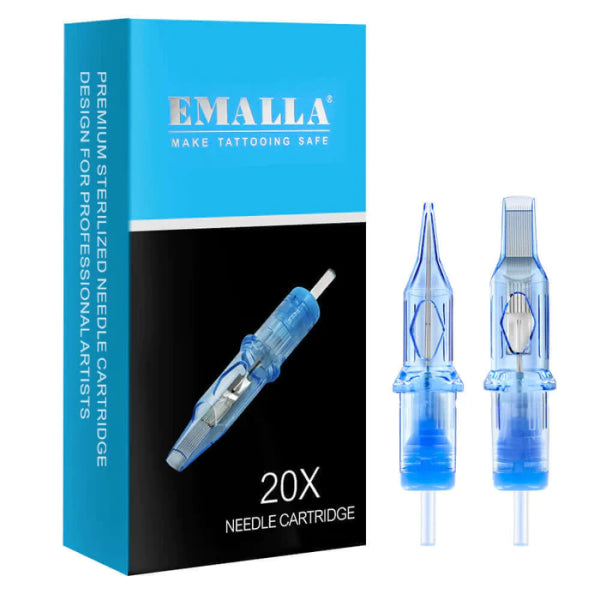
Emalla
Emalla Tattoo Needle Cartridges - Curved Magnum (20pcs)
View at Miami Tattoo Supplies: Emalla Tattoo Needle Cartridges - Curved Magnum (20pcs)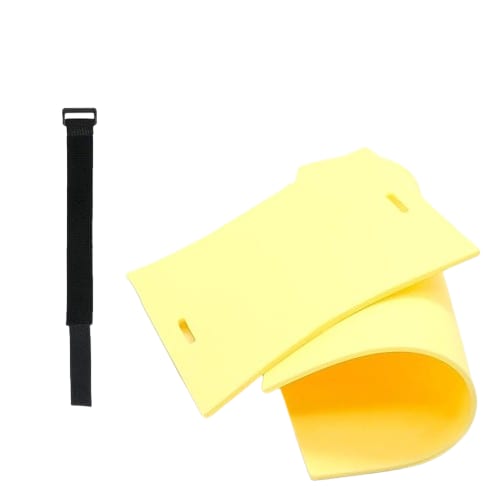
HQ Silicone Practice Skin with Straps 8x8
View at Miami Tattoo Supplies: HQ Silicone Practice Skin with Straps 8x8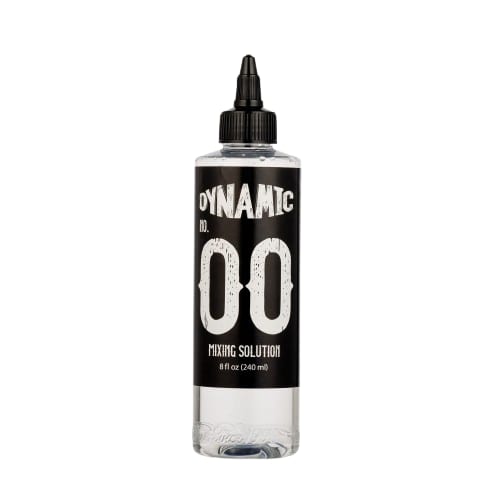
Dynamic Color
Dynamic Tattoo Ink - Mixing Solution
View at Miami Tattoo Supplies: Dynamic Tattoo Ink - Mixing Solution
Frequently asked questions
What needle is best for tattoo shading?
For smooth black and grey, a curved (soft-edge) magnum, around 7 to 15 needles, in #10 or #12. For small areas, a round shader. For whip and stipple shading, small round liners from 1RL to 7RL. Most artists keep curved mags in two or three sizes and a couple of liners for texture.
What is the difference between whip shading and pendulum shading?
Whip shading is a short flick that lifts the needle out, leaving ink densest where it entered and fading along the stroke. Pendulum shading swings the machine back and forth in an arc from the wrist, building tone at the turns. Whip gives texture in small areas; pendulum covers larger areas with smoother fades.
What voltage should I shade at?
FK Irons gives 6.5 to 8 V as a baseline for black and grey shading on modern rotaries, lower than for lining, and 7.5 to 9.5 V for color packing. Your machine, stroke and grouping change the figure. Start low, adjust in small steps, and check the result on practice skin.
Why is my tattoo shading patchy?
Usually inconsistent hand speed, too few passes, a needle that is too shallow, or skin that is not stretched flat. It can also come from starting with ink that is too dark, which shows every overlap. Slow and steady passes with even pressure, lighter tones first, and a good stretch fix most patchiness.
Can you shade with a round liner?
Yes. Small round liners are the usual needle for whip shading and stipple shading, and Bishop lists 3RL shading among the jobs of its Liner Power Wand. For larger areas and smooth gradients, a round shader or curved magnum is faster and gentler, because it covers more skin per pass.