Best Needles for Shading and Color Packing, Task by Task
Short answer
What needles are best for shading and color packing?
For most shading, use a curved (soft-edge) magnum: around 7 to 15 needles in #10 for smooth black and grey, or #12 for bolder tones. For color packing, use a #12 curved or standard magnum sized to the area, typically 9 to 15 needles. Use round shaders (5RS to 9RS) for small or tight spaces, and large magnums of 23 needles or more for big black fills.
Key takeaways
- Curved or soft-edge magnums (RM, CM, SEM) are the default shading needle because their soft edges blend passes together.
- For smooth black and grey, many artists choose #10 curved mags; for color packing and solid black, #12 puts more ink in per pass.
- Round shaders handle small and tight areas where a magnum is too wide.
- Size the magnum to the area: the largest grouping that fits means fewer passes and less trauma to the skin.
- Standard (flat-edged) magnums suit solid fills and crisp shading edges; large curved mags of 23 needles and up suit big blackwork.
On this page 8 sections
Lining has one main tool. Shading and packing have several, and the best artists switch between them within a single piece. This guide matches the needle to the task, with the sizes and diameters that suit each job and what they cost at Miami Tattoo Supplies (MTS), the store that publishes this site and stocks them in its needle cartridge collection.
Which needles are best for shading and color packing?
Magnums do most of the work, with round shaders for small spaces. The quick reference:
| Task | Grouping | Typical sizes | Diameter |
|---|---|---|---|
| Smooth black and grey gradients | Curved magnum (RM, CM, SEM) | 7–15 | #10 |
| Bold shading, color blending | Curved magnum | 9–15 | #12 |
| Color packing, medium areas | Curved or standard magnum | 9–15 | #12 |
| Solid black fill | Standard magnum (M1, MG) | 11–23 | #12 |
| Large blackwork | Large curved mag | 23 and up | #12 |
| Small or tight shading | Round shader | 5RS–9RS | #10 or #12 |
The groupings themselves are explained in magnum needles explained and round liner vs round shader, and the hand techniques in whip, pendulum and smooth shading.
What needle is best for smooth shading?
A curved magnum. Its needle tips follow a curve, so the outer needles land softer than the center and each pass blends into the next without a hard edge. Kwadron says its curved soft-edge magnums let colors blend without a visible join, so edges blur into the skin instead of being outlined.
For black and grey, diameter is the second lever. A #10 (0.30 mm) needle deposits less ink per pass, so gradients build more gently. Kwadron's own guidance says #10 gives gentler shading and smoother transitions between black and grey, while #08 suits fine portrait detail at the cost of speed. A 9 to 13 needle #10 curved mag covers most black and grey shading on an arm or calf. The ink side of the job is in grey wash explained.
What needle is best for color packing?
A #12 magnum sized to the area. Packing means saturating color fully and evenly, and #12 needles carry more ink per pass. Kwadron points out that #12 needles are also spaced wider than #10, so the same count covers more skin. Curved mags are the common choice because they leave fewer visible pass marks; standard magnums give a slightly firmer, more solid deposit that some artists prefer for packing.
Size up rather than down. Kwadron's guidance is to use the largest magnum the tattoo allows: filling a big area with a small magnum takes longer and causes unnecessary skin damage, and it tends to leave uneven color.
What needle is best for solid black and big blackwork?
For solid black in medium areas, a #12 standard magnum (MG, M1) or curved magnum of 11 to 23 needles. For large blackwork, much bigger groupings exist: Emalla's Super Curved Mag comes in 35 needles of 0.35 mm and 49 needles of 0.30 mm (10 per box, $25.99), and Kwadron makes a Combat magnum line for the same job. Pair them with a black ink suited to fill; see the best black tattoo ink.
When should you use a round shader instead?
When the area is too small or tightly curved for a magnum: small shaded shapes, corners, tight gaps between lines, and dot or whip textures. A 5RS to 9RS covers most of these. Once the area is wider than the round shader's stroke, a magnum is faster and kinder to the skin.
What these needles cost at the time of writing
At MTS at the time of writing (November 2026), per box:
| Cartridge | Box | Price range |
|---|---|---|
| Kwadron Soft Edge Curved Mag (SEM), 5–27 needles | 20 | $32.49–$56.99 |
| Kwadron Magnum (MG), #12 | 20 | $31.99–$56.99 |
| Bishop Da Vinci V2 Curved Magnum, 5–23 needles | 20 | $35.49–$47.99 |
| Emalla Curved Magnum, 5–27 needles | 20 | $25.99–$36.99 |
| Elite Infini Plus Curved Magnum | 20 | $27.99–$29.99 |
| Emalla Super Curved Mag (35 or 49 needles) | 10 | $25.99 |
| Kwadron Round Shader (RS) | 20 | $31.49–$39.99 |
Large groupings sit at the top of each range. The Emalla curved magnums are the lower-cost way to stock several shading sizes in #10 and #12, and the Kwadron soft-edge curved mags span 5 to 27 needles. Everything is in the needle cartridges collection. The trade-off between thin and standard needles is covered in needle diameter and taper explained.
A practical shading tray
For a medium black and grey piece: a 9 or 11 #10 curved mag for gradients, a 13 or 15 #12 curved mag for darker tones, a 5RS or 7RS for corners, and a liner for touch-ups. For a color piece: #12 curved mags in two sizes and a round shader for small shapes. Practice blending and packing on synthetic skin before client work, and refine technique under your mentor.
Gear mentioned
Products from the Miami Tattoo Supplies catalog, the publisher of this site. Check current price and stock on the store.
Kwadron
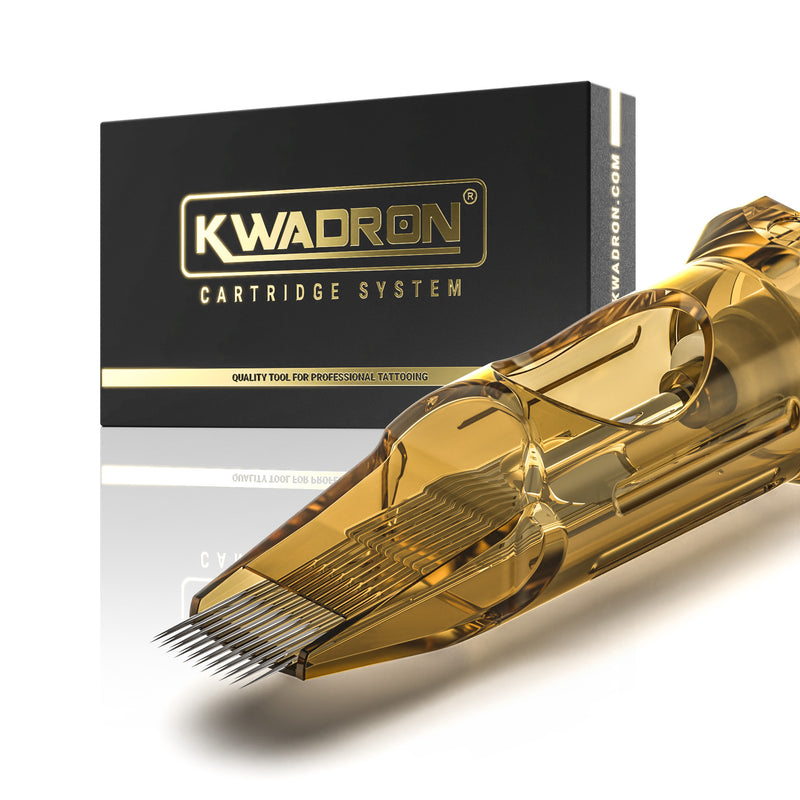
Kwadron Cartridge Needles - Soft Edge Curved Mag (SEM) Tattoo Cartridges 20pcs
View at Miami Tattoo Supplies: Kwadron Cartridge Needles - Soft Edge Curved Mag (SEM) Tattoo Cartridges 20pcs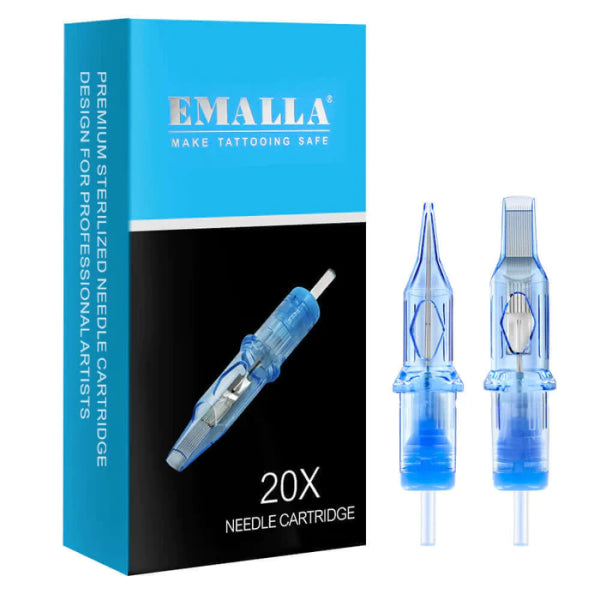
Emalla
Emalla Tattoo Needle Cartridges - Curved Magnum (20pcs)
View at Miami Tattoo Supplies: Emalla Tattoo Needle Cartridges - Curved Magnum (20pcs)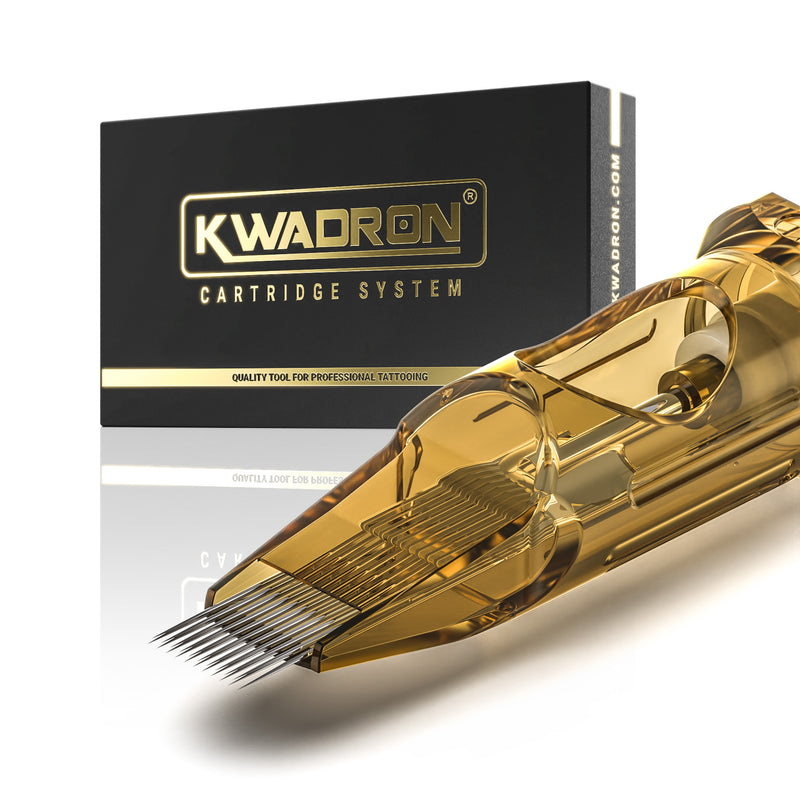
Kwadron
Kwadron Cartridge Needles - Magnum (MG) Tattoo Cartridges 20pcs
View at Miami Tattoo Supplies: Kwadron Cartridge Needles - Magnum (MG) Tattoo Cartridges 20pcs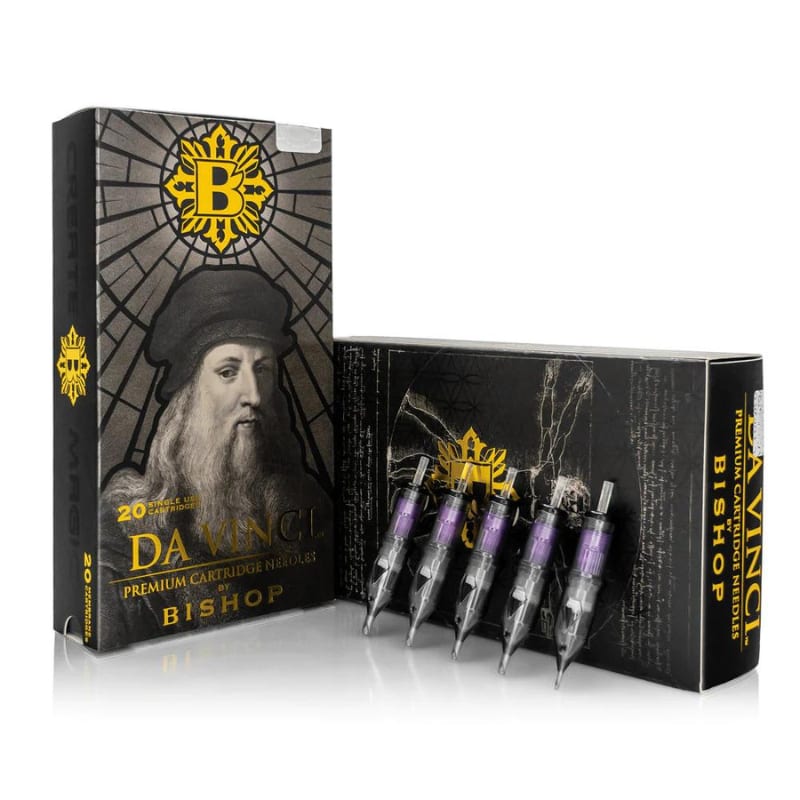
Bishop
Bishop Da Vinci V2 Tattoo Cartridge Needles 20pcs - Curved Magnums
View at Miami Tattoo Supplies: Bishop Da Vinci V2 Tattoo Cartridge Needles 20pcs - Curved Magnums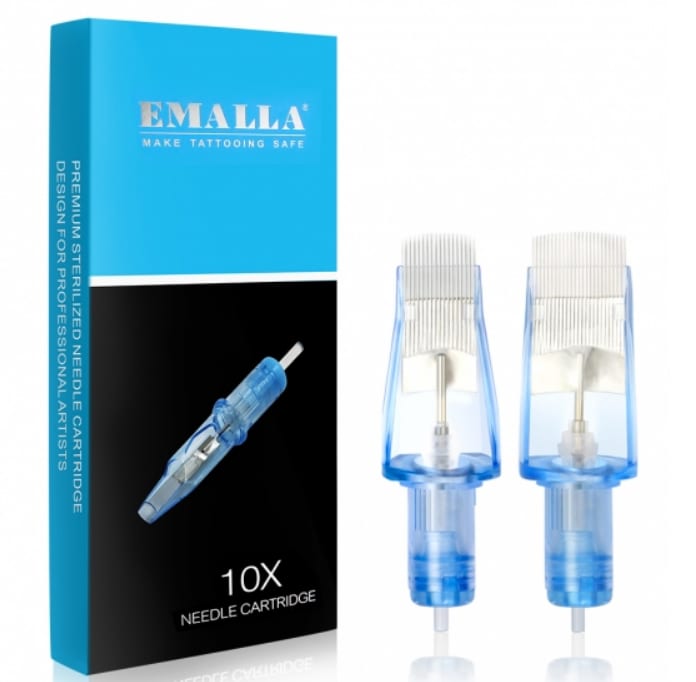
Emalla
Emalla Tattoo Needle Cartridges - Super Curved Mag (10pcs)
View at Miami Tattoo Supplies: Emalla Tattoo Needle Cartridges - Super Curved Mag (10pcs)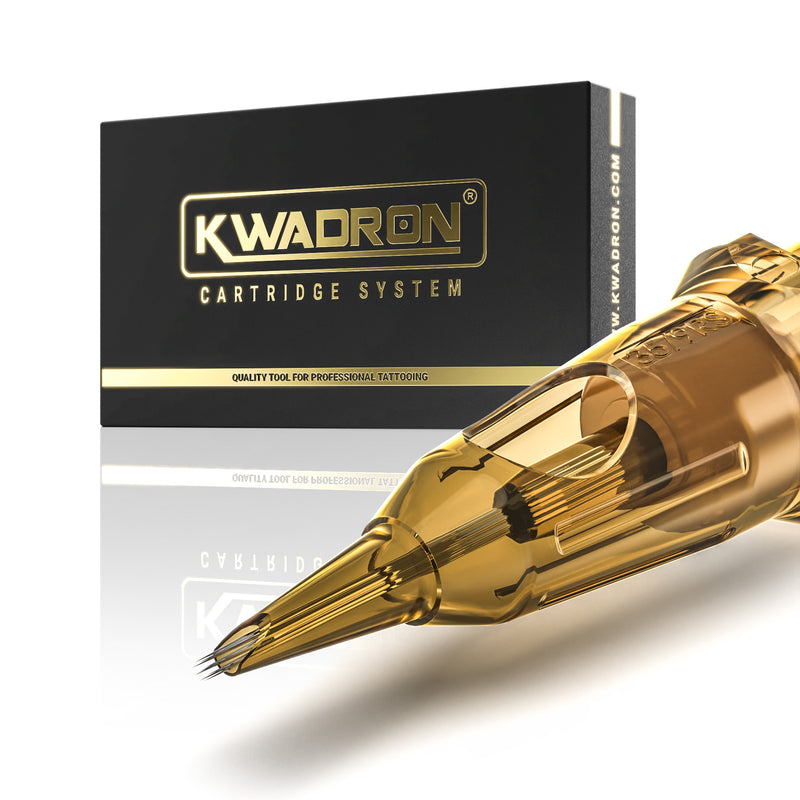
Kwadron
Kwadron Cartridge Needles - Round Shader (RS) Tattoo Cartridges 20pcs
View at Miami Tattoo Supplies: Kwadron Cartridge Needles - Round Shader (RS) Tattoo Cartridges 20pcs
Frequently asked questions
What is the best needle for shading?
For most shading, a curved (soft-edge) magnum. Its curved tip line blends each pass into the next without hard edges. Choose #10 for smooth black and grey and #12 for bolder tones and color. Use a round shader for areas too small for a magnum, and size the magnum to the area you are shading.
What size magnum is best for color packing?
Most color packing on medium areas uses 9 to 15 needle #12 magnums, curved or standard. Larger areas call for 17 needles or more. Use the largest grouping that fits the shape, because a small magnum on a big area needs more passes and causes more trauma to the skin.
Is a curved magnum or a regular magnum better for color?
Both work. Curved magnums blend passes and leave fewer visible marks, which is why many artists use them for color. Standard magnums deposit a slightly firmer, more solid band, which some prefer for packing and solid fills. Many artists keep both and switch depending on the area and the effect they want.
Can you shade with a round liner?
You can, but it is slow and hard on the skin, because a liner concentrates each pass on a tight point. Round liners are used for stippled or dotwork shading on purpose. For smooth gradients and fills, a round shader or magnum covers the area evenly with fewer passes.
Should I use bugpins for color packing?
Usually not. Bugpins (#10 and smaller) release less ink per pass, which suits soft black and grey but makes full color saturation slower. Most artists pack color with #12 magnums and keep #10 curved mags for gradients and soft blends.