Tattoo Gun vs Tattoo Machine: Why Artists Correct You
Short answer
Is it called a tattoo gun or a tattoo machine?
The professional term is tattoo machine. "Tattoo gun" is common slang and means the same tool, but most artists avoid it: the device does not fire or shoot anything, the word sounds careless to clients, and the trade has used "tattooing machine" since Samuel O'Reilly's 1891 US patent. When you shop, look for rotary, coil or pen tattoo machines.
Key takeaways
- "Tattoo gun" and "tattoo machine" describe the same tool; "machine" is the trade term.
- Samuel F. O'Reilly's US patent 464,801 of 1891 was titled "Tattooing-Machine", and it was driven by an electric motor.
- Today's machines are coils (electromagnets and springs) or rotaries (motor-driven), and most rotaries sold now are pens.
- Searching "tattoo gun" turns up many toy-grade kits; search "tattoo machine" for professional equipment.
On this page 7 sections
If you have ever said "tattoo gun" in a shop and watched an artist wince, you have met one of the trade's small pet peeves. Nobody is going to refuse to tattoo you over it, but the word choice signals something, and it changes what you find when you shop. Here is where both terms come from, why artists prefer "machine", and what the actual types of tattoo machine are. Published by Miami Tattoo Supplies (MTS).
Is it a tattoo gun or a tattoo machine?
It is a tattoo machine. "Tattoo gun" is widely understood slang for the same handheld tool, and you will hear it from clients, on TV and from some older artists. Inside the trade, "machine" is the standard word, and suppliers, manufacturers and licensing material use it. FK Irons, Bishop, Emalla and every other maker list their products as tattoo machines, and so does the tattoo machine collection at Miami Tattoo Supplies.
Why do artists dislike "tattoo gun"?
Three reasons:
- It is inaccurate. The machine does not shoot or fire anything. It moves a needle up and down many times a second, depositing ink through repeated small punctures. There is no projectile and no trigger.
- It sounds careless. Tattooing is a licensed, hygiene-regulated trade. "Gun" makes it sound casual or violent to a nervous client, and artists who care about professionalism avoid it.
- It has a long history. The tool has been called a machine since the first patents, and the people who build and tune them by hand take some pride in the word.
Some people trace "gun" to the pistol-grip shape of frame machines or the trigger-like foot pedal. Whatever its origin, it stuck in popular use, not in the trade.
Where does the term "tattoo machine" come from?
From the patents. Samuel F. O'Reilly of New York filed a US patent for a "Tattooing-Machine" in July 1891, granted on December 8, 1891 as patent 464,801. His design moved the needle with an "electromotor" mounted on a tubular handle, which means the first patented American tattoo machine was motor-driven, not so different in principle from a modern rotary. Electromagnetic coil machines became the familiar design for much of the following century, and today's rotary pens have brought the motor back.
What types of tattoo machine are there?
Two mechanisms, several body styles.
| Type | How it moves the needle | Where you see it |
|---|---|---|
| Coil machine | Electromagnets pull an armature bar; a spring returns it | Traditional and bold line work |
| Rotary (frame) | Electric motor and cam; direct drive or slider | Artists who like a frame grip |
| Rotary pen | Motor and drive inside a pen-shaped barrel; cartridges only | Most new machines today |
| Wireless pen | Rotary pen with a battery on or in the machine | Most current flagship models |
Our rotary vs coil comparison explains how the two mechanisms feel different, and what is a tattoo pen machine covers pens.
Why the word matters when you shop
Search for "tattoo gun" online and much of what comes back is cheap all-in-one kits with unbranded machines, inks and needles. Search for "tattoo machine" and you find the professional brands. That is not a rule, but it is a useful filter. A professional machine has a named manufacturer, published specs such as stroke length and operating voltage, spare parts and a warranty. Our guide to tattoo kits explains what to watch for.
At Miami Tattoo Supplies, every tattoo machine listed is a rotary pen at the time of writing (November 2026), from the $169 Mast Tour to FK Irons and Bishop flagships; the in-stock machines page shows what ships today. If you are choosing one, the best tattoo machines of 2026 sorts them by job and the machine cost guide by price.
Other terms worth knowing
A few words you will meet once you start shopping:
- Stroke: how far the needle travels per cycle, in millimeters.
- Give: how much the needle yields on hitting skin; some rotaries set it electronically.
- Cartridge: a sealed, disposable needle module that clicks into a pen.
- Needle on bar: a traditional needle soldered to a bar, used with a tube in coil and frame machines.
- Power supply: the box that sets voltage for corded machines; wireless machines carry a battery instead.
Gear mentioned
Products from the Miami Tattoo Supplies catalog, the publisher of this site. Check current price and stock on the store.
FK Irons
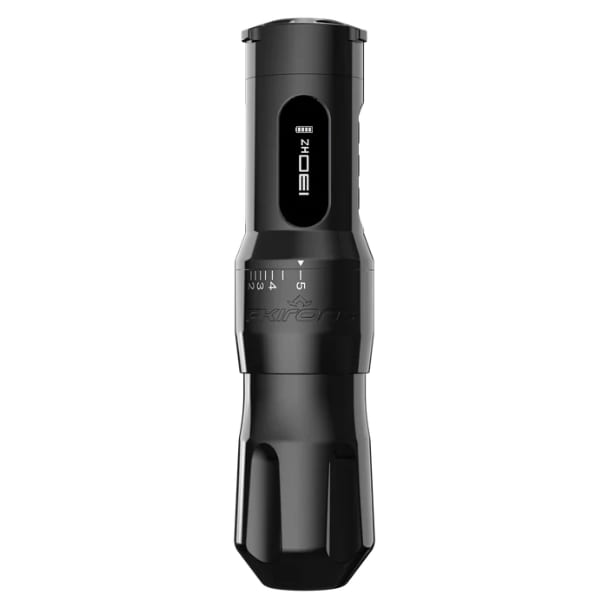
FK One Adjust Wireless Tattoo Machine
View at Miami Tattoo Supplies: FK One Adjust Wireless Tattoo Machine
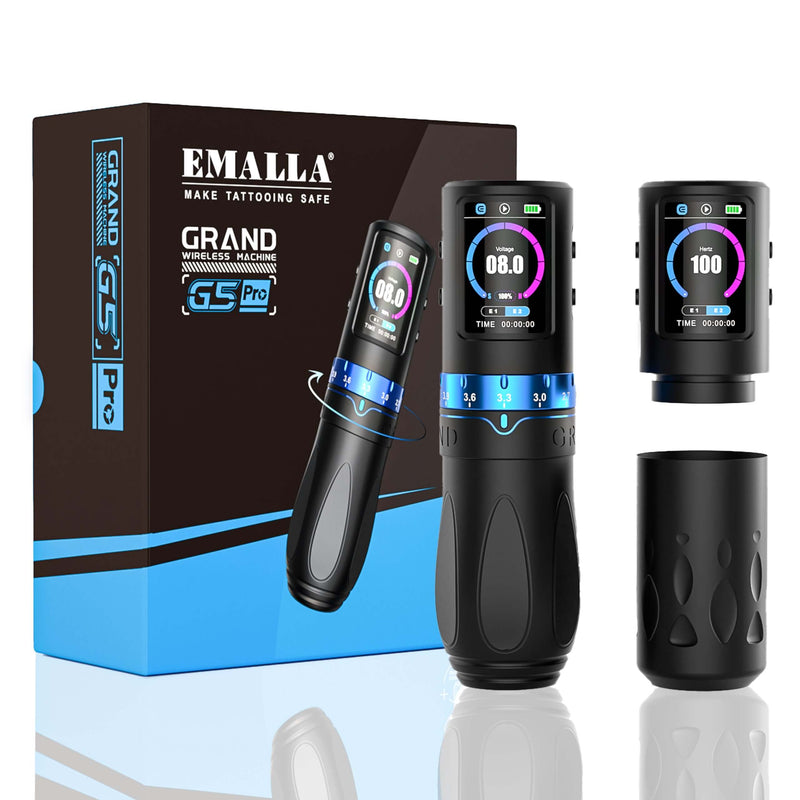
Emalla
EMALLA Grand G5 Pro Wireless Tattoo Pen Machine (Adjustable Strokes)
View at Miami Tattoo Supplies: EMALLA Grand G5 Pro Wireless Tattoo Pen Machine (Adjustable Strokes)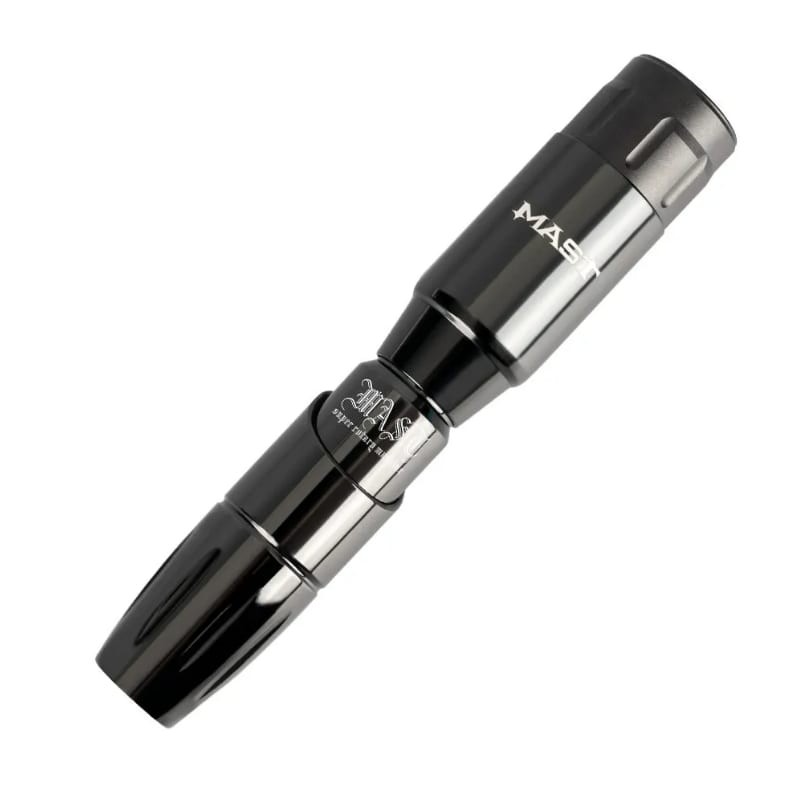
Frequently asked questions
Is it wrong to say tattoo gun?
It is not wrong in the sense that people understand you. It is just not the trade term, and many artists find it grating. If you are a client, nobody will mind much. If you want to work in the industry, say "machine": it signals that you know the craft.
Why is it called a tattoo machine?
Because the earliest patents used that word. Samuel F. O'Reilly's 1891 US patent 464,801 is titled "Tattooing-Machine," and the term stayed with the trade through the coil era into today's rotaries and pens. "Machine" also describes what it is: a powered mechanical device, not a hand tool or a weapon.
What is the difference between a tattoo pen and a tattoo gun?
A tattoo pen is a specific type of tattoo machine: a rotary in a pen-shaped body that runs cartridge needles. "Tattoo gun" is slang for any tattoo machine, pen or coil. When a listing says "tattoo pen," it describes the body style and needle system, not a different tool.
Do professional artists ever say tattoo gun?
Some do, casually or out of habit, especially artists who came up in the coil era when frame machines had a pistol-like profile. In writing, product listings and training, the trade uses "tattoo machine." When in doubt, use "machine."
Are cheap "tattoo gun" kits worth buying?
Usually not for anyone planning to tattoo professionally. Unbranded kit machines often run inconsistently, and the bundled inks and needles are the bigger concern. If you are learning, buy a named machine with published specs and practice on synthetic skin under a mentor.