What Is Give on a Tattoo Machine? Soft vs Hard Hit Explained
Short answer
What is give on a tattoo machine?
Give is how a tattoo machine responds when the needle meets resistance in the skin: a hard-hitting machine drives straight through, a machine with give yields slightly, like a shock absorber. Coils have give built in; direct-drive rotaries are stiff. Modern pens add it electronically, such as FK Irons eGive (levels 0 to 3) and Emalla E-Soft (10 levels). Use less give for lining, more for soft shading.
Key takeaways
- Give is the machine's yield on impact; zero give is a rigid, hard hit, high give is a cushioned, soft hit.
- Coil machines get give from spring tension and the air gap; most rotaries are direct drive and stiff unless they add springs or electronic give.
- FK Irons eGive on the PowerBolt II has four levels: 0 off, 1 hard, 2 medium, 3 soft; the motor briefly slows on impact.
- Emalla's E-Soft on the Grand G5 Pro offers 10 levels of softness from 5 to 100 percent.
- FK Irons suggests low or no give for lining, medium for color packing and high for soft shading.
On this page 8 sections
Artists who move from coils to rotaries often say the new machine feels harsher, and the word they reach for is give. It is one of the least defined terms in machine buying, and it now appears as a menu setting on wireless batteries. This page explains what give is, where it comes from in each kind of machine, how FK Irons and Emalla implement it, and when it helps. It is published by Miami Tattoo Supplies (MTS); the machines discussed are in the tattoo machine collection at Miami Tattoo Supplies.
What does give mean on a tattoo machine?
Give is how the machine responds when the needle meets resistance in the skin. FK Irons defines it in those terms. A machine with no give is rigid: the needle travels its full stroke regardless of what it hits, which artists call a hard hit. A machine with a lot of give acts like a shock absorber: the needle yields slightly on impact, which artists call a soft hit.
Neither is better. A hard hit puts ink in quickly and makes crisp lines. A soft hit is gentler and more forgiving when you layer light tones, but it takes more passes to saturate.
Where does give come from?
It depends on the machine's drive.
| Machine type | Where give comes from | Typical feel |
|---|---|---|
| Coil | Spring tension and the air gap between moving parts | Built-in cushion, tunable by tuning the machine |
| Direct-drive rotary or pen | None by default; the motor drives the needle directly | Stiff, consistent, hard |
| Rotary or pen with mechanical give | Internal springs or suspension | Fixed amount of cushion |
| Pen with electronic give | Motor control in the battery or firmware | Adjustable from a menu |
FK Irons describes coils as having give built in: the physical tension of the springs and the air gap create a mechanical cushion. Most rotaries, it says, are direct drive and naturally stiff, and modern models add give through internal springs or electronic give. Our rotary vs coil comparison explains the drives themselves.
How does FK Irons eGive work?
eGive is a digital control over motor behavior. FK Irons says that as you raise eGive, the motor slows down for a fraction of a second when the needle hits the skin, which imitates the softness of a coil without changing any parts.
On the PowerBolt II battery used by the Flux Max there are four levels: 0 (disabled), 1 (hard), 2 (medium) and 3 (soft). Older PowerBolt and PowerBolt+ batteries ran from 0 (no effect) to 5 (maximum). FK Irons asks you to let the machine finish sensing the needle after you change eGive, before you start working. The video on this page is FK Irons' own walkthrough of turning it on. More detail on the machine is in the Flux Max guide.
How does Emalla E-Soft work?
Emalla calls its version E-Soft and describes it as precise give control. On the Grand G5 Pro there are 10 levels of softness adjustment, from 5 to 100 percent, which Emalla pitches as the feel of a traditional coil with the precision of a wireless pen. The G5 Pro also has adjustable stroke (2.4 to 4.2 mm) and separate voltage and frequency modes, so you can change hit three ways on one machine. At the time of writing (November 2026) the Emalla Grand G5 Pro was $429 at MTS.
What about machines without a give setting?
Many professional pens have no give menu, including the Bishop Power Wand: Bishop's pages list no give setting. On those machines you control the feel in other ways:
- Stroke. A shorter stroke is softer. The Wand comes as Shader 3.5 mm, Packer 4.2 mm or Liner 5.0 mm, so the version you buy sets its hit. See the stroke length guide.
- Voltage. Lower voltage slows the cycle, which FK Irons says generally softens the feel.
- Needle and hand. Smaller groupings, bugpin diameters and a lighter hand all soften the result.
Give, stroke and voltage are separate controls. A long stroke with high give and a short stroke with no give can feel similar on some work and very different on others, so change one at a time.
When should you use more or less give?
FK Irons' suggestions are a sensible starting point:
| Technique | Suggested give | Why |
|---|---|---|
| Line work | Low or off | Crisp, punchy hit that sets the line in one pass |
| Color packing | Medium | Enough power to saturate without overworking |
| Soft shading | High | Layering light tones slowly without chewing the skin |
FK Irons also notes that heavy hits on sensitive areas such as the inner arm or ribs can make skin red and swollen quickly, and it warns that combining high give with many passes over one area causes excessive trauma. The practical rule: more give is a tool for gentle layering, not an excuse to keep working the same patch. If ink is not going in, a softer setting usually makes that worse.
Is a give setting worth paying for?
It is worth having if you came from coils and miss the cushion, or if you want one machine to cover lining and soft shading. It is not essential: many artists do excellent work on stiff direct-drive pens and change the hit by stroke and voltage instead. If you are learning, practice with give at the middle setting so you learn hand speed first, then explore it on practice skin.
Watch
Gear mentioned
Products from the Miami Tattoo Supplies catalog, the publisher of this site. Check current price and stock on the store.
FK Irons
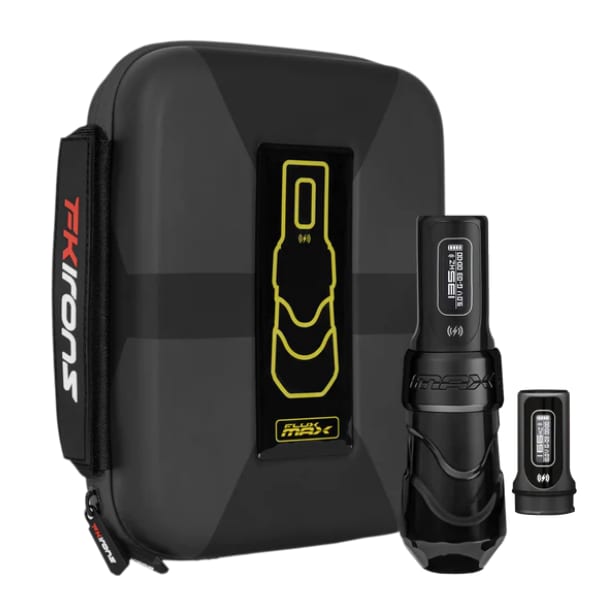
FK Irons Flux Max Stealth w/ 2 PowerBolts II
View at Miami Tattoo Supplies: FK Irons Flux Max Stealth w/ 2 PowerBolts II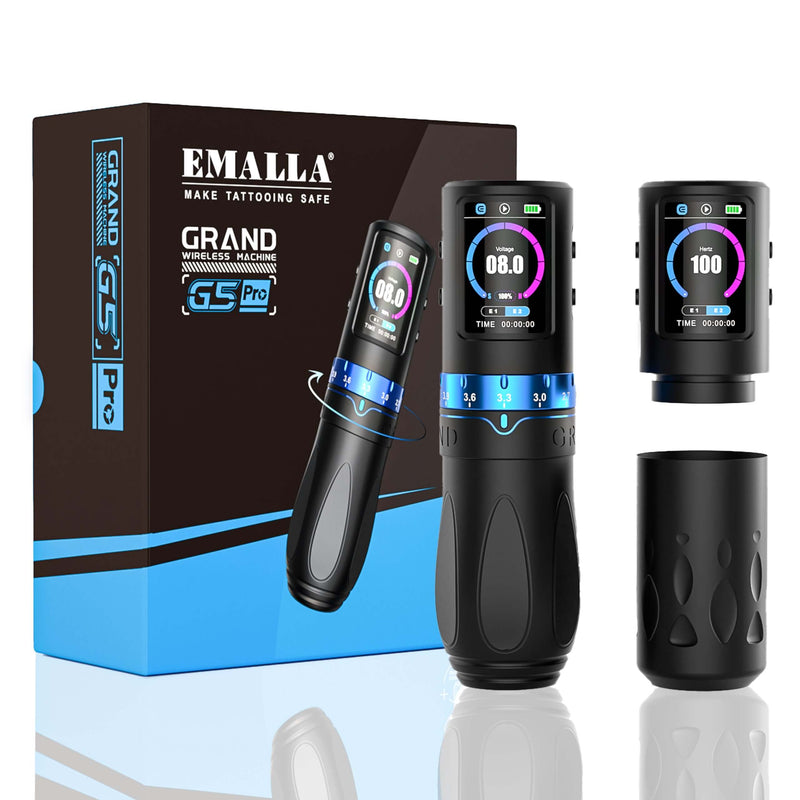
Emalla
EMALLA Grand G5 Pro Wireless Tattoo Pen Machine (Adjustable Strokes)
View at Miami Tattoo Supplies: EMALLA Grand G5 Pro Wireless Tattoo Pen Machine (Adjustable Strokes)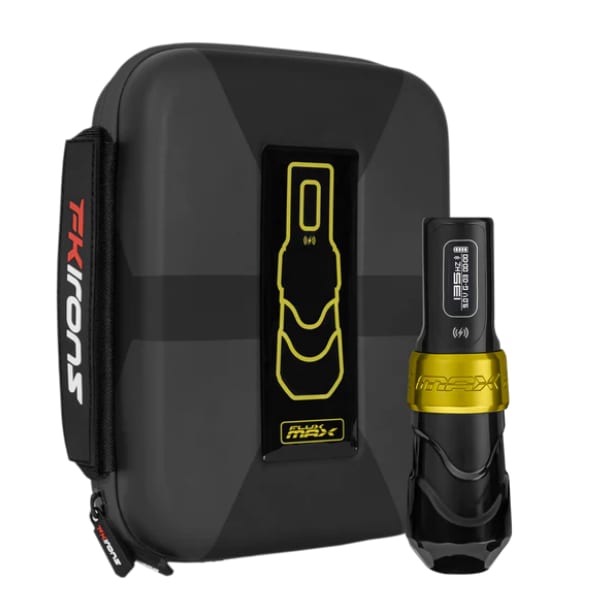
FK Irons
FK Irons Flux Max Gold Stealth w/ 1 PowerBolt II
View at Miami Tattoo Supplies: FK Irons Flux Max Gold Stealth w/ 1 PowerBolt II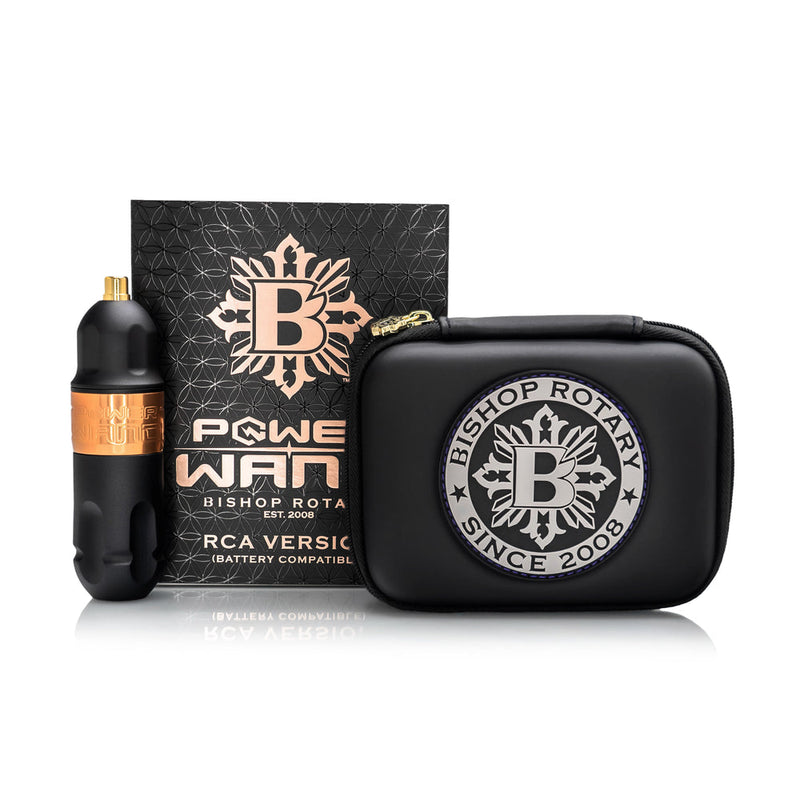
HQ Silicone Practice Skin with Straps 8x8
View at Miami Tattoo Supplies: HQ Silicone Practice Skin with Straps 8x8
Frequently asked questions
Is more give better for beginners?
Not necessarily. A soft hit is more forgiving of a heavy hand, but it also hides depth and hand-speed problems and needs more passes to saturate, which can overwork skin. Learn on a middle setting, on practice skin and under a licensed mentor, so you understand what the machine is doing before you rely on give.
What eGive setting should I use on a Flux Max?
FK Irons' general guidance is low or off for lining, medium for color packing and high for soft shading. On the PowerBolt II that maps to levels 0 or 1 for lines, 2 for packing and 3 for soft black and grey. Let the machine finish sensing the needle after each change.
Do rotary tattoo machines have give?
Most direct-drive rotaries have very little; the motor drives the needle directly, so the hit is stiff and consistent. Some rotaries add mechanical give with internal springs or suspension, and many current wireless pens add electronic give, such as FK Irons eGive or Emalla E-Soft, adjustable from the battery or buttons.
Is give the same as stroke length?
No. Stroke is the distance the needle travels on each cycle, fixed by the machine's cam. Give is how much the needle yields when it meets skin. Both change how hard the machine hits, which is why they get confused, but you can have a long stroke with high give or a short stroke with none.
Does the Bishop Power Wand have give?
Bishop's product pages list no adjustable give setting for the Power Wand. Instead, Bishop sells three fixed strokes: the Shader 3.5 mm for a softer hit, the Packer 4.2 mm and the Liner 5.0 mm for the hardest hit. You can also soften the feel by lowering voltage.