Disinfectants for Tattoo Studios: What to Use Where
Short answer
What disinfectant do tattoo shops use?
Tattoo shops disinfect surfaces and equipment with an EPA-registered hospital disinfectant that carries a tuberculocidal claim, such as CaviCide, and keep the surface visibly wet for the contact time on the label. Florida's tattoo rule requires exactly that kind of product. Skin is a separate job: it is cleaned with a soap and prepared with a product labeled as an antiseptic. Never use a surface disinfectant on skin.
Key takeaways
- Surfaces get an EPA-registered disinfectant with a tuberculocidal claim; skin gets a product labeled as an antiseptic.
- Contact time is the time the surface must stay wet, and it is printed on the label. Wiping dry early means it was not disinfected.
- Clean visible soil first, then disinfect. Cleaning and disinfecting are two steps unless the label says one-step.
- Check the EPA registration number on the label against EPA's List B (tuberculocidal) and List S (bloodborne pathogens).
- Barrier-cover what you can, and disinfect the machine and work area after every client.
On this page 9 sections
"Disinfectant" gets used loosely in shops for anything that smells clean. Regulators use it narrowly: a registered product, applied to a hard surface, left wet for a stated time. Getting that distinction right is most of what an inspector checks at the station. This guide is published by Miami Tattoo Supplies; products named are ones the store lists in its cleaners and disinfectants collection.
What disinfectant do tattoo shops use?
An EPA-registered hospital disinfectant with a tuberculocidal claim on its label. In the US, surface disinfectants are registered pesticides, and EPA keeps lists of registered products by the organisms they are proven against. Two lists matter for a studio:
- List B — products effective against Mycobacterium tuberculosis.
- List S — products effective against bloodborne pathogens (HIV, hepatitis B and hepatitis C). EPA consolidated its older HIV and HBV lists into List S.
Florida writes the TB claim into law. Its tattoo rule defines "disinfect" as using a product registered with the EPA as a tuberculocidal disinfectant, and requires the machine and work area to be disinfected with one after every tattoo. CDC's guidance for blood spills likewise calls for an EPA-registered tuberculocidal agent or a product with specific HIV or HBV label claims. OSHA requires contaminated work surfaces to be decontaminated with an appropriate disinfectant after procedures.
The practical check: find the EPA registration number on the label and look it up on the relevant EPA list.
Contact time: the part most people skip
Contact time is how long the surface must stay visibly wet for the label claims to be true. It is set per product and per organism. EPA's own explanation is direct: contact time is the time the product must be applied to the surface for it to be effective. CDC notes that most EPA-registered hospital disinfectants carry a 10-minute label contact time, while some are registered at one to three minutes.
Spray, then wipe straight away, and you have cleaned the surface but not disinfected it. If the product dries before the contact time, apply more.
CaviCide is a good example of reading the label closely. On EPA's List B, CaviCide (EPA Reg. No. 46781-6) is listed at a 3-minute contact time for TB. Metrex's wipes come in more than one version: List B shows CaviWipes (46781-8) at 3 minutes and CaviWipes1 (46781-13) at 1 minute. Read the registration number on the tub you receive and use the time printed on that label.
Clean first, then disinfect
Visible blood, ink and glide block a disinfectant from reaching the surface. CDC's recommendations treat cleaning as a necessary step before disinfection and call for visible organic residue to be removed first. Some products are labeled as one-step cleaner-disinfectants; even then, for heavy soil, wipe it off with the product and a paper towel, then apply a fresh wet coat for the full contact time.
What to use where
| Surface or item | Product type | How |
|---|---|---|
| Workstation, tray, armrest, chair | EPA-registered tuberculocidal disinfectant | Clean, then keep wet for label time, after every client |
| Machine body, power supply | Same, applied to a towel or wipe | Barrier first; disinfect after barrier removal |
| Spray and squeeze bottles | Same | Bag during use; disinfect after |
| Client's skin before tattooing | Product labeled as an antiseptic | Per the label, with a single-use towel or pad |
| Skin during the session | Green soap or tattoo foam soap | Diluted or used per the label |
| Reusable steel instruments | Cleaning, then autoclave sterilization | Disinfectant is not a substitute |
Surface disinfectants vs skin products
These are different categories and are not interchangeable. EPA reminds users that disinfectants are pesticides and can be harmful, and the use sites on their labels are surfaces such as countertops and chairs. Skin is prepared with products made and labeled for skin. Florida's rule requires the tattoo area to be cleansed with a solution labeled as an antiseptic, used per the manufacturer's instructions. The store lists sterile 70% isopropyl alcohol prep pads from Dynarex at $4.95 for 100 at the time of writing (November 2026), and the skin-cleaning side is covered in what is green soap.
Reusable instruments are a different standard
A disinfectant is for noncritical surfaces. Anything reusable that pierces skin must be sterilized, which in Florida means a steam autoclave with spore testing and records, unless the studio uses only pre-sterilized single-use items. Do tattoo shops need an autoclave? covers that choice, and machines themselves are covered in how to clean a tattoo machine.
Barriers reduce what you have to disinfect
CDC accepts barrier coverings on noncritical surfaces in place of disinfection between clients, changed when soiled or damaged. Florida requires barrier covers on items touched during a tattoo and disinfection of the machine and work area at the end anyway. See the barrier protection guide for the full kit.
What Miami Tattoo Supplies lists
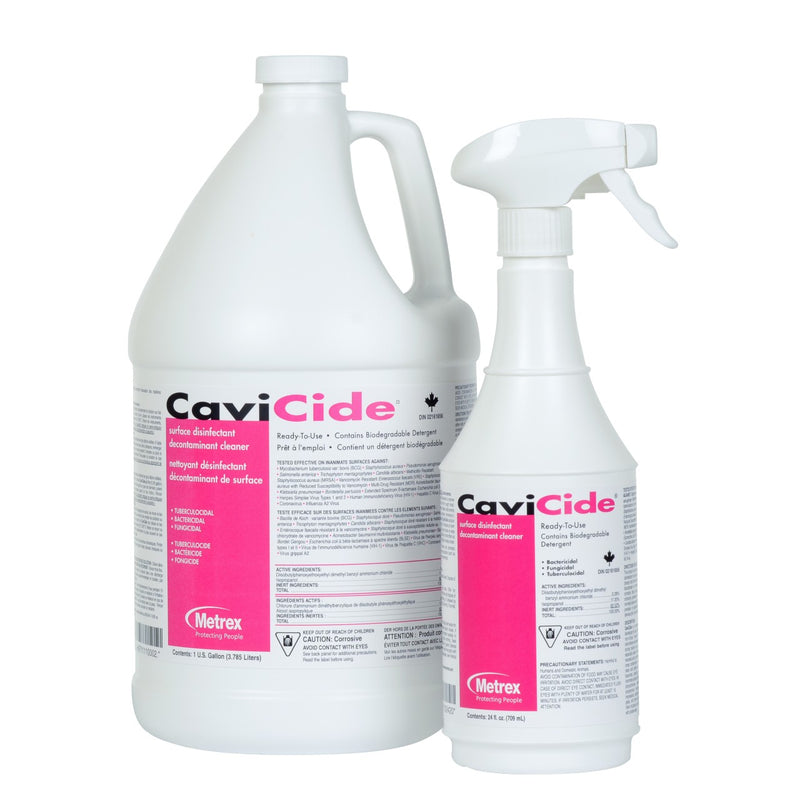
At the time of writing (November 2026), the store lists CaviCide ready-to-use disinfectant at $18.90 for the 24 oz spray and $43 for the gallon, and CaviCide surface disinfectant wipes at $19.90 for a 160-count tub. Refill a 10 oz continuous spray bottle from the gallon and label it with the product name, which Florida requires for any liquid not in its original container. The CaviCide spray and gallon listing shows both sizes.
Gear mentioned
Products from the Miami Tattoo Supplies catalog, the publisher of this site. Check current price and stock on the store.
Cavicide Surface Disinfectant Cleaner
View at Miami Tattoo Supplies: Cavicide Surface Disinfectant Cleaner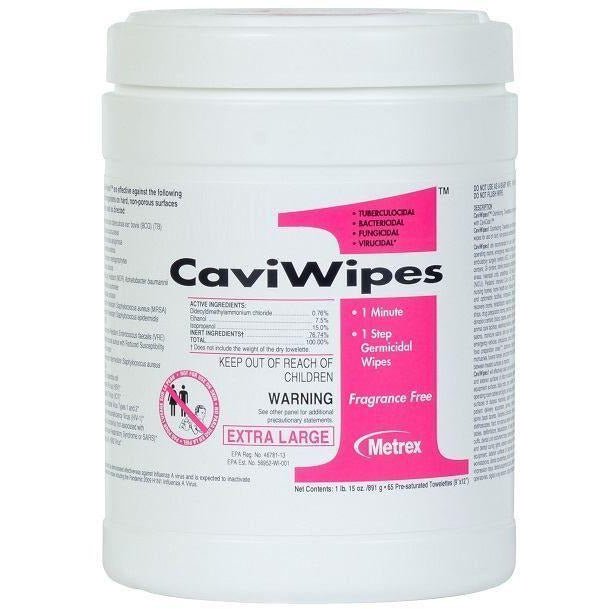
CaviCide Surface Disinfectant Wipes 160 Count
View at Miami Tattoo Supplies: CaviCide Surface Disinfectant Wipes 160 Count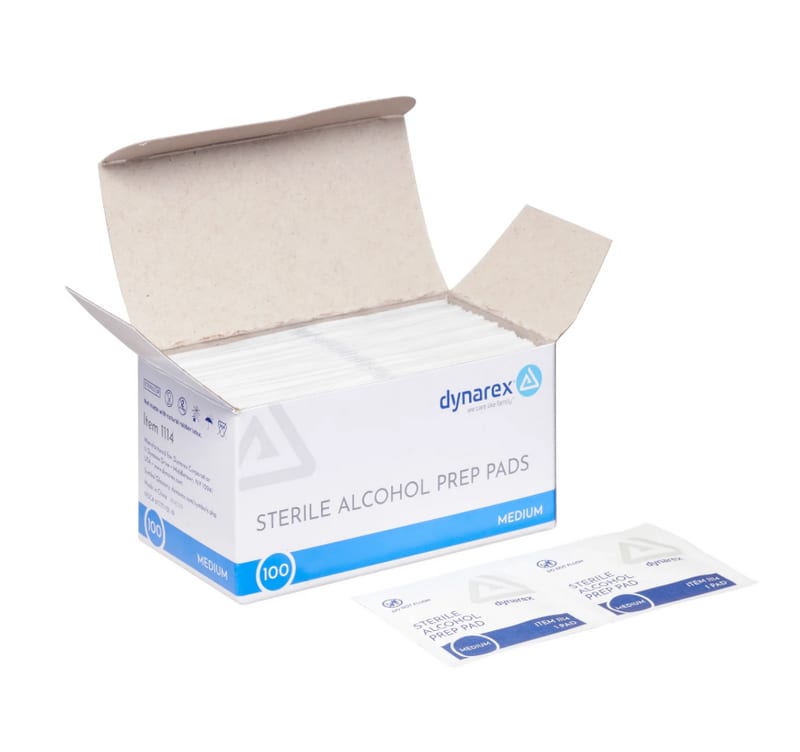
Dynarex
Dynarex Alcohol Prep Pads Sterile - Box of 100 - Wrapped
View at Miami Tattoo Supplies: Dynarex Alcohol Prep Pads Sterile - Box of 100 - Wrapped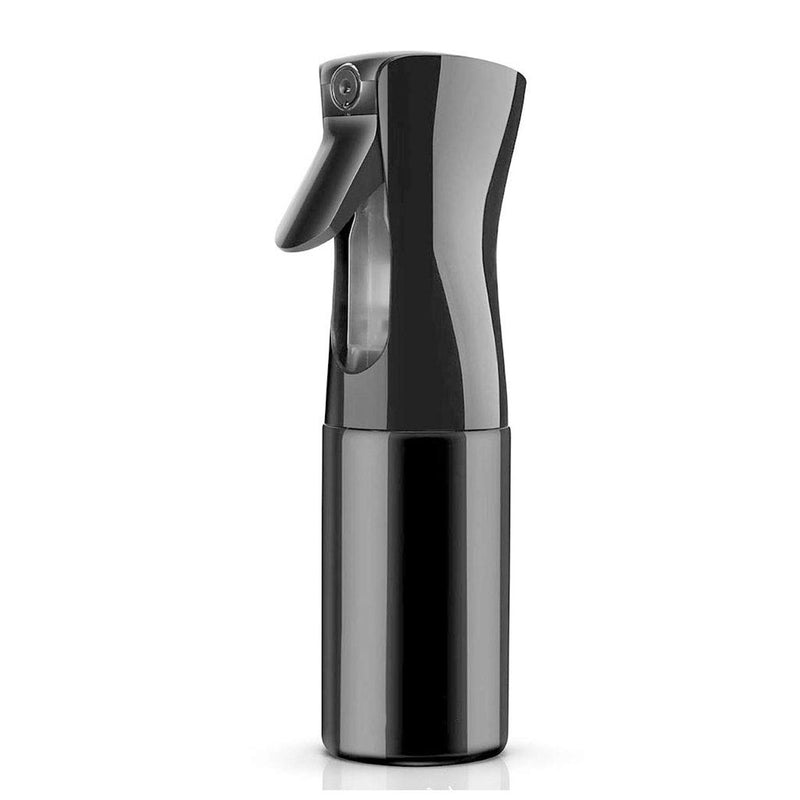
Continuous Spray Bottle 10 oz
View at Miami Tattoo Supplies: Continuous Spray Bottle 10 oz
Frequently asked questions
Is CaviCide good for tattoo shops?
CaviCide is an EPA-registered intermediate-level surface disinfectant listed on EPA's List B with a 3-minute tuberculocidal contact time, which meets a tuberculocidal requirement such as Florida's. It is for hard, non-porous surfaces, not skin. Use it according to its label and keep surfaces wet for the stated time.
Can I use rubbing alcohol to disinfect my station?
Not as your surface disinfectant unless the specific product carries an EPA registration with a tuberculocidal claim. Florida's rule requires an EPA-registered tuberculocidal disinfectant for the machine and work area. Alcohol prep pads have their place on skin, used per their label.
Can I use bleach in a tattoo studio?
CDC describes diluted sodium hypochlorite for blood spill cleanup in healthcare settings, and EPA lists registered bleach-based disinfectants. If you use bleach, use an EPA-registered product with the claims you need and follow its label for dilution and contact time.
How long should disinfectant stay on a surface?
For the contact time on that product's label. EPA defines contact time as how long the surface must stay wet for the product to work. It varies from about one minute to ten depending on the product and the organism, so read the label rather than relying on a general rule.
Is green soap a disinfectant?
No. Green soap is a skin cleanser. It is not an EPA-registered surface disinfectant, and it does not replace a tuberculocidal disinfectant on the station. Some green soap products are labeled as an antiseptic for skin; check the label of the one you use.
Sources
- EPA — Selected EPA-Registered Disinfectants (Lists B and S)
- EPA — List B: Registered Products Effective Against Mycobacterium tuberculosis
- CDC — Recommendations for Disinfection and Sterilization in Healthcare Facilities
- OSHA — Bloodborne Pathogens Standard, 29 CFR 1910.1030
- Florida Department of Health — Chapter 64E-28, F.A.C., Tattooing