Liner vs Shader Tattoo Machines: Do You Still Need Both?
Short answer
What is the difference between a liner and a shader tattoo machine?
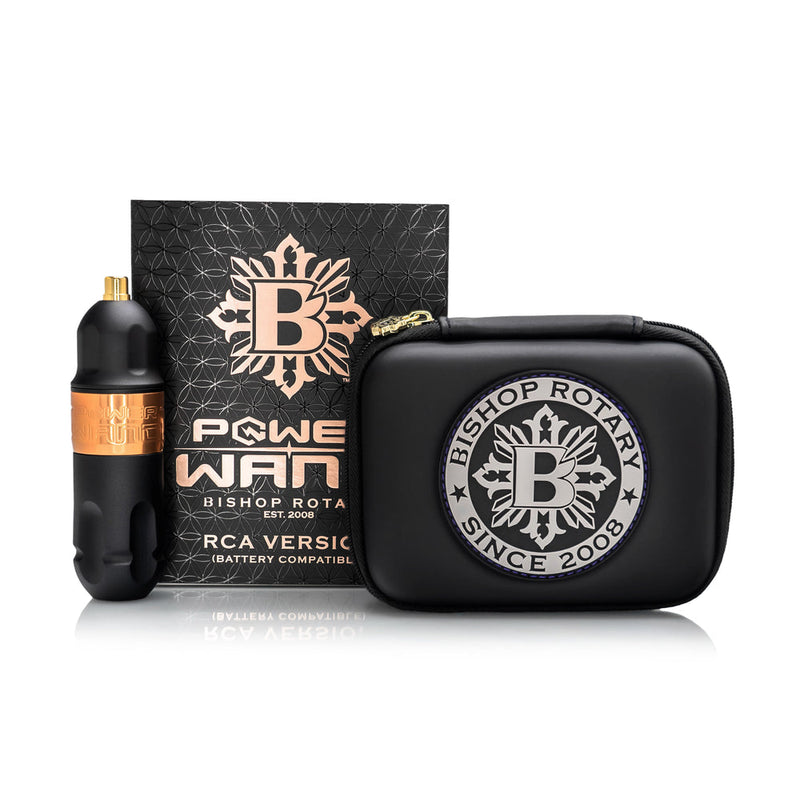
A liner is tuned for crisp, single-pass lines and a shader for smooth shading and packing. On coil machines the difference is built in through coils, springs and tuning. On rotaries it mostly comes down to stroke length, and Bishop, for example, sells the Power Wand as Liner 5.0 mm and Shader 3.5 mm. An adjustable-stroke machine can now replace both.
Key takeaways
- On coils, liner and shader are different builds: a liner is tuned to run fast and snappy, a shader softer and steadier.
- On rotaries, liner and shader are usually just stroke lengths: Bishop Power Wand Liner 5.0 mm, Packer 4.2 mm, Shader 3.5 mm.
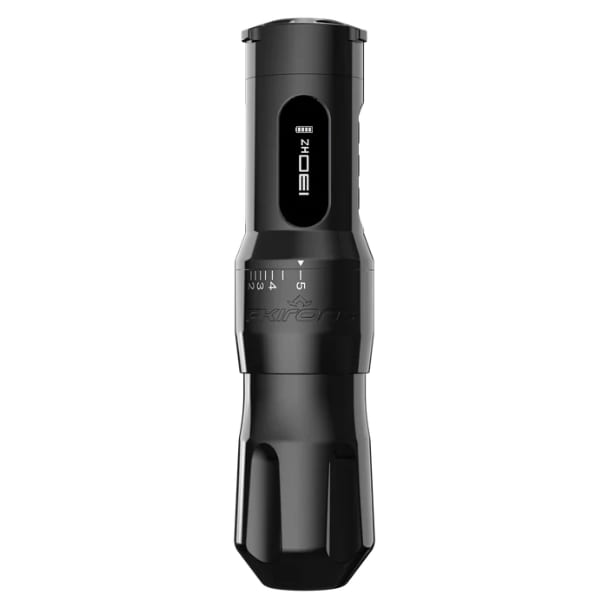
- Adjustable machines like the FK One Adjust (2.0 to 5.0 mm) or Emalla Grand G5 Pro (2.4 to 4.2 mm) cover lining and shading in one body.
- Two fixed machines are still worth it if you switch between lining and shading constantly and do not want to touch a setting.
On this page 7 sections
"Get a liner and a shader" was standard advice for decades, and a lot of starter kits still ship that way. The labels made complete sense on coil machines. On a modern rotary they mean something narrower, and with adjustable-stroke machines the question of owning two has changed. This page explains both eras and when two machines are still the better buy. Written by Miami Tattoo Supplies (MTS), which sells both fixed-stroke and adjustable machines.
What is the difference between a liner and a shader?
A liner is set up to put ink in with a single clean pass and leave a crisp line. A shader is set up to lay down smooth, even shading and packing over larger areas without overworking the skin. The goal differs, so the hit differs: a liner wants a fast, decisive hit; a shader wants a steadier, softer one that builds tone gradually.
These are machine setups, not needle types. A round liner needle and a round shader needle are a separate distinction; see round liner vs round shader needles.
How liners and shaders differ on coil machines
On a coil machine, liner and shader are different builds. Coil wraps, spring stiffness, armature weight and the contact gap are all chosen and tuned for the job. In coil tradition, a liner is tuned to run fast with a snappy hit, and a shader is tuned to run a little slower with a softer, steadier feel that suits larger groupings. Because tuning is physical, you cannot turn one into the other with a dial; you either retune or own both. Our rotary vs coil guide explains why.
Corded setups built around this have dual-output power supplies. The Salvation Dual Input Digital Power Supply at MTS, for example, has separate jacks and voltage dials for a liner and a shader, plus a pedal input.
How liners and shaders differ on rotary machines
On a rotary, "liner" and "shader" usually just mean stroke length. Bishop sells the Power Wand in three versions, listed at Miami Tattoo Supplies as Shader 3.5 mm, Packer 4.2 mm and Liner 5.0 mm. Bishop says the Shader is made for smooth black-and-grey shading and fine line, the Packer for color packing and saturation, and the Liner for all line work, 3RL shading, blackwork and dotwork. A longer stroke hits harder and drives a line in on one pass; a shorter stroke is gentler for shading. The Bishop Power Wand guide covers the three versions in detail.
Not every brand uses the words. FK Irons sells the Flux Max simply by stroke (3.2, 4.0 and 4.5 mm) and leaves the artist to decide which is which. Fine-line artists often line with short strokes, because their lines are small and light. That is why stroke numbers are more useful than the labels; the stroke length guide lists common ranges, and soft vs hard hit covers the other half of how a machine feels.
| Liner | Shader | |
|---|---|---|
| Goal | Clean line, one pass | Smooth, even tone and packing |
| Coil setup | Tuned fast and snappy | Tuned softer and steadier |
| Rotary setup | Longer stroke (Bishop Liner 5.0 mm) | Shorter stroke (Bishop Shader 3.5 mm) |
| Typical needles | Round liners | Magnums, round shaders |
Do you still need both?
Not necessarily. An adjustable-stroke machine changes stroke on the machine, so one body can line, shade and pack:
- FK One Adjust: 2.0 to 5.0 mm in 0.5 mm steps; FK Irons says it changes stroke without powering down. $799.99 at Miami Tattoo Supplies at the time of writing (November 2026).
- Emalla Grand G5 Pro: seven steps from 2.4 to 4.2 mm; Emalla labels 3.9 to 4.2 mm for bold lining and 2.4 to 3.0 mm for soft shading. $429 at the time of writing.
A single adjustable machine suits artists who want one thing to bag, charge and carry, and artists who travel or work guest spots.
When two machines are still better
Two fixed machines win when you change between lining and shading constantly in a session. Picking up a second machine is faster than adjusting a setting, and you never discover mid-line that you left the machine on a shading stroke. Two machines also give you a backup if one fails. Many artists run a pair such as a 3.2 mm and a 4.0 or 4.5 mm Flux Max, or a Power Wand Liner and Shader.
If you go that route, the FK Irons machine collection and Bishop machine collection at Miami Tattoo Supplies list each stroke separately.
The bottom line
The liner and shader split is a coil-era idea that survives on rotaries as stroke length. Buy one adjustable machine if you want simplicity, or a long-stroke and short-stroke pair if you switch constantly and want no settings to manage. Technique for each job is in how to line a tattoo.
Watch
Gear mentioned
Products from the Miami Tattoo Supplies catalog, the publisher of this site. Check current price and stock on the store.
FK Irons
FK One Adjust Wireless Tattoo Machine
View at Miami Tattoo Supplies: FK One Adjust Wireless Tattoo Machine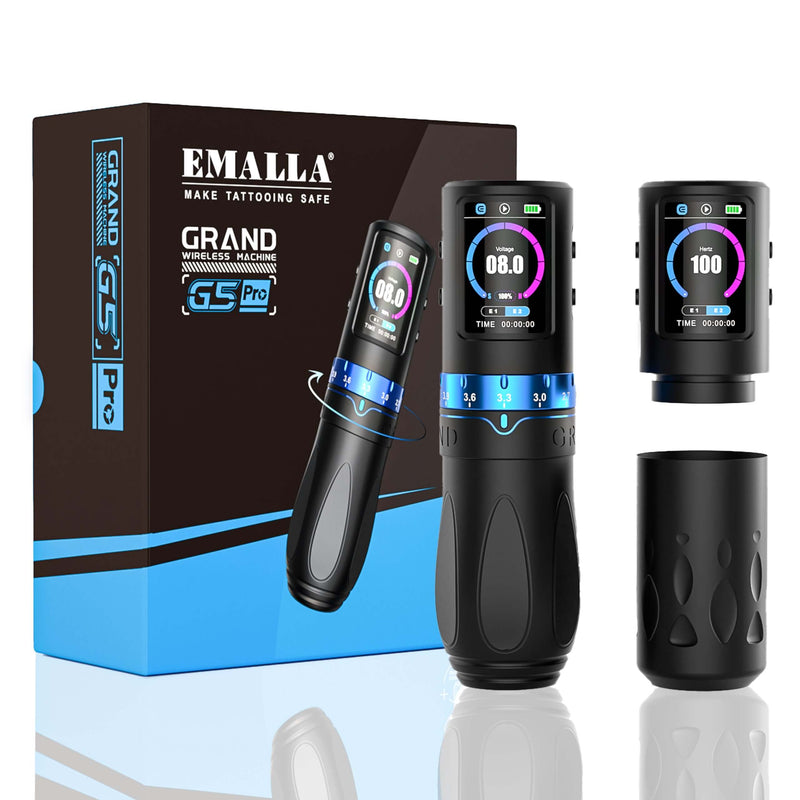
Emalla
EMALLA Grand G5 Pro Wireless Tattoo Pen Machine (Adjustable Strokes)
View at Miami Tattoo Supplies: EMALLA Grand G5 Pro Wireless Tattoo Pen Machine (Adjustable Strokes)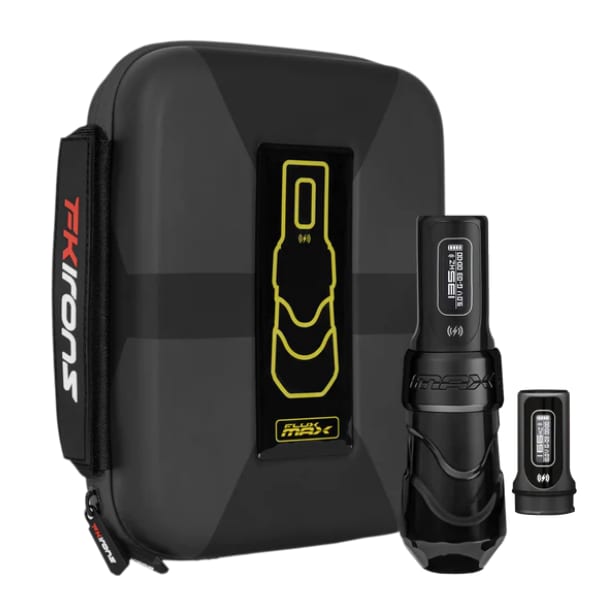
FK Irons
FK Irons Flux Max Stealth w/ 2 PowerBolts II
View at Miami Tattoo Supplies: FK Irons Flux Max Stealth w/ 2 PowerBolts II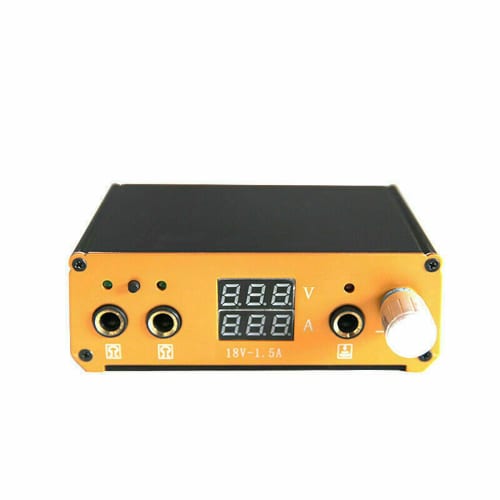
Salvation Dual Input Digital Power Supply
View at Miami Tattoo Supplies: Salvation Dual Input Digital Power Supply
Frequently asked questions
Can you shade with a liner machine?
Yes, and many artists do, especially for whip shading and bold black work. A long-stroke liner hits harder, so you move faster and take care not to overwork skin. For soft black-and-grey gradients, a shorter stroke is usually easier. Your hand speed and needle choice matter as much as the machine.
Can you line with a shader machine?
Often, yes. A shorter stroke can line well, particularly for fine-line work with small groupings. Bold traditional lines are harder with a soft, short stroke because the needle needs more passes. Test on practice skin to see if your shader holds a clean line.
What stroke is a liner tattoo machine?
It depends on the brand. Bishop's Power Wand Liner is 5.0 mm. Emalla suggests 3.9 to 4.2 mm for bold lining on the G5 Pro. Fine-line artists often line at 2.5 to 3.0 mm. Check the stroke number on the listing rather than the label.
Is a packer the same as a shader?
Not quite. On Bishop's Power Wand, the Packer sits between the Shader and Liner at 4.2 mm and is meant for solid color and black packing, which needs more force than soft shading. Other brands do not use the term. Think of it as a mid-to-long stroke for saturation.
Do I need a dual power supply for a liner and shader?
Only if both machines are corded and you want them plugged in at once. A dual-output supply lets you set separate voltages and switch with a toggle. If either machine is wireless, a single-output supply or none at all may be enough.