
How Long Does It Take to Learn to Tattoo? Milestones, Not Myths
Short answer
How long does it take to learn to tattoo?
There is no fixed time. Learning to tattoo competently takes a long apprenticeship, not a short course, and the pace depends on how well you already draw, how structured your mentor is, how much you practice and the style you work in. The legal steps are short: in Florida, a three-hour approved course and a $60 license application. Measure progress by milestones, not months.
Key takeaways
- There is no standard length for learning to tattoo or for an apprenticeship; it is set by the shop and by your progress.
- Strong drawing skills shorten every later stage, which is why the portfolio comes first.
- The legal steps can be quick: Florida's approved bloodborne pathogens course is at least three hours, and the state does not require an apprenticeship to apply for a license.
- Being licensed is not the same as being ready; readiness is judged by your mentor and your healed work.
On this page 8 sections
"How long does it take?" is a fair question when you are deciding whether to commit to tattooing, and most answers online give a confident number. We do not know of a reliable one: apprenticeships have no standard length, and the person who arrives drawing well progresses on a different clock from the person who does not.
This guide is published by Miami Tattoo Supplies, a tattoo supply store in Hollywood, Florida, whose practice skin range is where most of these hours get spent. Instead of inventing a figure, it sets out the milestones that mark real progress and what speeds each one up or slows it down.
The honest answer: it depends on five things
How long it takes you is decided mostly by five factors.
| Factor | Speeds you up | Slows you down |
|---|---|---|
| Drawing ability | A strong, tattoo-ready portfolio | Learning to draw while learning to tattoo |
| Mentor and shop | Structured teaching, regular feedback | Little supervision, unclear expectations |
| Practice time | Daily drawing and practice-skin work | Occasional sessions |
| Style | Simple, bold work first | Starting with realism or fine detail |
| Local rules | Clear, quick licensing | Longer licensing or training requirements |
The legal steps are usually the shortest part. In Florida, the Department-approved bloodborne pathogens course must be at least three hours long under Rule 64E-28.006, and the Department of Health's FAQ says an apprenticeship is not required to apply for a license. That means you can be licensed long before you are good, which is why the milestones below matter more than the paperwork.
Milestone 1: A portfolio that gets you into a shop
The first milestone is a drawing portfolio strong enough for a shop to take you on. How long this takes depends entirely on where you start. Someone with years of drawing behind them may need only to redraw their work as tattoo designs; someone starting from scratch needs much longer.
You are ready when your book shows clean line work, controlled shading, finished tattoo-style designs and a sense of the style you want to work in. Our guide to how to become a tattoo artist describes what shops look for.
Milestone 2: Running a clean station without reminders
Early in an apprenticeship, most of your time goes on shop work: cleaning, setting up and breaking down stations, making stencils, watching. The milestone is being able to run the whole hygiene routine correctly every time, without anyone checking. It is unglamorous, and it is the part that protects clients.
Milestone 3: Consistent work on practice skin
Next comes machine work on synthetic skin: straight lines, circles, shading gradients, color packing, needle changes. The milestone is consistency, not one good sheet: lines that are steady every time, shading without patches, and a setup you can repeat.
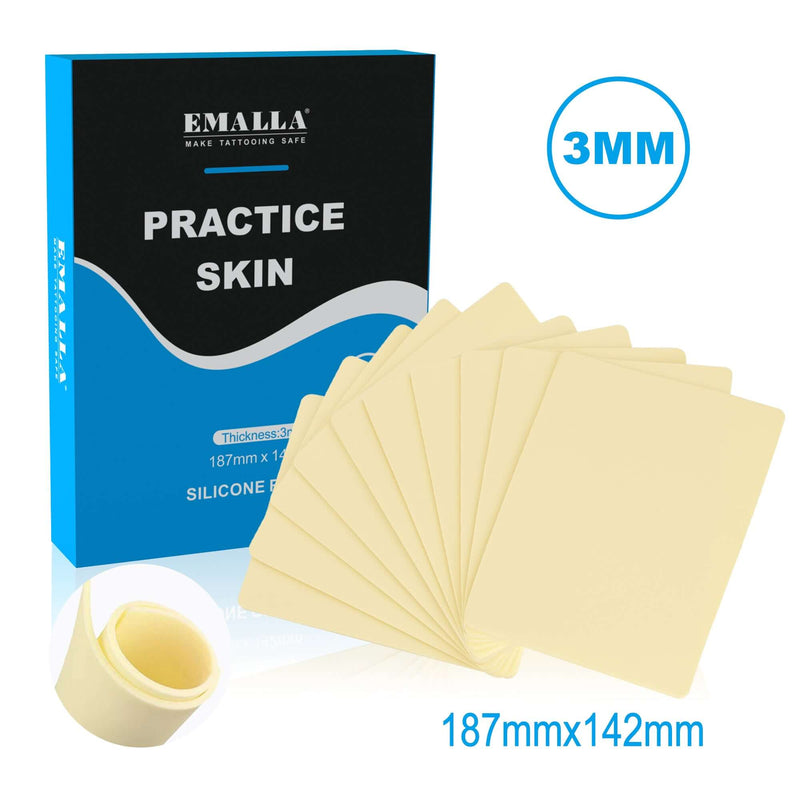
Practice volume decides how quickly you get here. Cheap flat sheets make daily practice affordable; at the time of writing (November 2026), Miami Tattoo Supplies lists the Emalla small practice skin 10-pack at $25.99, and Peak Dotwork ballpoint drawing cartridges at $24.99 for a box of 20 for practicing machine control on paper. Our list of common beginner mistakes shows what to watch for at this stage.
Milestone 4: Training, license and first supervised tattoos
Before you tattoo a person, you need bloodborne pathogens training and, in most states, a license. In Florida, anyone who tattoos another person needs a Department of Health license, including apprentices; the steps are in our guide to getting a tattoo license in Florida.
Your first tattoos on people are usually small, simple designs, done under supervision in a licensed shop. The milestone here is not the first tattoo but the first few dozen that heal well: healed work is the only honest test of depth, line work and saturation.
Milestone 5: Working independently
Mentors decide when an apprentice can take their own clients, and they decide it based on healed results, not a calendar. Many artists keep working on simpler designs for some time before taking on larger or more technical pieces.
There is no finish line after that. Working artists keep learning new styles, machines and techniques for their whole careers, and most will tell you their first year of independent work taught them as much as the apprenticeship.
How to shorten the timeline without cutting corners
You cannot skip the steps, but you can move through them faster.
- Draw every day, especially tattoo-style designs.
- Practice on synthetic skin daily once your mentor allows it, with a full setup each time.
- Ask for specific feedback and keep a record of your sheets to see progress.
- Start with bold, simple work before fine detail or realism.
- Get your bloodborne pathogens course done early, so it never holds you back.
What does not shorten it is tattooing friends at home. It is unsafe and, in states like Florida, illegal, and it tends to produce scarred clients and a reputation that is hard to fix. Practice skin is where the extra hours belong; the practice skin collection at Miami Tattoo Supplies has options at every price point, and our apprentice supply list shows what else to have on hand.
Gear mentioned
Products from the Miami Tattoo Supplies catalog, the publisher of this site. Check current price and stock on the store.
Emalla
EMALLA Small Tattoo Practice Skin (10pcs)
View at Miami Tattoo Supplies: EMALLA Small Tattoo Practice Skin (10pcs)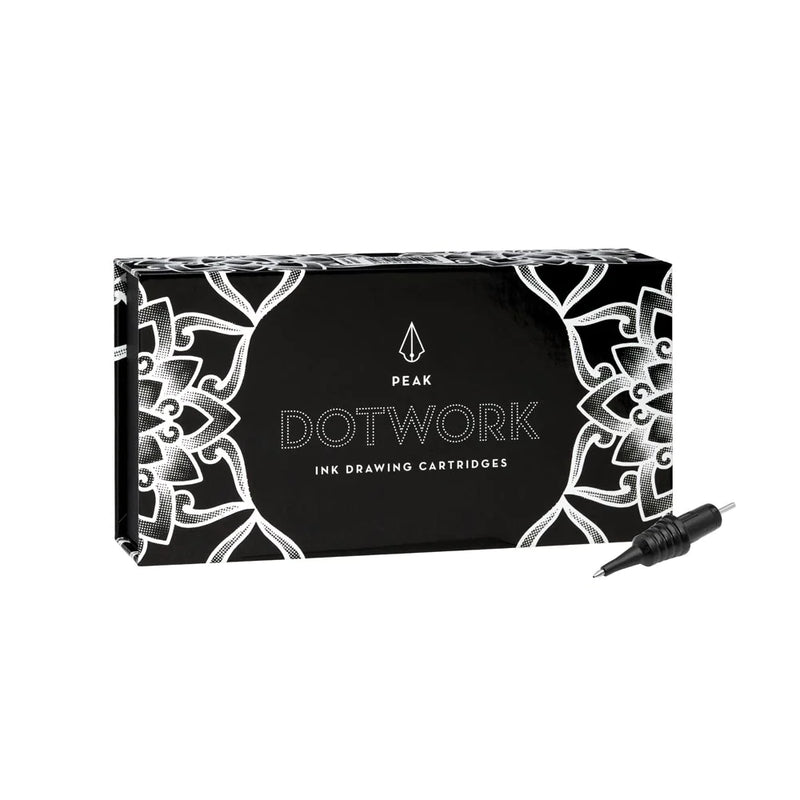
Peak
Peak Dotwork Ink Drawing Cartridge for Versatile Artistic Applications - Box of 20
View at Miami Tattoo Supplies: Peak Dotwork Ink Drawing Cartridge for Versatile Artistic Applications - Box of 20
Frequently asked questions
How long is a tattoo apprenticeship?
There is no standard length. Each shop sets its own terms, and many move apprentices forward based on progress rather than a fixed date. Ask about the expected structure and milestones before you start, and get the arrangement in writing.
Can you learn to tattoo in a few weeks?
You can complete the legal training quickly in some states, but you cannot learn to tattoo well in weeks. Drawing, machine control, hygiene and depth take sustained practice and supervision. Short courses that promise to make you a tattoo artist skip the parts that keep clients safe.
How long does it take to get a tattoo license in Florida?
The approved bloodborne pathogens course must be at least three hours, plus the exam. You then send the application and $60 fee to your county health department. The Department's FAQ says it has 30 days to deem an application complete and 90 days to process it, and that tattoo applications are generally faster.
Can I learn to tattoo without an apprenticeship?
Some states, Florida included, do not require one for a license. But an apprenticeship is where nearly every artist learns depth, hygiene and client care, and without one the learning happens on clients. If you cannot find one immediately, keep drawing and practicing on synthetic skin while you look.
Is it too late to learn to tattoo as an adult?
People start tattooing at many ages. What matters is drawing ability, the time you can commit to an apprenticeship, and your practice volume. Strong existing art skills can shorten the early stages considerably, whatever your age.