Best Tattoo Machine for Beginners (and What to Skip)
Short answer
What is the best tattoo machine for a beginner?
The best beginner tattoo machine is a simple, reliable cartridge pen with a mid-range stroke around 3.5 mm, used on practice skin under a licensed mentor. At Miami Tattoo Supplies in November 2026, sensible picks are the Mast Tour ($169), the Emalla Grand G5 Pro ($429) and, for apprentices ready to invest, the FK One Adjust ($799.99). Skip no-name kit machines.
Key takeaways
- Tattooing people requires a license where you work, bloodborne-pathogen training and, in practice, an apprenticeship; a machine does not replace any of them.
- A single mid-range stroke around 3.5 mm lines, shades and packs acceptably while you learn the basics.
- Buy a machine that takes standard cartridges and runs from a regulated power source, so practice translates to studio equipment.
- Cheap kit machines usually fail on consistency: unstable power, vague needle depth and no service or spare parts.
On this page 6 sections
Most people asking this question are hoping the right machine will shorten the learning curve. It will not. What a good first machine does is stay out of the way: it runs the same way every time, so the mistakes you see on practice skin are yours to fix rather than the machine's. This page covers what that machine looks like, three sensible budgets, and what to avoid. It is published by Miami Tattoo Supplies (MTS), which sells the machines named; the machines in stock at MTS are the ones you can order today.
First: where tattooing is actually learned
Tattooing is learned in an apprenticeship, not from a machine box. To tattoo people legally you need whatever license or registration your state and county require, bloodborne-pathogen training, and in practice a mentor who signs off on your work. Requirements differ by state, so confirm yours with the regulator; our Florida licensing guide covers it, and how to become a tattoo artist explains the apprenticeship route.
Until then, the machine goes on practice skin, fruit and synthetic pads, never on friends, never at home, and never on anyone under the legal age. Our practice skin guide covers what to practice on.
What makes a machine good for a beginner?
A good first machine is predictable. Look for four things:
- A mid-range fixed stroke, or an adjustable one you leave in the middle. Around 3.5 mm is a common all-round setting: soft enough to shade, firm enough to line and pack. It removes one variable while you learn hand speed and depth.
- Standard cartridges. Practice with the same cartridge system you will use in a studio. Most pens accept standard cartridges; see are tattoo cartridges universal, and how to set up a tattoo pen machine for loading, depth and voltage.
- Regulated power with a readout. A display that shows volts (or hertz) lets you repeat a setting and lets your mentor see what you were running.
- A brand with spare parts and service. O-rings, batteries and grips wear out. A machine nobody can repair is a disposable machine.
Three sensible budgets
Prices are Miami Tattoo Supplies prices at the time of writing (November 2026). All three were in stock at the time of writing.
| Machine | Stroke | Power | MTS price | Suits |
|---|---|---|---|---|
| Mast Tour | 3.5 mm fixed | Mast wireless battery, RCA | $169 | Practice and learning on a tight budget |
| Emalla Grand G5 Pro | 2.4–4.2 mm, 7 steps | Two 2,000 mAh batteries (about 10 h) or RCA | $429 | Apprentices who want room to grow |
| FK One Adjust | 2.0–5.0 mm, 0.5 mm steps | Two drop-in batteries | $799.99 | Apprentices buying the machine they will keep |
Around $170: Mast Tour
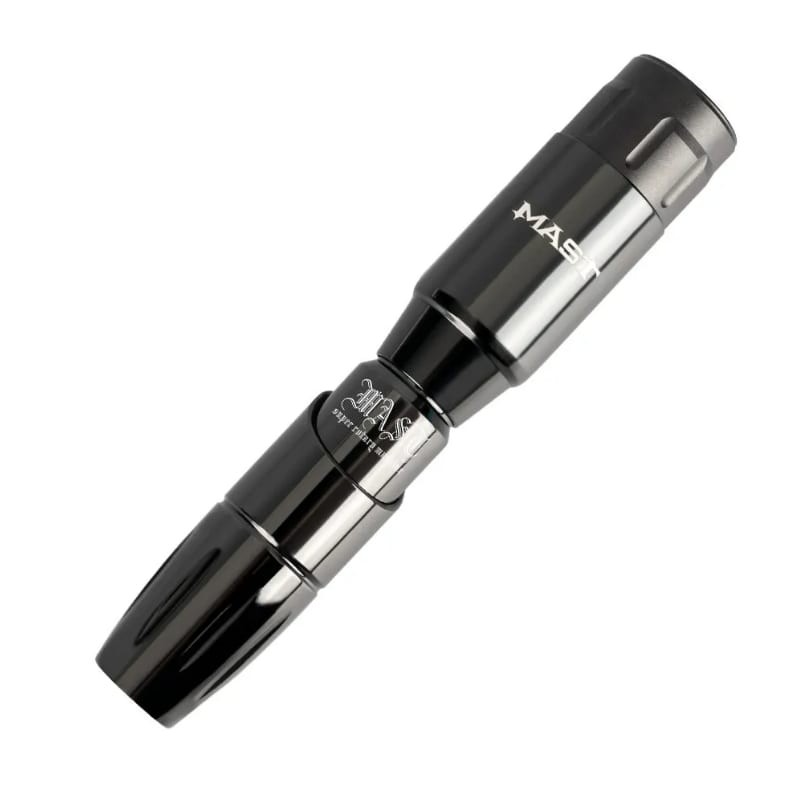
The Mast Tour is the cheapest machine we would put in a learner's hands. The MTS listing gives a 3.5 mm fixed stroke, an 82 g machine with a 25 mm grip, RCA connection and a Mast wireless battery included. One stroke means one less thing to think about. Expect to outgrow it, but it will still serve as a backup.
Around $430: Emalla Grand G5 Pro
The G5 Pro is the step up that lasts longer. Emalla lists seven strokes from 2.4 to 4.2 mm, a brushless motor, voltage mode (4–12 V) and frequency mode, and two 2,000 mAh batteries good for about 10 hours combined. Leave it at 3.3 or 3.6 mm while learning, then explore shorter strokes for soft shading once your mentor says your depth is consistent.
Around $800: FK One Adjust
If your mentor uses FK Irons, or you would rather buy once, the FK One Adjust is a professional machine that also suits a beginner because it does everything. Its stroke runs from 2.0 to 5.0 mm in 0.5 mm steps without powering down, at 5–12 V, with two drop-in batteries. The risk at this price is buying it before you know you will stay in the trade.
There is also a $119 option: the Salvation Premium Rotary Pen, a corded pen the MTS listing describes with a 3 mm stroke, 7–12 V operation and cartridge needles. It is fine for practice skin; pair it with a basic power supply and foot pedal.
What cheap kit machines get wrong
Most cheap kit machines fail on consistency, not on looks. The common problems are motors that slow under load so lines wobble, power supplies with no reliable readout, needle depth adjustments that drift during a session, and no spare parts or service. The kits often bundle unknown inks and needles too, which is the bigger risk. Our tattoo kits guide goes through what to keep and what to bin.
If you are buying for practice, the Miami Tattoo Supplies practice skin range and a box of standard cartridges in the needle cartridges collection are the other two pieces of a learning setup.
The bottom line
Buy a simple cartridge pen with a mid-range stroke, practice on synthetic skin, and get into an apprenticeship. The Mast Tour is the budget entry, the Emalla G5 Pro is the best value with room to grow, and the FK One Adjust is the buy-once option.
Gear mentioned
Products from the Miami Tattoo Supplies catalog, the publisher of this site. Check current price and stock on the store.
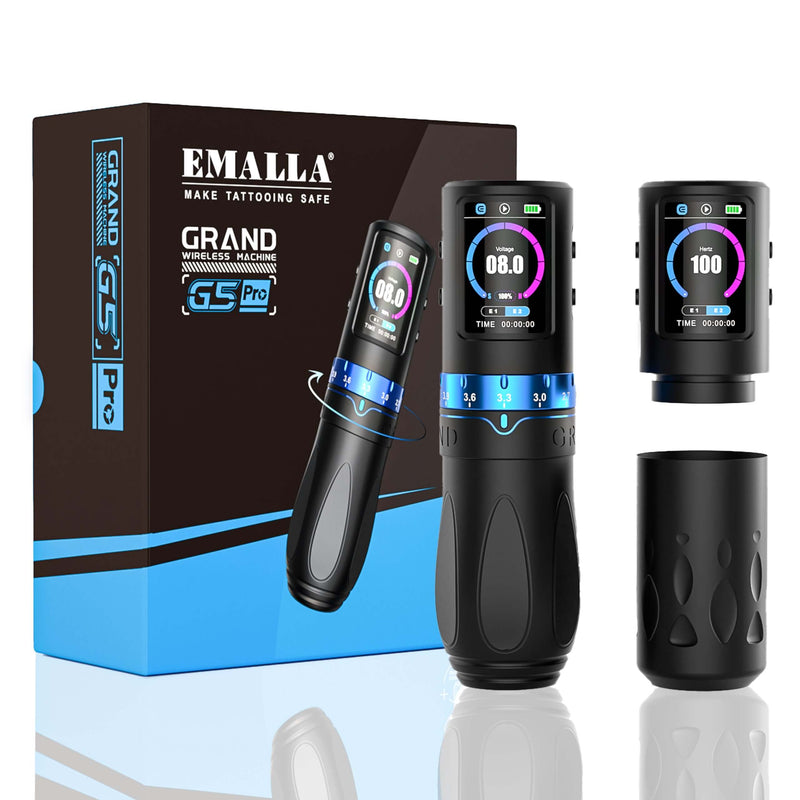
Emalla
EMALLA Grand G5 Pro Wireless Tattoo Pen Machine (Adjustable Strokes)
View at Miami Tattoo Supplies: EMALLA Grand G5 Pro Wireless Tattoo Pen Machine (Adjustable Strokes)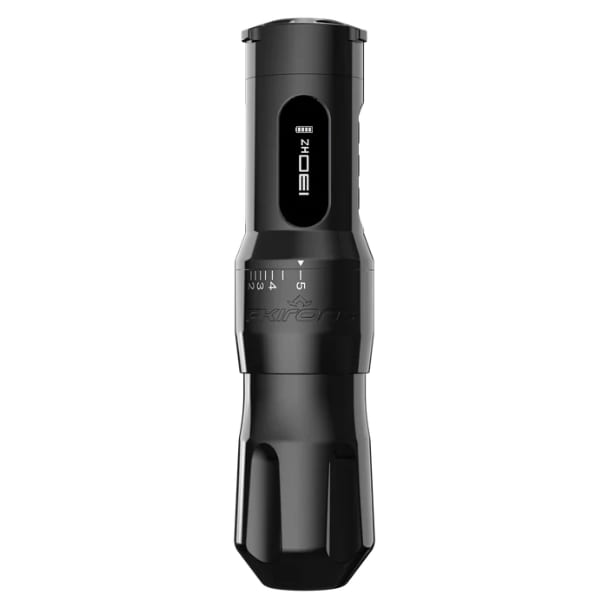
FK Irons
FK One Adjust Wireless Tattoo Machine
View at Miami Tattoo Supplies: FK One Adjust Wireless Tattoo Machine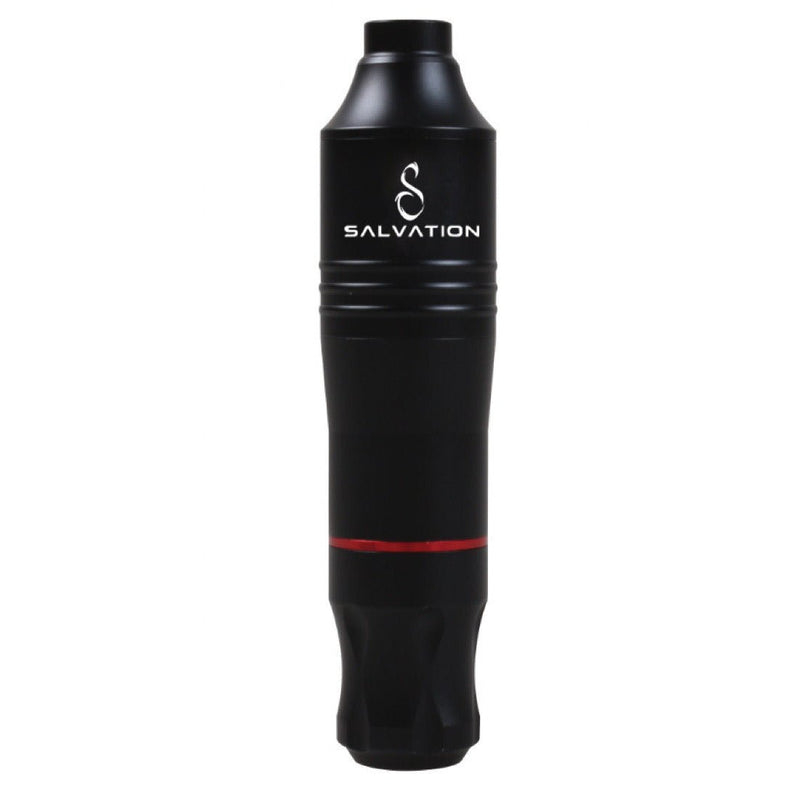
Salvation
Salvation Professional Premium Rotary Tattoo Pen - Black Strong and Quiet
View at Miami Tattoo Supplies: Salvation Professional Premium Rotary Tattoo Pen - Black Strong and Quiet
Frequently asked questions
Should a beginner buy a rotary or a coil machine?
A rotary pen. It is quieter, lighter, needs less tuning and runs standard cartridges, so you can focus on hand speed and depth. Coil machines reward experience in tuning springs and contact screws, which is better learned under a mentor who runs coils. The rotary vs coil comparison on this site covers the details.
What stroke length is best for a beginner?
A mid-range stroke around 3.5 mm is the common all-round choice. It lines, shades and packs acceptably, so you can learn without changing machines. On an adjustable machine, pick a middle setting and leave it until your mentor suggests otherwise. Very short strokes are less forgiving of uneven hand speed.
Is a wireless machine good for beginners?
Yes, if the battery shows voltage and charge clearly. Wireless removes the cord, which makes practice easier to set up. The downside is cost and remembering to charge. A corded RCA pen with a basic supply teaches the same skills for less money.
Can I practice tattooing on myself or friends?
Not legally without a license in most places, and it is the fastest way to cause an infection or a scar you cannot undo. Practice on synthetic skin until a licensed mentor supervises your first work on people. Many states also require bloodborne-pathogen training before you touch a client.
How much should a beginner spend on a first machine?
Enough to get consistent power and standard cartridges, which at Miami Tattoo Supplies in November 2026 starts around $169 with the Mast Tour. Spending $400 to $800 buys adjustable stroke and longer battery life. Spend the rest on practice skin, cartridges and training rather than a second machine.