What Is Tattoo Ink Made Of? Pigments and Carriers Explained
Short answer
What is tattoo ink made of?
Tattoo ink is pigment suspended in a liquid carrier. The pigments are mostly synthetic organic colorants plus a few inorganic ones: carbon black for black, titanium dioxide for white, iron oxides for some reds and browns. The carrier is usually purified water, sometimes with isopropyl alcohol, glycerin or witch hazel. The maker's safety data sheet names the pigments.
Key takeaways
- Eternal's black SDS lists only deionized or distilled water and carbon black (Pigment Black 7, CI 77266).
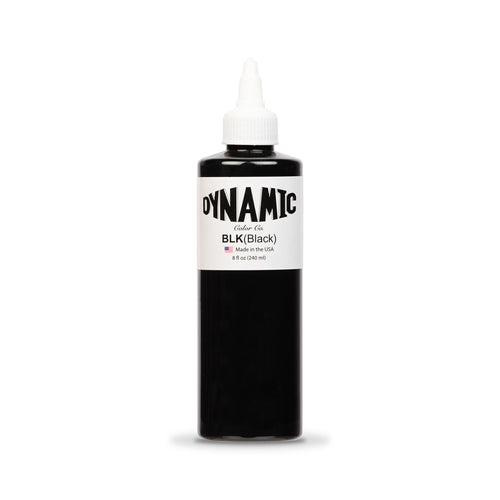
- Dynamic states its traditional inks contain distilled sterile water, pigment and isopropyl alcohol; its thicker Platinum line adds glycerine and witch hazel.
- Most bright colors use synthetic organic pigments such as Pigment Red 122 or Pigment Yellow 83; organic here means carbon-based chemistry, not natural.
- The FDA says no color additive is approved for injection into the skin, and some tattoo pigments are industrial-grade colors.
- An SDS gives pigment identities and concentration ranges, not the full recipe.
On this page 6 sections
Clients ask it in the chair, inspectors ask it on a visit, and artists ask it when a bottle behaves differently from the last one. The answer is simpler than the marketing suggests: every tattoo ink is a pigment suspended in a carrier, and the maker's safety data sheet tells you which pigments. This guide is published by Miami Tattoo Supplies, using the makers' own data sheets for inks in the tattoo ink collection at Miami Tattoo Supplies.
What is tattoo ink made of?
Two things: pigment, which gives the color and stays in the skin, and a carrier, the liquid that keeps the pigment evenly dispersed and carries it into the skin. Many professional inks are sold "pre-dispersed," meaning the pigment is already ground and suspended in the carrier, ready to use after shaking.
Two real formulas, as the makers describe them:
| Ink | Pigment | Carrier and additives |
|---|---|---|
| Eternal black inks (SDS) | Carbon black, Pigment Black 7, CI 77266, CAS 1333-86-4 | Deionized or distilled water |
| Dynamic traditional inks (FAQ) | Pigment | Distilled sterile water and isopropyl alcohol; Dynamic says no fillers |
| Dynamic Platinum inks (FAQ) | Pigment | Thicker; contains glycerine and witch hazel |
World Famous adds another data point: it says its Blackout black contains zero glycerin. Carriers differ by brand, which is one reason makers such as Intenze advise against mixing brands in one cap, and why a bottle past its date or stored badly can behave differently (does tattoo ink expire covers storage).
What pigments are used in tattoo ink?
Inorganic pigments
A small number of mineral and carbon pigments do a lot of the work:
- Carbon black (Pigment Black 7) for black and for darkening other colors.
- Titanium dioxide (Pigment White 6, CI 77891) for white and for lightening tints; best white tattoo ink compares the whites.
- Iron oxides (for example red iron oxide, CI 77491) for some reds, browns and earth tones.
Synthetic organic pigments
Most bright colors come from synthetic organic pigments, "organic" in the chemical sense of carbon-based molecules, not natural or plant-derived. Eternal's SDS for its red-group inks, for example, lists Pigment Red 122, Red 170 and Red 254, Pigment Orange 16, Pigment Yellow 14 and 83, Pigment Violet 23 and Pigment Blue 15:3, alongside titanium dioxide, red iron oxide and carbon black used across the group. Each is identified by a Colour Index (CI) number and a CAS number, so you can look it up.
Pigments you should not find
DermNet's reference on tattoo reactions lists older pigments such as mercury sulfide (cinnabar) in red and cadmium sulfide in yellow, and notes that red pigments cause the most reactions. EU rules now cap mercury in tattoo inks at 0.00005% by weight, and neither pigment appears on the Eternal sheets we reviewed. The FDA adds a caution that applies to any ink of unknown origin: some pigments used in tattoo inks are industrial-grade colors suitable for printers' ink or automobile paint.
What does the carrier do?
The carrier keeps pigment particles suspended so the ink flows evenly off the needle and goes into the skin consistently. Water is the base. Alcohol, glycerin and witch hazel adjust flow and thickness; in Dynamic's range, the thicker Platinum line is the one that contains glycerine and witch hazel. Because water and other carrier ingredients can carry microbes, the FDA's October 2024 guidance recommends that manufacturers test ink components, including pigments, water and other solvents, for microbial contamination, and validate any sterilization method they use.
That is also why you should dilute only with a sterile mixing solution sold for the purpose, such as Dynamic Mixing Solution at Miami Tattoo Supplies, and never with tap water.
How to read a tattoo ink safety data sheet
A safety data sheet (SDS) is the document that tells you what is in the bottle in regulated terms. What to look for:
- Section 3, composition: each pigment by name, CI number and CAS number, with a concentration range. Eternal's sheets give ranges such as "<1% to 30%" because one SDS covers several colors.
- Section 7, storage: Eternal's black SDS, for instance, says to store between 32°F (0°C) and 89.6°F (32°C), away from direct sunlight, in a dust-free area.
- Revision date: a current sheet reflects current formulas.
An SDS does not give the full recipe or the exact percentage of each ingredient; it lists what must be declared. Eternal, Dynamic, Fusion and Intenze all link SDS pages from their sites. Keep the sheets for your inks on file; inspectors and clients with allergies sometimes ask.
Is tattoo ink vegan?
It depends on the brand. Historically some inks used animal-derived ingredients such as bone char in black or animal-sourced glycerin. Modern carbon black is not bone char, and Eternal, Dynamic, World Famous, Intenze and StarBrite state on their own sites that their inks are vegan or contain no animal products. Is tattoo ink vegan? lists the claims brand by brand. Black, white and color inks from these makers are listed by brand in Miami Tattoo Supplies' inks-by-brand collection.
Gear mentioned
Products from the Miami Tattoo Supplies catalog, the publisher of this site. Check current price and stock on the store.
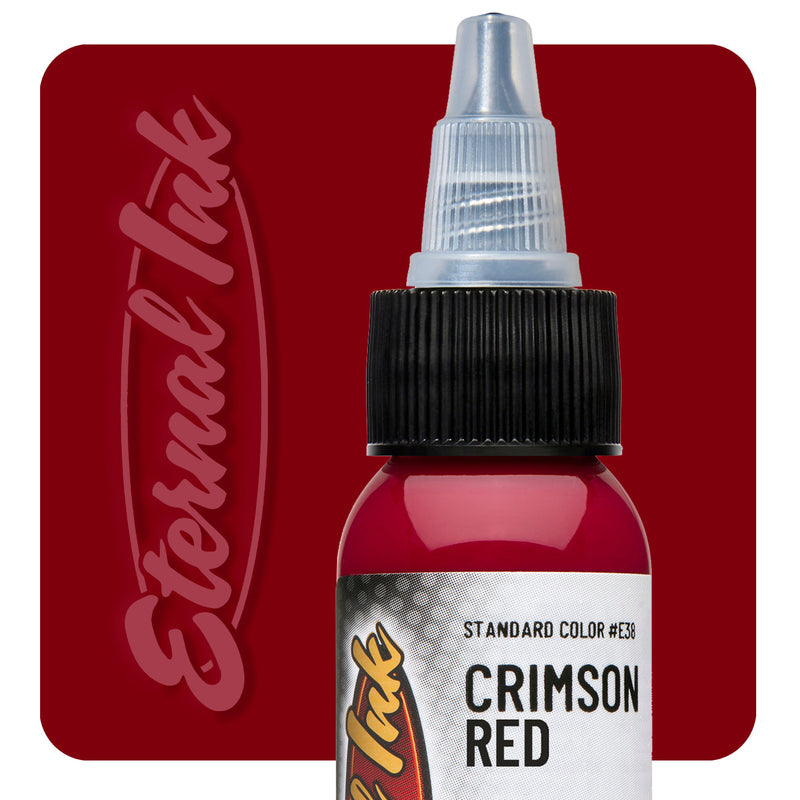
Eternal Ink
Eternal Tattoo Ink - Crimson Red 1 oz
View at Miami Tattoo Supplies: Eternal Tattoo Ink - Crimson Red 1 oz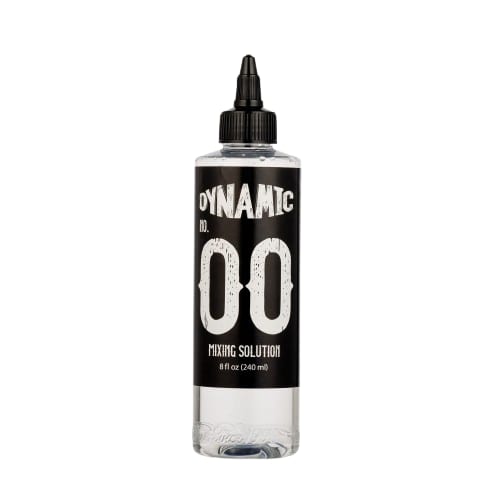
Dynamic Color
Dynamic Tattoo Ink - Mixing Solution
View at Miami Tattoo Supplies: Dynamic Tattoo Ink - Mixing Solution
Frequently asked questions
What is black tattoo ink made of?
Professional black ink is usually carbon black (Pigment Black 7) in a water-based carrier. Eternal's black SDS lists just deionized or distilled water and carbon black. Some blacks add alcohol, glycerin or witch hazel to adjust flow; World Famous says its Blackout contains no glycerin.
What is white tattoo ink made of?
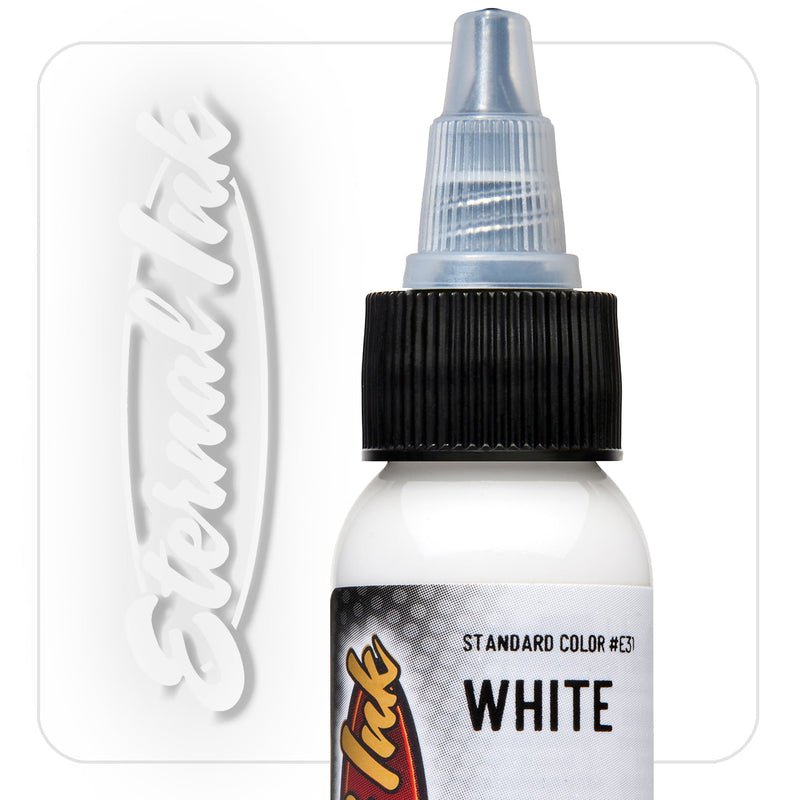
Titanium dioxide, listed as Pigment White 6 (CI 77891), in a water-based carrier. Eternal's white-ink SDS names it. Titanium dioxide is also what makes white inks opaque, and it is why mixing a little white into a color creates a lighter, more opaque tint.
Is tattoo ink toxic?
Professional inks are made for tattooing, but none is FDA approved for injection into the skin, and reactions do occur; DermNet notes red pigments cause the most. The bigger documented risk is microbial contamination, which is why sealed, sterile, in-date ink matters. Clients with reactions should see a doctor.
Do tattoo inks contain heavy metals?
Some pigments are metal-based, such as iron oxides and titanium dioxide. Older inks used mercury and cadmium pigments. Dynamic states its inks contain no heavy metals, and EU REACH rules cap metals such as mercury, lead and nickel in tattoo inks sold in Europe. Check the SDS for any specific ink.
Why do inks from different brands behave differently?
Different pigment loads, particle preparation and carriers. One brand uses water and alcohol, another adds glycerin and witch hazel, and the thickness and flow change with it. That is why makers advise against mixing brands in a cap.