Second Skin Tattoo Bandages: How Long to Leave Derm Shield On
Short answer
How long should you leave second skin on a tattoo?
Follow the bandage maker's directions. For Recovery Derm Shield, the first piece stays on for about 24 hours, depending on how much the tattoo weeps; a second piece can then be worn for several days, and a third if needed, but no single piece should stay on longer than one week. Peel it back slowly over itself, and remove it early if the skin reacts or fluid leaks.
Key takeaways
- Second skin is a thin, transparent, adhesive polyurethane film that protects a fresh tattoo while it weeps.
- Recovery Derm Shield's directions: first piece about 24 hours, later pieces several days, no piece longer than one week.
- Fluid and ink collecting under the film in the first day is expected; leaking edges mean it is time to change it.
- Remove it early for itching rash, blistering or spreading redness at the adhesive edge, and see a doctor if signs of infection appear.
- Apply on clean, dry skin with no ointment underneath, with a 1 to 2 inch margin and no stretching.
On this page 6 sections
"Second skin" is the trade name for adhesive film bandages that go over a fresh tattoo in place of plastic wrap. Clients like them because they can shower with one on and stop worrying for a few days; artists like them because the tattoo is protected through the messiest part of healing. The question everybody asks is how long to leave it on, and the answer belongs to the manufacturer's directions. This guide is published by Miami Tattoo Supplies and uses Recovery Derm Shield, the film listed in the store's tape and bandage collection, as the worked example. It is general information, not medical advice.
What is a second skin bandage?
A thin, transparent, adhesive film that sticks to the skin around the tattoo and covers it completely. Recovery describes Derm Shield as a light, waterproof composite film of three layers (EVA film, matte polyurethane film and glassine), of which the matte polyurethane film is the part that stays on and protects the skin. Recovery says the matte film is breathable and flexible, and the bandage is latex-free.
Florida's tattoo rule says the finished tattoo should be covered with a clean nonstick bandage if needed; a film bandage applied correctly is one way to do that. Cleveland Clinic's dermatology guidance describes the same practice: a thin ointment and a clear bandage before the client leaves, kept on for the time the artist specifies.
How long should you leave second skin on a tattoo?
As long as the maker's directions say, and no longer. Recovery's directions for Derm Shield, as printed with the product:
| Application | How long | Note |
|---|---|---|
| First piece | About 24 hours, depending on how much the tattoo weeps | Blood and fluid collecting under it is normal |
| Second piece | Several days | Clean and dry the area before applying |
| Third piece | If necessary | Same preparation |
| Any single piece | Never longer than one week | Hard limit in the directions |
Other film brands set their own times. If your studio uses a different film, give clients that maker's directions, not these.
When to take it off early
- It leaks. Once fluid escapes at the edge, the seal is gone and dirt can get in. Remove it, wash, and either reapply a new piece or switch to traditional aftercare.
- The skin reacts. An itchy rash, small blisters or redness along the adhesive may be a reaction to the adhesive. Remove it and do not reapply; tell the artist. AAD notes that reactions lasting more than one or two weeks should be seen by a board-certified dermatologist.
- Signs of infection. Redness that spreads or darkens instead of fading, pain that worsens, pus, or fever. AAD's advice is to see a doctor or a board-certified dermatologist right away.
How to apply Derm Shield (artist side)
Recovery's application directions, in order:
- Gently clean the tattoo and surrounding skin and pat dry. There should be no soap or residue on the skin.
- With clean gloves, take the film out of its sterile pouch.
- Cut a piece that covers the tattoo plus a margin of 1 to 2 inches beyond its edge.
- Peel off the backing and place the film adhesive side down over the tattoo.
- Smooth it on with light pressure, working from the center to the edges to push out air bubbles. Do not stretch the film.
Notice what is not on the list: ointment under the film. The directions call for clean, dry skin so the adhesive can seal.
How to remove it (client side)
Peel slowly from one edge, pulling the film back over itself, parallel to the skin, rather than lifting it straight up. Recovery's directions say not to pull the bandage upwards. Cleveland Clinic suggests washing your hands and soaking the bandage in warm water to soften it first, then peeling gently. Then wash the tattoo gently, pat dry with a clean paper towel, and either apply the next piece or start the aftercare routine the artist gave you.
The full client routine, with and without film, is in tattoo aftercare instructions for clients, and what happens to the skin week by week in tattoo healing stages.
Which size to buy
Recovery Derm Shield comes in several formats at Miami Tattoo Supplies, priced at the time of writing (November 2026):
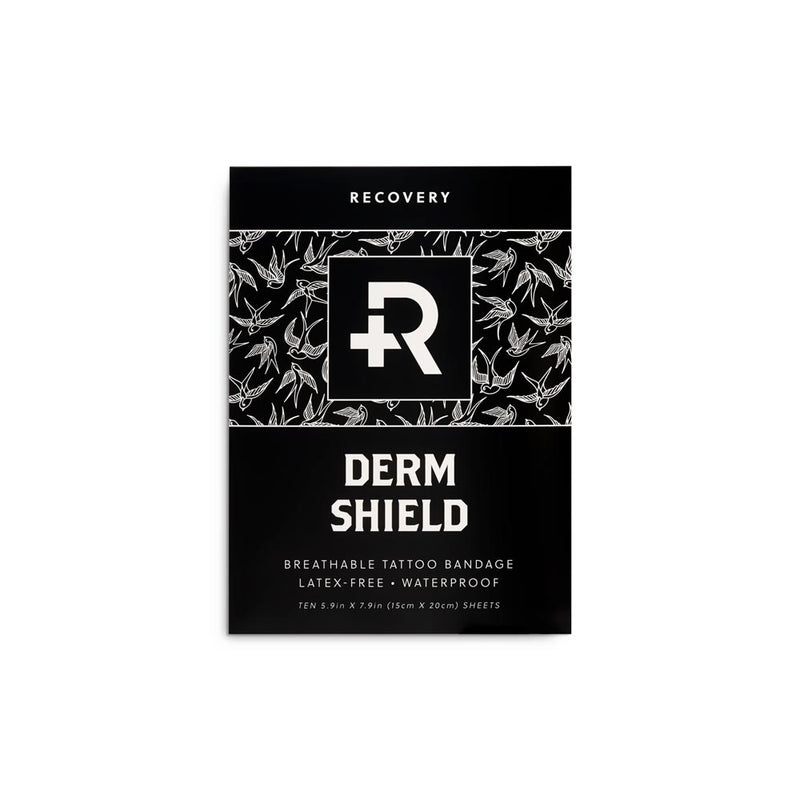
- Sheets, 5.9 x 8 inches, pack of 10: $17.99. Convenient for occasional use and for sending a second piece home with the client.
- Roll, 5.9 inches x 8 yards: $39.99. The economical choice for forearms and calves.
- Roll, 10 inches x 8 yards: $47.95, for backs, thighs and large pieces.
- Bangers, 3-inch circles, tub of 100: $41.99, for small tattoos.
For clients who should not wear an adhesive film, an absorbent, adhesive-free pad such as the Saferly aftercare pads ($11.99 to $14.99 per 10) is an alternative. The Derm Shield 5.9-inch roll is the usual studio buy; the best tattoo aftercare products guide covers what goes on once the film comes off.
Gear mentioned
Products from the Miami Tattoo Supplies catalog, the publisher of this site. Check current price and stock on the store.
Recovery
Recovery Derm Shield - 5.9" x 8" Sheets - Pack of 10
View at Miami Tattoo Supplies: Recovery Derm Shield - 5.9" x 8" Sheets - Pack of 10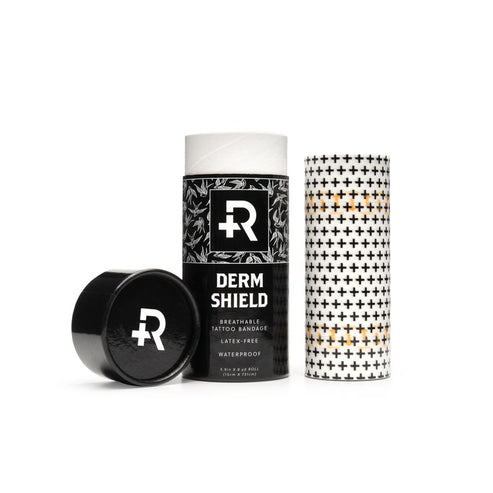
Recovery
Recovery Derm Shield - 5.9" x 8 Yard Roll Clear
View at Miami Tattoo Supplies: Recovery Derm Shield - 5.9" x 8 Yard Roll Clear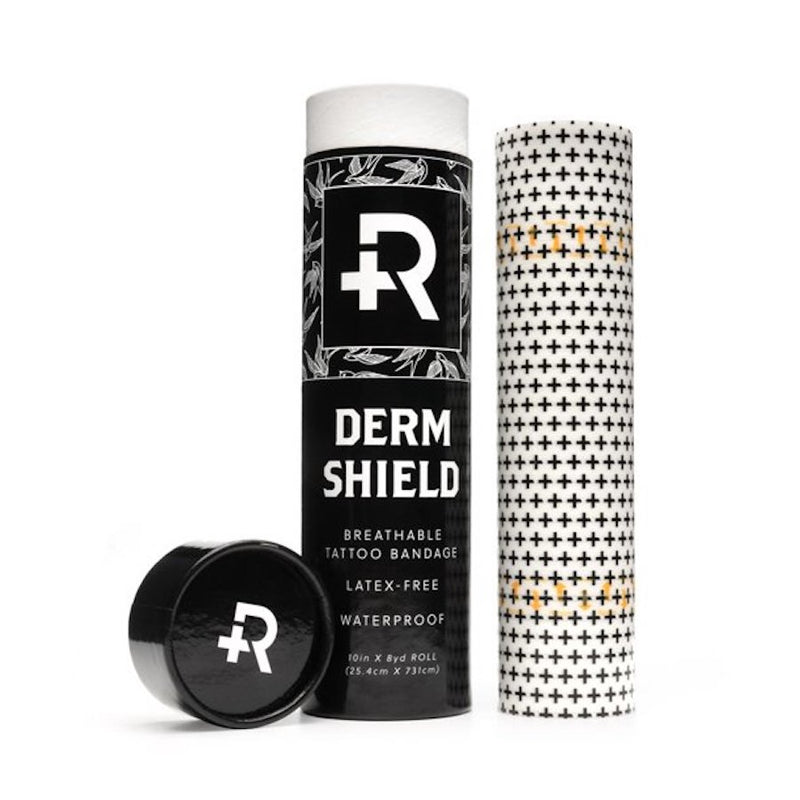
Recovery
Recovery Derm Shield - 10" x 8 Yard Roll Clear
View at Miami Tattoo Supplies: Recovery Derm Shield - 10" x 8 Yard Roll Clear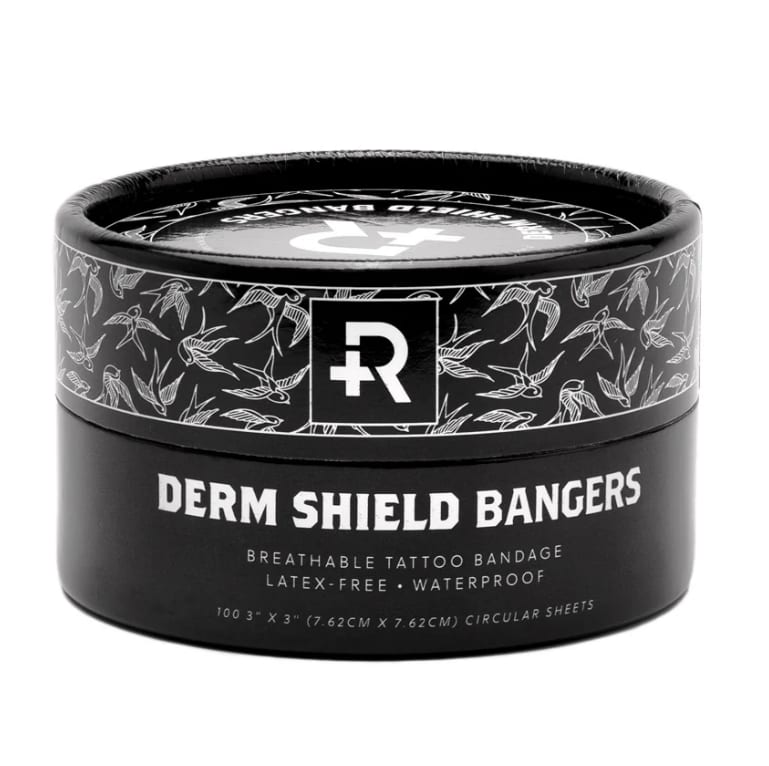
Recovery
Recovery Derm Shield Bangers - Tub of 100
View at Miami Tattoo Supplies: Recovery Derm Shield Bangers - Tub of 100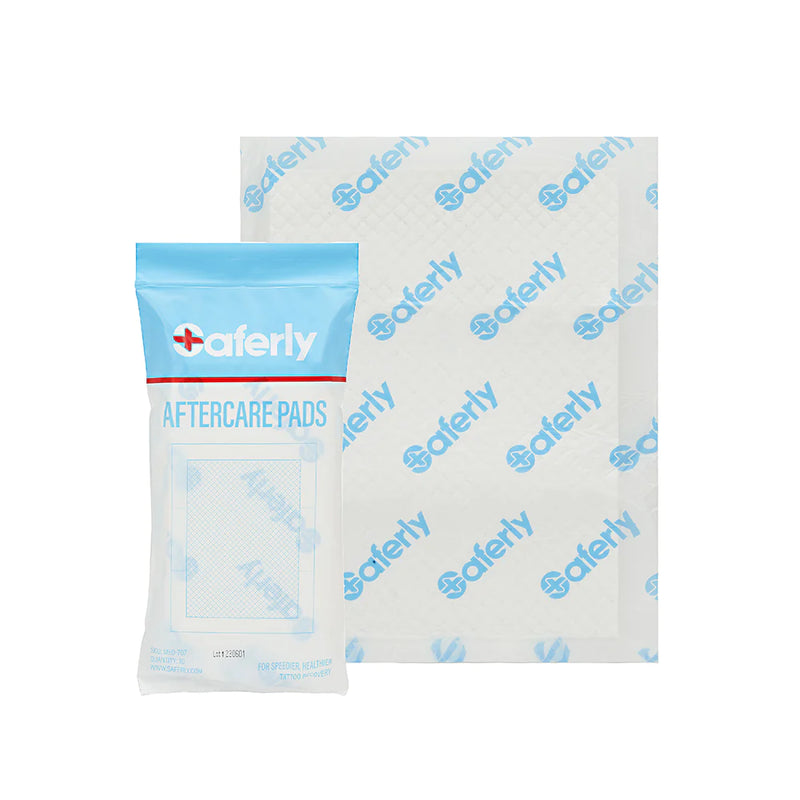
Saferly
Aftercare Bandage Pads by Saferly - Pack of 10
View at Miami Tattoo Supplies: Aftercare Bandage Pads by Saferly - Pack of 10
Frequently asked questions
Is it normal for fluid to build up under second skin?
Yes, in the first day. Recovery's directions say it is normal for blood and fluids to collect under the bandage. What is not normal is fluid leaking out at the edges, which breaks the seal, or a buildup that keeps growing after the first change. Change the bandage in either case.
Can I shower with a second skin bandage on?
Recovery describes Derm Shield as waterproof, so normal showering is fine as long as the seal is intact. Do not soak it: Cleveland Clinic advises keeping a healing tattoo out of baths, pools and hot tubs until it is fully healed.
Can I put ointment under a second skin bandage?
Not under Recovery Derm Shield. Its directions call for clean, dry skin with no soap or residue, because the adhesive needs dry skin to seal. Follow the directions of whichever film you use.
What if I am allergic to adhesive?
Tell your artist before the session. They can use a traditional dressing such as an adhesive-free pad, or no film at all. If a rash or blisters appear under a film, remove it and do not reapply. A reaction that persists should be seen by a doctor.
Do I still need aftercare after second skin comes off?
Yes. The film covers the first days; healing continues for weeks. After the last piece comes off, wash gently, keep the tattoo moisturized with a product your artist recommends, keep it out of the sun and out of soaking water until healed.