Organic vs Inorganic PMU Pigments: What the Makers Say Changes in the Skin
Short answer
What is the difference between organic and inorganic PMU pigments?
In PMU, organic and inorganic describe chemistry, not natural or clean ingredients. Organic pigments are synthetic carbon-based colorants: brighter and more transparent. Inorganic pigments are mineral compounds such as iron oxides and titanium dioxide: softer, more opaque and earthier. Perma Blend and Tina Davies say organic pigments implant more easily and last longer, while inorganic fade faster and need more frequent touch-ups. Most brands sell hybrids.
Key takeaways
- Organic means carbon-based and lab-made; inorganic means mineral-based, such as iron oxide and titanium dioxide.
- Perma Blend's rule of thumb: Colour Index codes below 76999 are organic, codes from 77000 up are inorganic.
- Per the makers, organic pigments implant easily and hold long but are less forgiving; inorganic pigments need more passes and soften within one to two years.
- Perma Blend says all its pigments are hybrids containing both organic and inorganic components.
- Tina Davies says neither type is better than the other; the choice depends on skin, area and the client's goals.
On this page 8 sections
"Organic" on a pigment bottle sounds like a health claim, and clients often hear it that way. In permanent makeup it is a chemistry term. It tells you what the colorant molecules are made of, which in turn shapes how a pigment goes in, how it looks healed and how it fades. Knowing which you are using changes your needle choice, your passes and the touch-up schedule you give the client.
This page is published by Miami Tattoo Supplies, a tattoo and permanent makeup supply store in Hollywood, Florida that sells Perma Blend and other PMU pigments. Everything about how pigments behave is the pigment makers' own description from their education pages, not clinical data, and not medical advice.
What do organic and inorganic mean in PMU pigments?
Perma Blend's guide stresses that the words describe chemical origin, not natural farming or clean-beauty certification.
- Organic pigments are synthetic, carbon-based molecules made in a lab. Tina Davies describes them as built from carbon rings and chains; Perma Blend says they give intense color, high transparency and vivid brightness from small, finely milled particles.
- Inorganic pigments are mineral-based metal oxide compounds such as iron oxide and titanium dioxide. Both makers describe larger, heavier particles that give softer, more opaque, earth-toned results.
- Hybrids combine both in one bottle. Perma Blend says most modern manufacturers formulate hybrids, and Tina Davies says any blend of organic and inorganic pigments counts as hybrid, in varying proportions.
One exception catches people out: carbon black is technically inorganic, but Tina Davies notes that its very small particle size makes it behave like an organic pigment.
How can you tell which a pigment is?
Read the Colour Index (CI) numbers in the ingredient list. Perma Blend's rule of thumb is that CI codes below 76999 indicate organic pigment particles and codes from 77000 upward indicate inorganic mineral components. A bottle listing both is a hybrid. Perma Blend's FAQ states that all Perma Blend pigments are hybrids containing both organic and inorganic components.
How do they behave differently, according to the makers?
| Organic (per the makers) | Inorganic (per the makers) | |
|---|---|---|
| Particles | Smaller, finely milled | Larger, heavier |
| Look | Bright, vivid, transparent | Soft, matte, earthy, opaque |
| Implanting | Enters skin quickly; needs lighter passes | Needs firmer stretch and more passes |
| Fading | Long retention; Perma Blend says roughly 2 to 5+ years | Lightens over about 1 to 2 years |
| Typical shift | Brows can dull and cool over time, per Tina Davies | Can leave a red or orange residual as iron oxide black breaks down, per Tina Davies |
| Forgiveness | Less forgiving; oversaturation is hard to correct | More forgiving, still needs proper technique |
| Touch-ups | Less often | About every 12 to 24 months, per Tina Davies |
These are tendencies the makers describe, and both say skin type, placement, technique and aftercare change the result. Perma Blend's FAQ, for example, says its hybrid pigments typically last one to three years depending on those factors.
Why do brows shift color as they fade?
Because different pigments in a blend fade at different rates. Tina Davies explains that in organic-based brows, the warm pigments fade first while carbon black and titanium dioxide white persist, so healed brows tend to look cooler and duller over time; she recommends a warm boost rather than a dark, cool pigment without a warm undertone. In inorganic-based brows, she says iron oxide black breaking down can leave a red or orange residual, which a green-olive pigment applied first can offset. Correcting color is a skill in itself: Tina Davies says corrections work only on brows that have faded by at least half. Perma Blend sells a corrector mini set of three 0.5 oz bottles ($92 at Miami Tattoo Supplies at the time of writing).
Which should you use for brows, lips and different skin?
The makers agree more than they disagree:
- Lips: Perma Blend recommends organic formulas for vibrant healed lip color.
- Soft powder brows: Perma Blend suggests hybrid or inorganic formulas for gentler healed tones.
- Oily or thick skin: both lean organic or strong hybrid for retention; Tina Davies adds larger needle configurations for inorganic pigment on thicker skin.
- Mature, thin or dry skin: both lean inorganic or lighter hybrids, which Perma Blend says help colors avoid healing too dark or cool.
- New artists: Tina Davies points to inorganic pigments as more forgiving.
- Clients who want flexibility as their hair grays or styles change: inorganic-leaning pigments, which soften sooner.
Tina Davies sums it up as one not being better than the other, and recommends keeping both types on hand. Needle choice follows pigment choice; see PMU cartridges explained.
Are PMU pigments FDA approved?
No. The FDA's fact sheet says no pigment is approved for injection into the skin, and that the agency has traditionally not exercised its regulatory authority over tattoo and permanent makeup pigments. It also records that in 2003 and 2004 it received more than 150 reports of adverse reactions to certain permanent makeup ink shades, which their marketer recalled in 2004. On its own products, Perma Blend's FAQ says its pigments are gamma-irradiated and third-party validated to ISO 11137-2, with a three-year unopened shelf life and use within 12 months of opening recommended.
Where to buy
At the time of writing (November 2026), Miami Tattoo Supplies listed Perma Blend and Perma Blend Luxe sets including the Luxe Medium Brows mini set ($134), the Evenflo Brow Set by Lulu Siciliano ($185), the Signature Lip Set ($231) and the Tina Davies Sunset Brow Set ($109). The Perma Blend Luxe collection holds the Luxe line. Brand comparisons are in best PMU pigment brands and our Perma Blend guide.
Watch
Gear mentioned
Products from the Miami Tattoo Supplies catalog, the publisher of this site. Check current price and stock on the store.
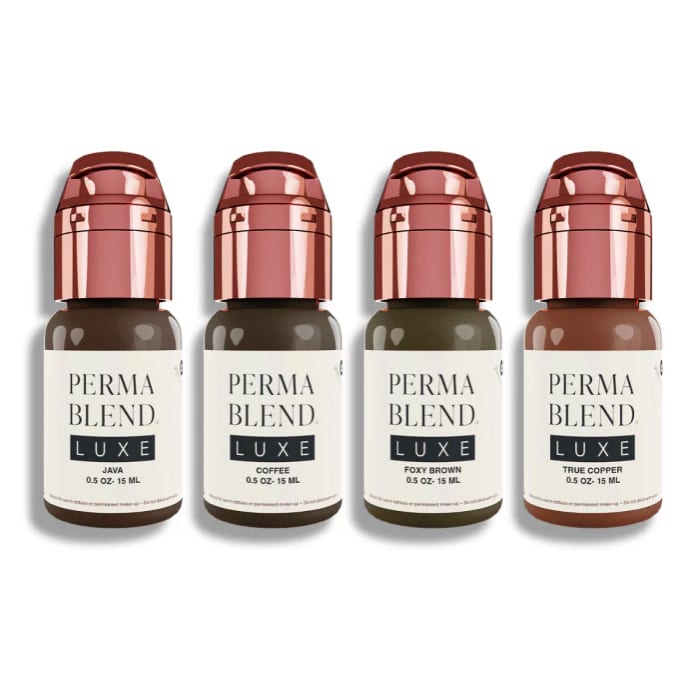
Perma Blend Luxe
Perma Blend Luxe - Medium Brows Mini Set 1/2oz Bottle
View at Miami Tattoo Supplies: Perma Blend Luxe - Medium Brows Mini Set 1/2oz Bottle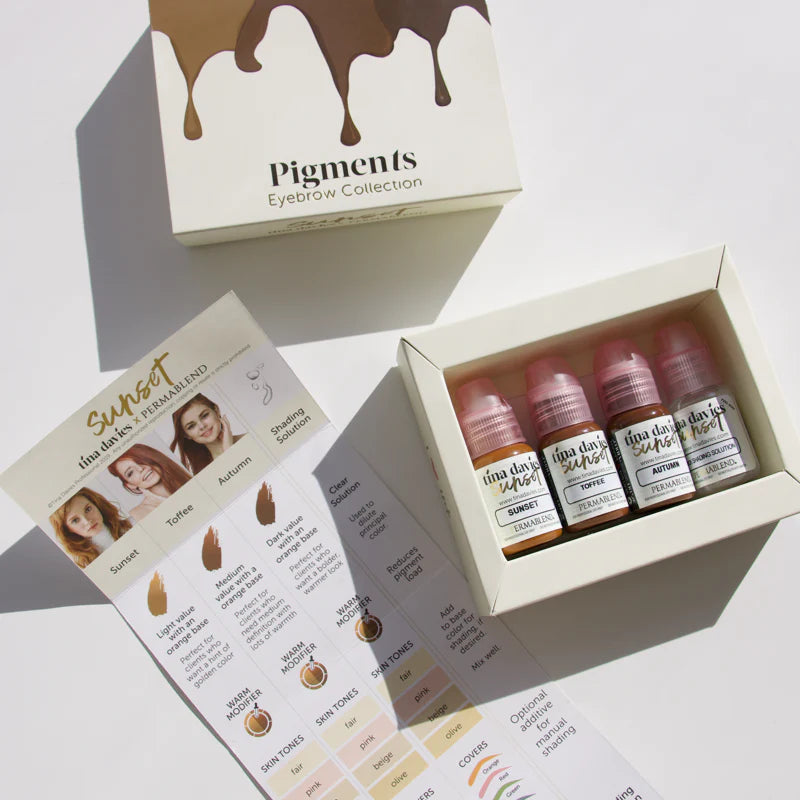
Perma Blend
Blend Pigments -Tina Davies Sunset Brow Set
View at Miami Tattoo Supplies: Blend Pigments -Tina Davies Sunset Brow Set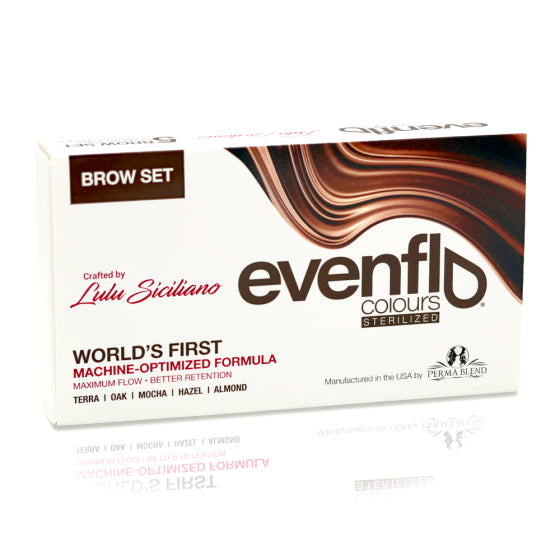
Perma Blend
Perma Blend Evenflo Brow Set - by Lulu Siciliano - 5 Bottles 0.5oz
View at Miami Tattoo Supplies: Perma Blend Evenflo Brow Set - by Lulu Siciliano - 5 Bottles 0.5oz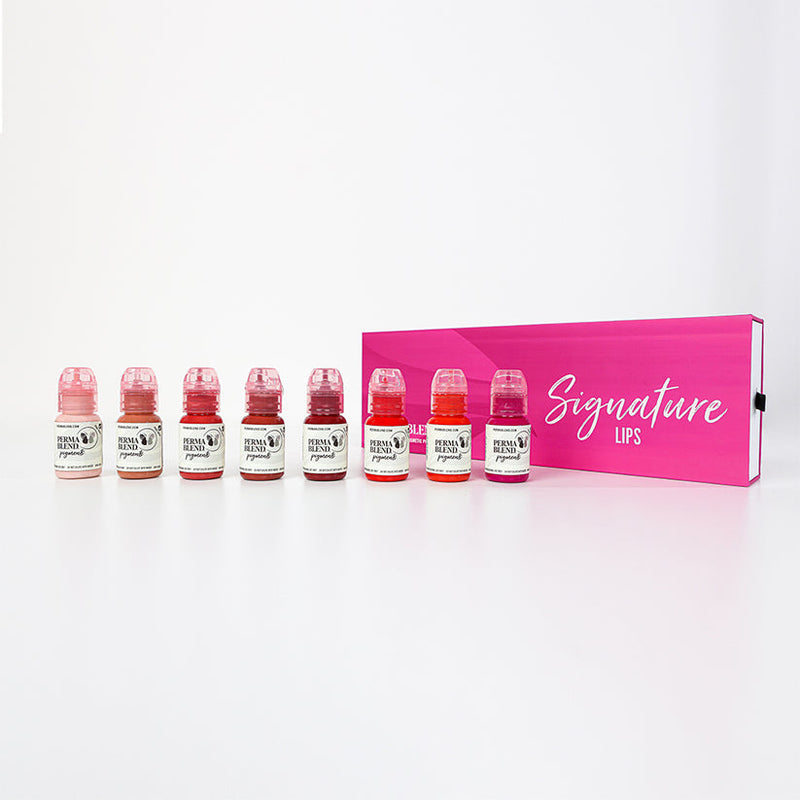
Perma Blend
Perma Blend - Signature Lip Set
View at Miami Tattoo Supplies: Perma Blend - Signature Lip Set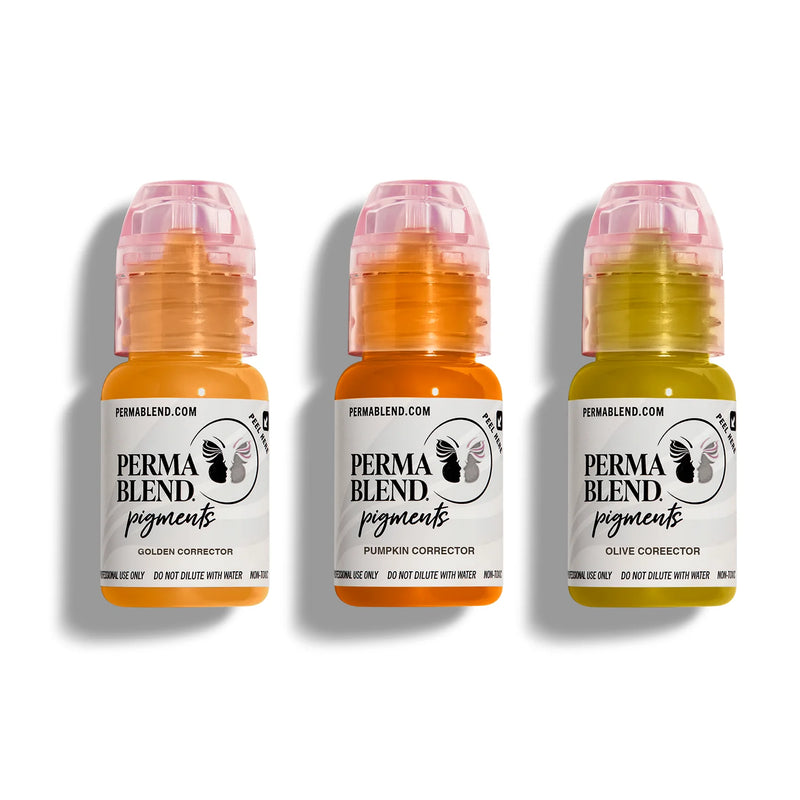
Perma Blend
Perma Blend - Corrector Mini Set - 3 Bottles 0.5oz
View at Miami Tattoo Supplies: Perma Blend - Corrector Mini Set - 3 Bottles 0.5oz
Frequently asked questions
Are organic PMU pigments safer than inorganic ones?
"Organic" in PMU describes chemistry, carbon-based versus mineral-based, not safety or natural origin, as Perma Blend's guide points out. Neither type is FDA approved for injection into the skin. Choose pigments from a maker that documents its sterilization and ingredients, and follow your training and local health rules.
Do inorganic pigments turn red or orange?
They can, according to Tina Davies, who says that as iron oxide black breaks down in inorganic brow pigments it can leave a red or orange residual. She recommends a green-olive pigment first to counter it. How a brow heals also depends on skin, technique, aftercare and the exact blend used.
Why do organic brow pigments turn grey or blue?
Tina Davies explains that in organic-based brows, warm pigments fade while carbon black and titanium dioxide white remain, so brows tend to look cooler and duller over time. She recommends a warm, orange- or yellow-based boost at touch-ups rather than adding a dark, cool pigment.
Are Perma Blend pigments organic or inorganic?
Neither alone. Perma Blend's FAQ says all its pigments are hybrids that include both organic and inorganic components, and that it labels them transparently. Tina Davies describes Perma Blend lines as hybrids that lean organic. Check each bottle's CI codes for the exact mix.
How long do organic and inorganic PMU pigments last?
The makers give ranges, not guarantees. Perma Blend says organic retention runs roughly two to five years or more and inorganic pigments lighten over one to two years; Tina Davies recommends touch-ups every 12 to 24 months for inorganic work. Skin type, placement, technique and aftercare all change the result.